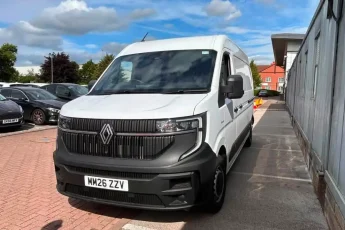
Beyond Driving has been back with West Midlands Safari Park, delivering a bespoke British Off Road Driving Association and vehicle familiarisation course for staff operating specialist safari vehicles.
It was great to return to such a distinctive training environment. While many off-road driving courses take place on private tracks, estates, construction sites or utility routes, safari park driving brings a very different set of challenges. Drivers are not only managing a specialist vehicle. They are operating around live animals, visitors, park infrastructure, tight routes, changing surfaces and the day-to-day pressures of a busy attraction.
That is why accredited training needs to go beyond a standard driving assessment. At West Midlands Safari Park, the requirement is for calm, consistent, well-briefed vehicle control in an environment where no two journeys are quite the same.
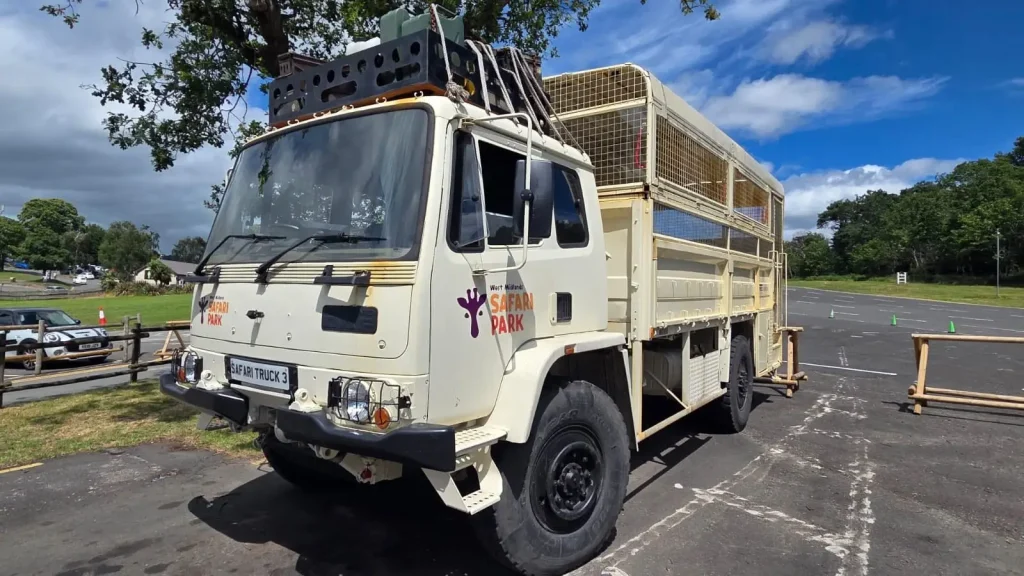
Returning to West Midlands Safari Park for ongoing driver development
Beyond Driving previously delivered a series of BORDA-related courses for West Midlands Safari Park, supporting drivers and staff working with specialist 4×4 safari vehicles. This latest June training builds on that work by continuing the familiarisation process and reinforcing safe, confident driving in the park’s real operating environment.
For organisations running specialist vehicles, training should not be treated as a one-off exercise. Vehicles change, staff teams develop, routes evolve and operating conditions vary by season. A returning course provides an opportunity to refresh key skills, introduce new staff to the standards expected and maintain a consistent approach across the team.
At West Midlands Safari Park, that means understanding how a large safari vehicle behaves at low speed, how to plan manoeuvres carefully, how to maintain awareness of animals and visitors, and how to work safely within the park’s procedures.
Why safari park driver training is so specialist
Driving in a safari park is not simply “off-road driving with animals nearby”. It is a specialist operating environment where the driver needs to combine technical vehicle control with observation, anticipation and patience.
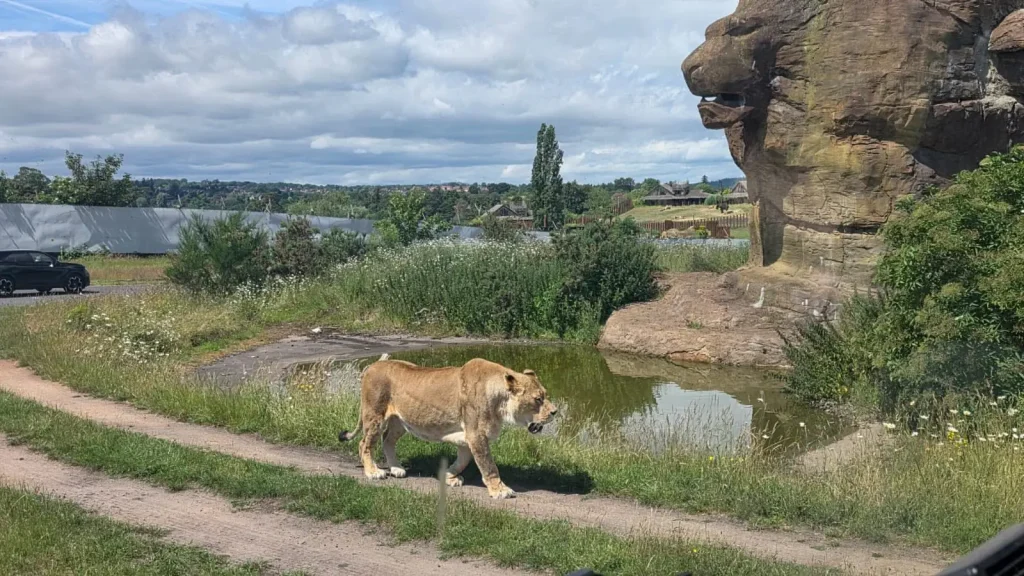
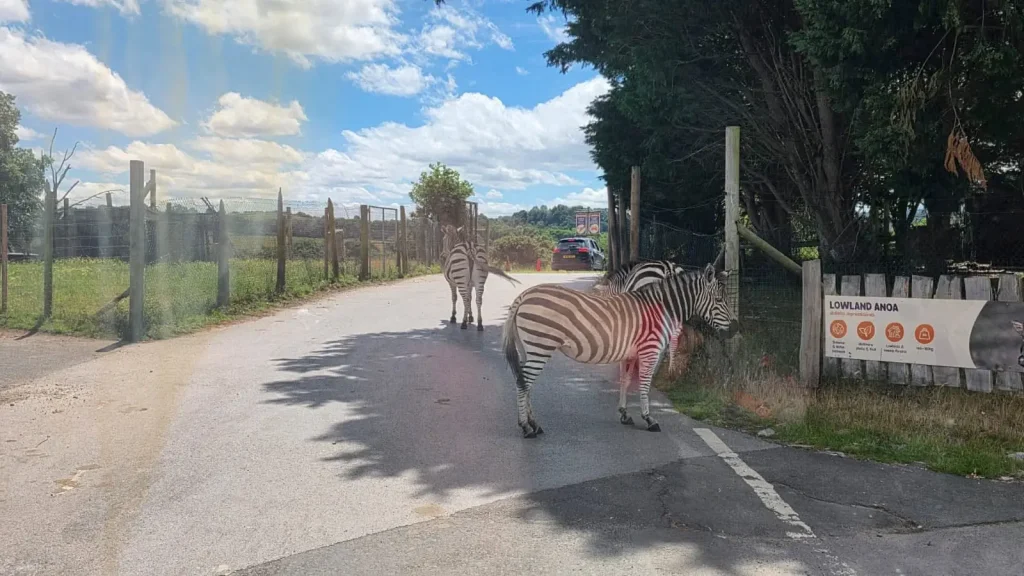
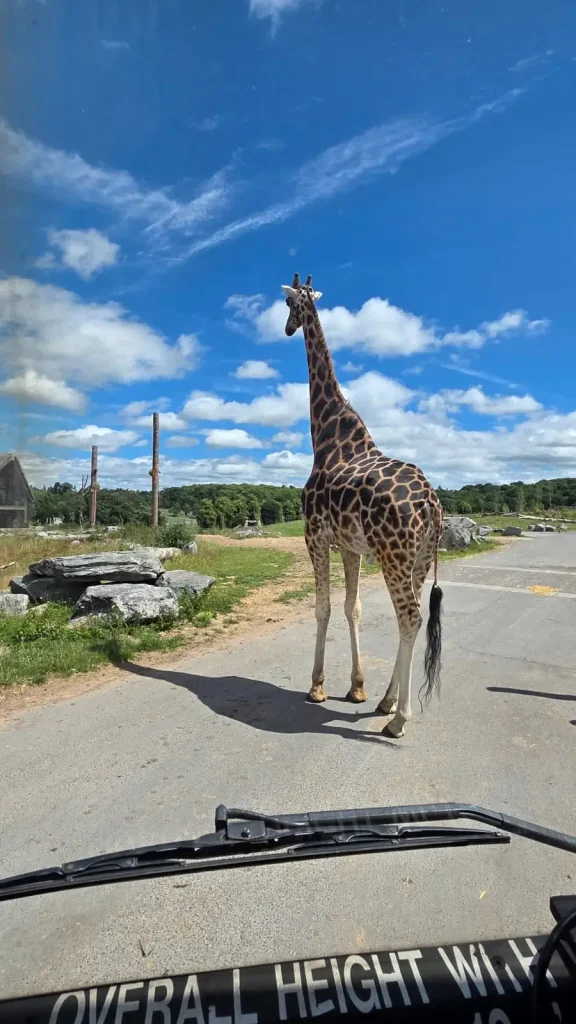
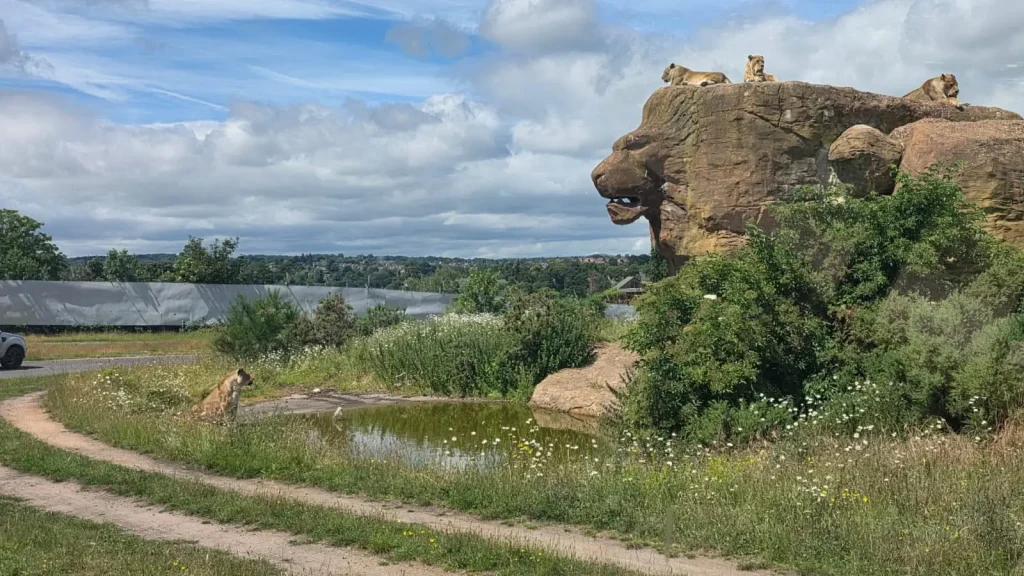
The photographs from the June course show exactly why this matters. Lions resting on a rock formation, a lioness walking alongside a track, giraffes standing close to the vehicle route and zebras crossing the road all highlight the kind of hazards that make this setting so different from a conventional work site.
A safari park driver may need to stop and wait for animals to move, adjust speed to avoid creating stress, hold position on a route, manoeuvre in confined areas and maintain control while passengers or visitors are watching the wildlife around them. None of this can be rushed.
The vehicle itself also forms part of the challenge. Safari trucks are large, high-sided and built for passenger movement through the park environment. Drivers need to understand visibility limitations, turning space, braking distance, height, weight and the way the vehicle responds at slow speed.
BORDA accredited training with practical vehicle familiarisation
The British Off Road Driving Association, often known as BORDA, provides recognised standards for off-road driver training. For organisations operating 4×4 vehicles, specialist off-road vehicles or mixed-surface routes, BORDA accredited training helps create a structured approach to safety and competence.
For West Midlands Safari Park, Beyond Driving combined BORDA-accredited training principles with practical vehicle familiarisation. This is an important distinction. Accreditation gives the course structure and quality assurance. Familiarisation makes it relevant to the vehicle, the site and the job role.
The aim is not simply to teach drivers how to complete an off-road exercise. The aim is to help them understand how to operate safely in the vehicles they will actually use, on the routes they will actually drive, with the real-world hazards they are likely to encounter.
That could include controlled low-speed driving, careful positioning, understanding blind spots, judging space around animals, managing gradients, planning turns and keeping the vehicle stable and predictable. In a safari setting, smooth driving is more than good technique. It supports safety, animal welfare and the visitor experience.
Training where the job actually happens
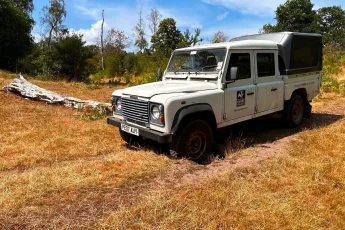
One of the most valuable elements of this type of course is that it takes place in the client’s own environment. The images from West Midlands Safari Park show animals close to the route, open internal roads, mixed surfaces, enclosure boundaries, signage and the specialist safari truck used by the park.
This kind of setting cannot be fully replicated on a generic training site. A controlled off-road area is useful for building technique, but site-specific familiarisation helps drivers understand the actual risks they will face.
At West Midlands Safari Park, the route may include areas where animals cross unexpectedly, places where visibility is restricted, spaces where vehicles need to pass carefully, and sections where drivers need to maintain a slow, steady pace. There are also practical considerations such as vehicle height, passenger areas, stopping points and interaction with other park traffic.
By training in the real environment, candidates can connect the course content directly to their everyday responsibilities. That makes the training more useful, more memorable and more relevant.
Calm vehicle control around unpredictable animals
The June photos make a strong point: animals do not follow a traffic plan.
A giraffe standing in the road, zebras pausing near a junction or a lioness moving beside a track can all change the driver’s immediate priorities. In this environment, the safest response is usually patience, observation and controlled decision-making.
Drivers need to avoid sudden inputs, harsh braking, hurried manoeuvres or unnecessary pressure. They need to understand the vehicle’s dimensions, keep safe clearance and be prepared to pause until the situation changes. They also need to communicate effectively with colleagues and follow the park’s procedures.
This is where professional familiarisation makes a real difference. Confidence is not about driving aggressively or pushing the vehicle’s capability. It is about knowing what the vehicle can do, understanding what it should not do, and making sensible decisions before a situation becomes difficult.
Supporting staff, visitors and animal welfare
For a safari park, good driver training has several benefits. It supports the staff operating the vehicles, helps protect visitors and contributes to a calmer environment for the animals.
A well-trained driver is more likely to plan ahead, drive smoothly, maintain safe separation and avoid unnecessary vehicle stress. This can help reduce wear and tear on specialist vehicles as well as lowering the risk of avoidable incidents.
For passengers, smooth and assured driving also improves the experience. A safari tour should feel exciting because of the wildlife, not because the vehicle is being driven unpredictably. When drivers are confident with their vehicle and surroundings, the journey feels safer, calmer and more professional.
For animals, predictable vehicle movement matters too. Slow, steady driving and sensible route positioning help reduce disturbance and support the park’s wider operational standards.
Bespoke training for unusual fleets and environments
Beyond Driving works with a wide range of organisations that operate vehicles away from ordinary road conditions. That includes utilities, conservation bodies, estates, emergency services, local authorities, telecoms teams and specialist visitor attractions.
West Midlands Safari Park is a particularly memorable example because the environment is so unusual, but the principle applies across many sectors. If staff are required to drive a specialist vehicle as part of their job, the training should match the vehicle, the site and the risk profile.
A standard course can provide the foundation, but bespoke delivery makes it relevant. That may mean adapting exercises for larger vehicles, working around operational routes, considering passenger safety, addressing animal or public interaction, or focusing on the specific manoeuvres staff need to perform.
Building consistency across the team
Another benefit of returning training is consistency. When different staff members have different levels of experience, it is easy for working habits to vary. Accredited and bespoke training helps create a shared standard.
This is especially important in an environment such as West Midlands Safari Park, where drivers may be operating near animals, visitors, colleagues and specialist infrastructure. A common approach to vehicle checks, route awareness, manoeuvring, speed control and hazard management helps everyone work to the same expectations.
By returning to deliver further training, Beyond Driving can help reinforce those standards and support staff development over time.
Professional safari park driver training from Beyond Driving
Beyond Driving was pleased to be back at West Midlands Safari Park delivering another bespoke BORDA and vehicle familiarisation course. The June training provided a valuable opportunity to continue supporting the park’s team with professional, site-specific instruction in one of the UK’s most distinctive driving environments.
From giraffes in the roadway to lions beside the route, the course showed exactly why familiarisation matters. Safari park driving requires more than basic vehicle handling. It requires judgement, patience, observation and a clear understanding of how the vehicle behaves in a live animal environment.
For organisations operating 4×4 vehicles, specialist tour vehicles or off-road fleets, Beyond Driving can deliver accredited and bespoke training designed around the realities of the job.
Whether your team works on a safari park, estate, conservation site, utility route, construction area or remote location, the right training helps drivers operate safely, confidently and professionally.