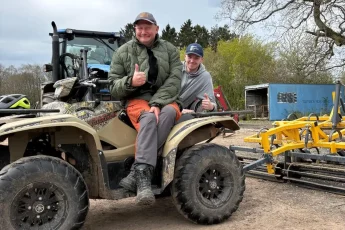
When an emergency response moves beyond the road network, the demands placed on both people and vehicles change immediately. For NHS Hazardous Area Response Teams, better known as HART teams, access can be complex, terrain can be unpredictable and every movement needs to be calm, controlled and operationally safe.
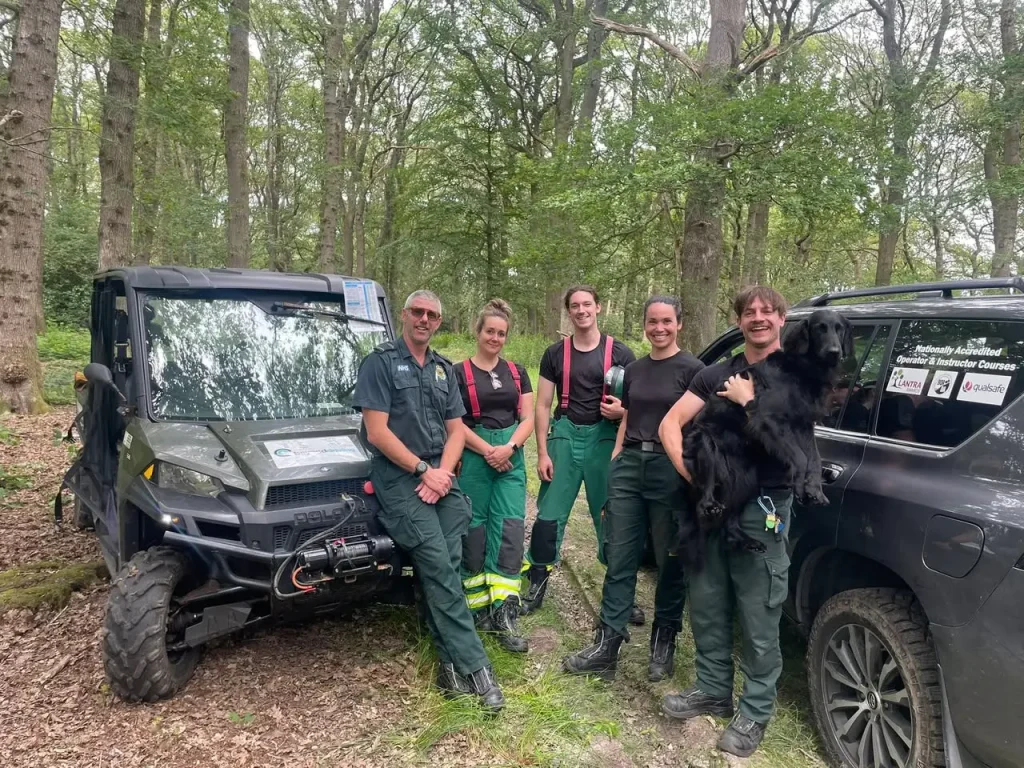
Beyond Driving has recently spent several days with the London Ambulance Service NHS Trust HART team at our Newbury training centre, delivering a programme of Lantra UTV training and Lantra Winch Operator training for new recruits.
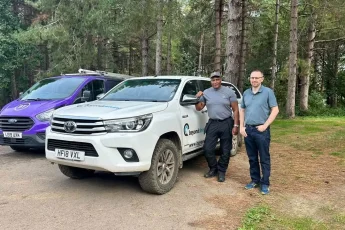
The training was designed to prepare candidates for real-world operational tasks where access may be off the beaten track. Using winch-equipped Toyota Hilux vehicles and a Polaris UTV, the course gave the team practical, hands-on experience in woodland terrain, uneven ground, recovery scenarios and safe vehicle control away from tarmac.
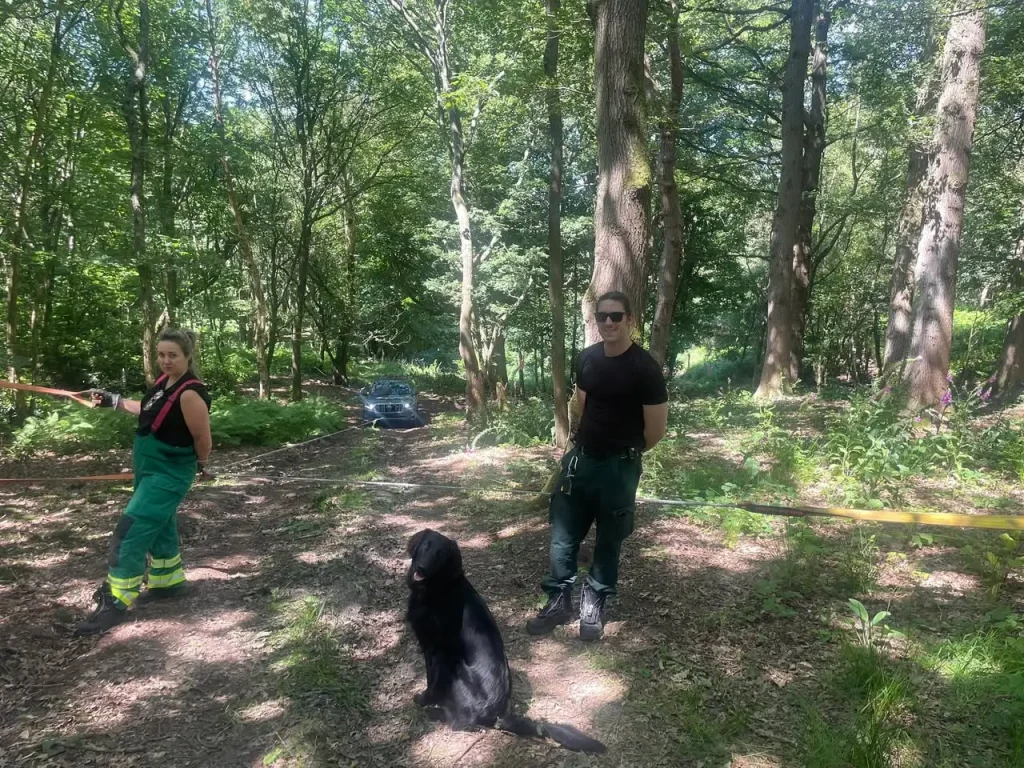
It was the end of a productive week with a highly engaged group, supported throughout by the Beyond Driving instructor team — and with Tarka, the company mutt, keeping a watchful eye over proceedings.
Why off-road training matters for NHS HART teams
HART teams are trained to work in environments that go beyond standard ambulance response. Their role can involve access to hazardous areas, difficult terrain, remote sites, major incidents, flood zones, industrial locations, woodland, rough tracks and other challenging operational settings.
In those situations, vehicle capability is only part of the answer. The more important factor is the operator’s judgement.
A Polaris UTV, 4×4 or winch-equipped vehicle can be an invaluable asset, but only when used by someone who understands its limits. Training helps HART personnel make informed decisions before they drive, during the approach and throughout any recovery or extraction task.
That includes knowing when to proceed, when to stop, when to reassess and when a different plan is needed.
Lantra UTV training for operational tasks
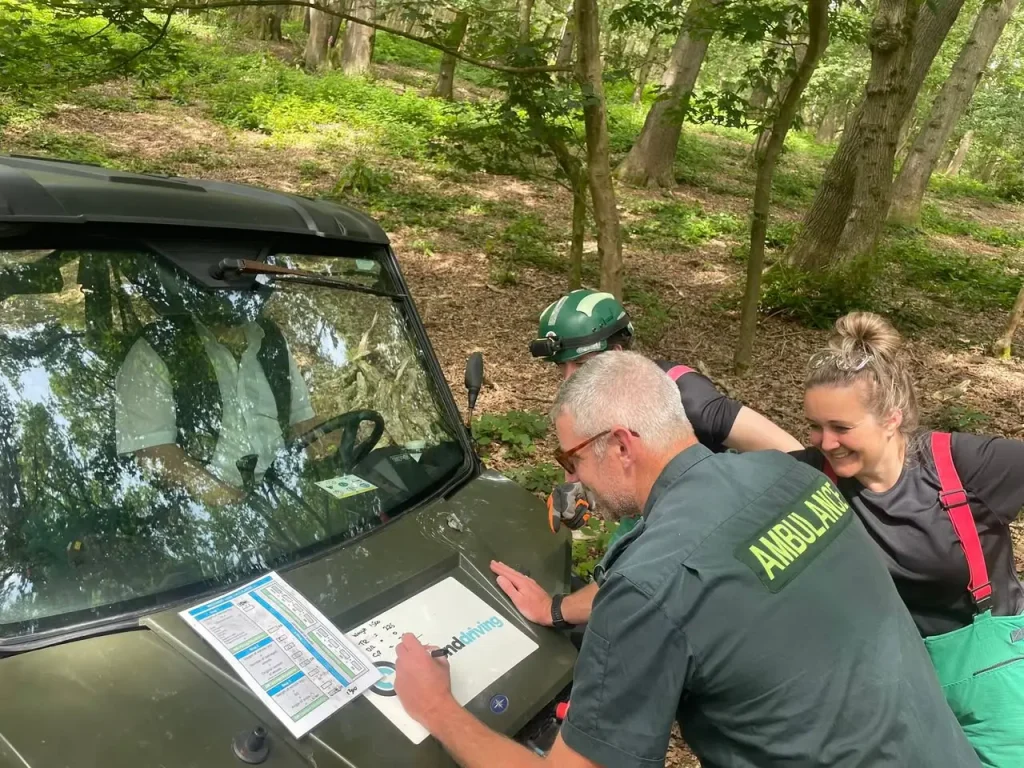
The Polaris UTV used during the London Ambulance HART training provided candidates with a realistic platform for working in confined, uneven and wooded environments. UTVs are highly capable machines, but their short wheelbase, responsive steering and off-road design require a different driving approach from a conventional road vehicle.
During the course, candidates developed their understanding of:
- pre-use checks and vehicle familiarisation
- safe loading and passenger awareness
- route assessment and terrain reading
- low-speed vehicle control
- braking and steering on uneven ground
- slope approach and descent techniques
- safe positioning in restricted woodland tracks
- use of communication between driver, banksman and team members
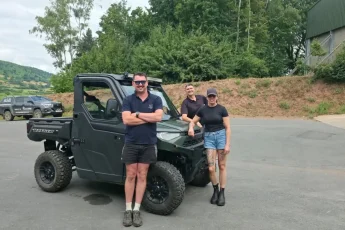
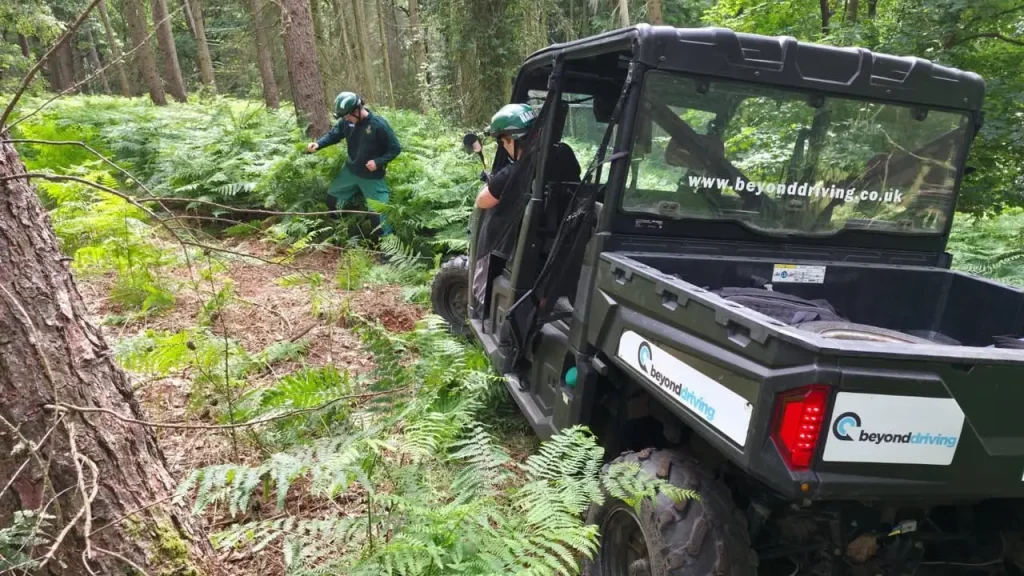
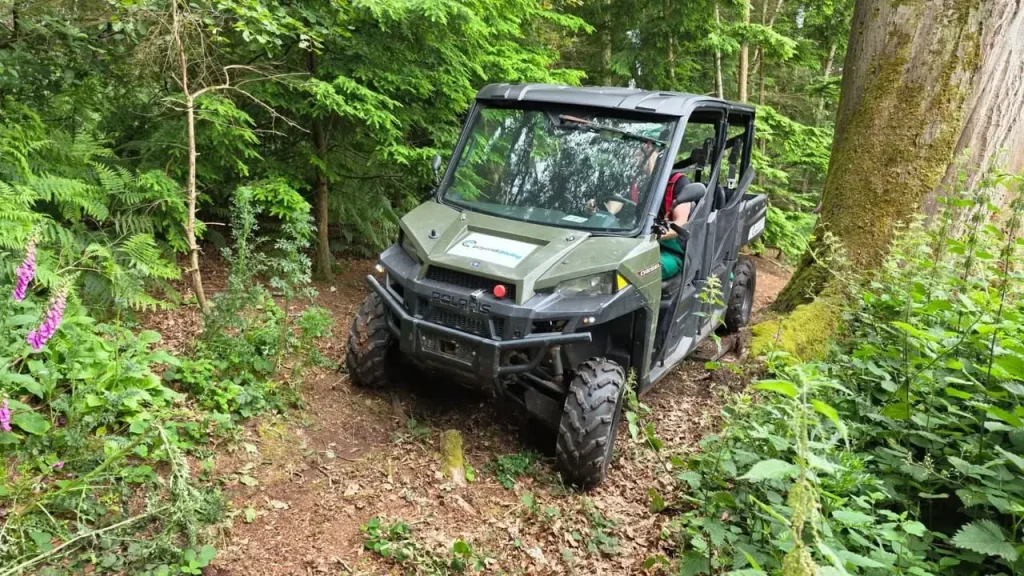
The photographs from the course show the Polaris being used on narrow woodland routes, in dense bracken and on sloping ground. These are exactly the types of conditions where good technique matters. The aim is not to push the vehicle to its limit, but to give operators the skill and confidence to use it safely and appropriately when the situation requires it.
Winch training: controlled recovery, not guesswork
Winching is one of those skills that can appear straightforward until it is needed under pressure. A winch can generate significant force, and incorrect use can quickly create risk to people, vehicles and equipment.
That is why Lantra Winch Operator training forms such an important part of emergency services vehicle capability.
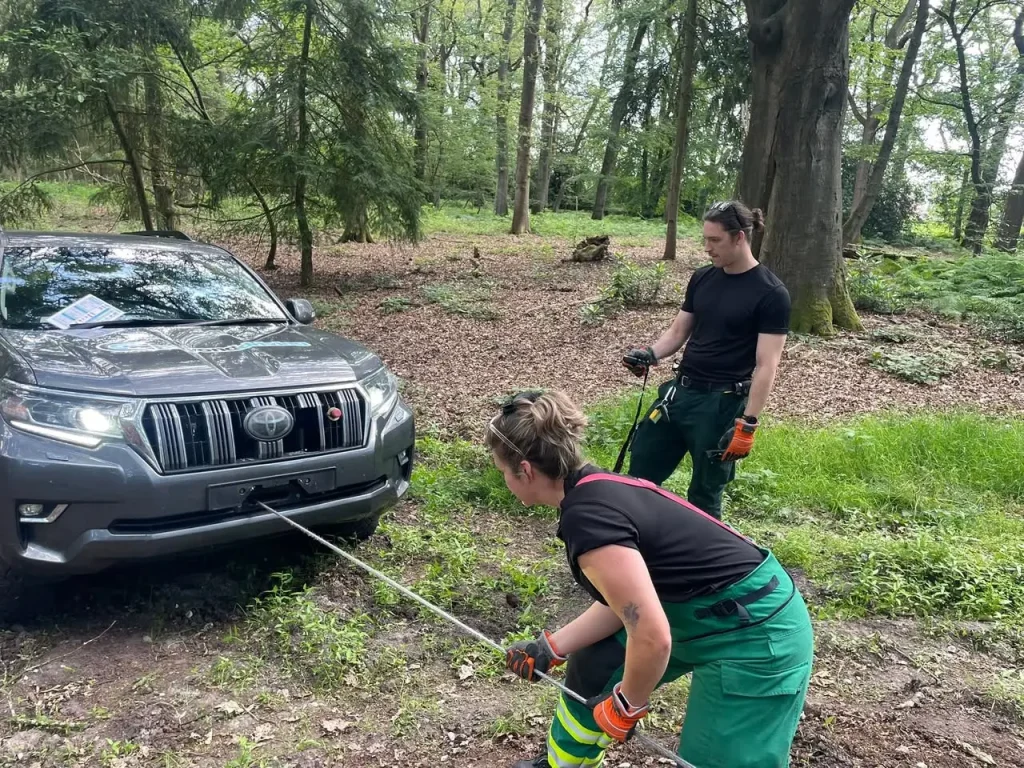
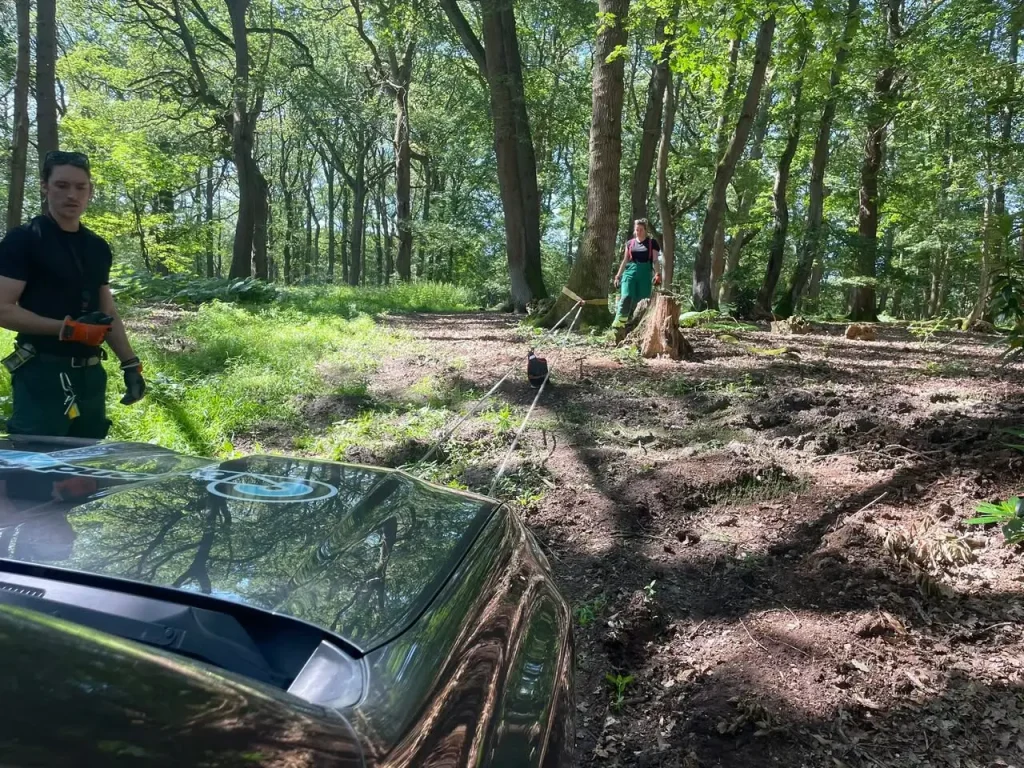
At Newbury, the London Ambulance HART candidates worked with winch-equipped vehicles in realistic woodland recovery scenarios. The training covered practical recovery planning, safe equipment handling and the importance of clear communication between team members.
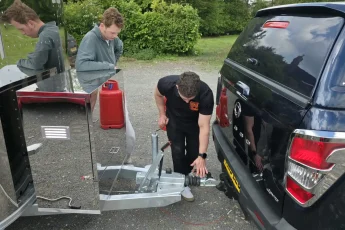
Candidates practised setting up recovery systems, identifying suitable anchor points, managing the winch line, maintaining safe working distances and understanding the forces involved. The images show the team working around both the Hilux and the Polaris, with instructors guiding the process and candidates actively involved in planning and execution.
The focus throughout was on safe, controlled recovery. A winch should never be treated as a quick fix. It is a technical tool that needs proper training, methodical thinking and respect for the risks involved.
Training in realistic terrain at Newbury
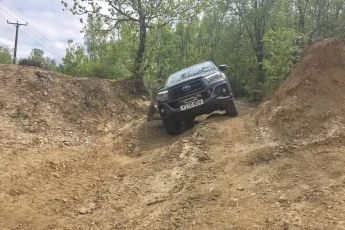
One of the strengths of the Beyond Driving Newbury facility is the variety of terrain available for specialist training. For this HART team course, candidates were able to work in woodland, on gradients, through narrow tracks and across uneven ground, giving them a much more realistic experience than a flat training yard could provide.
This matters because off-road driving is rarely about one isolated skill. It is about combining observation, planning, mechanical sympathy, vehicle control and team communication.
A driver may need to assess a route before committing. A banksman may need to guide the vehicle around trees or through confined spaces. A team may need to decide whether a winch recovery can be carried out safely or whether the situation needs a different approach.
By working through these scenarios in a controlled training environment, candidates build the experience they need before facing similar challenges operationally.
Vehicle familiarisation for emergency response teams
For HART teams, vehicle familiarisation is essential. Operational vehicles are not generic. Each one has its own layout, controls, weight, visibility, turning circle, ground clearance and recovery equipment.
During the London Ambulance HART training, Beyond Driving supplied winch-equipped Hilux vehicles and a Polaris UTV. This allowed candidates to experience both larger 4×4 vehicles and specialist off-road utility vehicles within the same training programme.
That combination is especially useful for emergency services personnel because different tasks may require different vehicles. A Hilux may be better suited to moving equipment, towing or accessing rough tracks, while a Polaris UTV may be more effective in tighter, softer or more restricted terrain.
Understanding those differences helps operators make better decisions in the field.
Building confidence without overconfidence
A key part of professional off-road training is helping candidates become more confident without becoming overconfident.
Confidence comes from knowing what the vehicle can do, understanding what the operator can do and recognising when conditions require caution. Overconfidence, by contrast, often comes from relying on the vehicle rather than making a proper assessment.
For HART teams, that distinction is vital. The safest operators are not necessarily the ones who drive through the most difficult obstacle. They are the ones who can assess risk, choose the right technique and protect the team, the vehicle and the wider operation.
Beyond Driving’s instructor-led approach supports that mindset. Training is practical and hands-on, but it is also structured around decision-making, risk awareness and professional standards.
Supporting HART instructor development
Beyond Driving has extensive experience working with NHS HART teams and emergency services clients. As well as delivering operator training, we also provide bespoke HART instructor development programmes for organisations that need to build internal training capacity.
Our bespoke HART instructors course is designed for teams that require a deeper level of off-road, UTV, 4×4 and recovery instruction capability. It can be adapted around the vehicles, operational requirements and training objectives of each organisation.
For NHS trusts and emergency response teams, this helps ensure that training remains relevant, consistent and connected to the real tasks personnel may be required to perform.
Professional training for specialist teams
The London Ambulance Service NHS Trust HART course at Newbury is a strong example of how specialist vehicle training should be delivered: with relevant vehicles, realistic terrain, accredited training standards and instructors who understand operational requirements.
Over several days, the candidates developed practical skills in UTV operation, off-road vehicle handling and winch recovery. They worked through realistic scenarios, used equipment in controlled conditions and gained experience that will support them when operating away from the road network.
For HART teams, this kind of training is not about adventure driving. It is about readiness, safety and capability.
When emergency teams need to reach people and places beyond normal access routes, the right training helps ensure they can do so with confidence, control and professionalism.
NHS HART team training with Beyond Driving
Beyond Driving provides specialist driver and vehicle training for NHS HART teams, emergency services, utilities, local authorities, conservation organisations and other professional operators.
Our training can include:
- Lantra UTV operator training
- Lantra 4×4 operator training
- Lantra winch operator training
- bespoke HART instructor training
- vehicle familiarisation
- operational off-road driving
- trailer handling and recovery skills
Training can be delivered at our Newbury facility, at other Beyond Driving locations or on client sites where suitable.
For NHS HART teams and emergency services organisations looking to develop safe, capable and accredited off-road vehicle operators, Beyond Driving can build a programme around your vehicles, your risks and your operational requirements.
Find out more:
https://www.beyonddriving.co.uk/driving-instructor-training/bespoke-hart-instructors-course/