Beyond Driving has been near Bradford delivering Lantra 4×4 Operator Training for members of the JBA Consulting team.
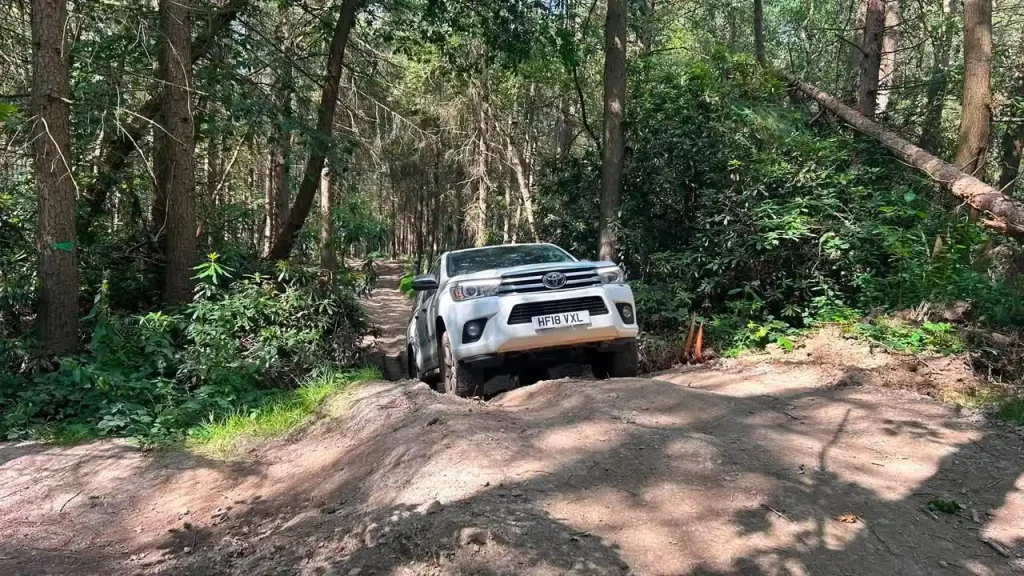
The practical course gave delegates the opportunity to develop their off-road driving skills across steep gradients, uneven woodland tracks, loose surfaces, deep ruts and challenging cross-axle terrain.
For organisations whose employees undertake environmental surveys, inspect watercourses, assess flood risks or visit remote project sites, reaching the work location can be a significant part of the task. Roads and surfaced access routes may end well before the survey point, leaving drivers to negotiate farm tracks, forestry routes, wet ground and uneven terrain.
Professional training helps drivers approach these conditions methodically rather than relying on everyday road-driving experience.
Supporting Environmental and Engineering Fieldwork
JBA Consulting works across environmental, engineering and risk-management disciplines, helping organisations and communities build resilience to flooding, drought and a changing climate. Its teams combine environmental, analytical, engineering and nature-based approaches across projects in the UK and internationally.
This type of work can require employees to travel beyond conventional roads to reach rivers, drainage assets, flood defences, monitoring equipment, construction sites and environmentally sensitive locations.
A four-wheel-drive vehicle may make access possible, but the vehicle alone does not remove the risk. Operators must still understand:
- whether a route is suitable for the vehicle;
- how ground conditions could affect traction;
- how to negotiate slopes and uneven terrain;
- when to stop and reassess the route;
- and when conditions make it safer not to proceed.
The ability to make a sound decision before committing the vehicle is every bit as important as the driving technique itself.
Developing Controlled Off-Road Driving Skills
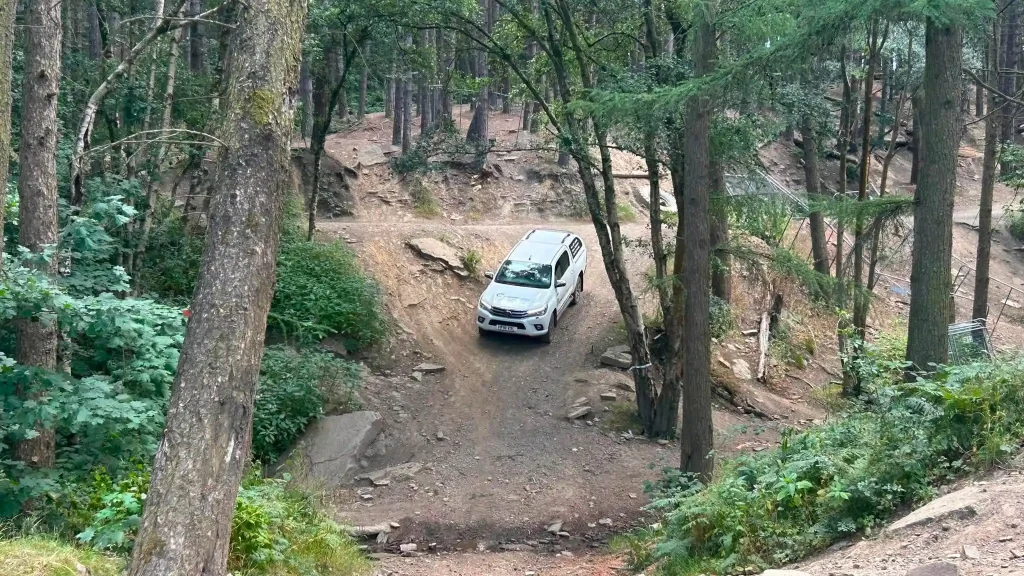
The Bradford-area training site provided varied terrain on which delegates could develop their skills progressively.
The course included practical instruction in areas such as vehicle checks, four-wheel-drive controls, route assessment, steering technique, speed control and the safe use of vehicle systems.
Delegates also practised negotiating:
- steep ascents and descents;
- loose and changing surfaces;
- deep ruts and hollows;
- uneven woodland tracks;
- cross-axle obstacles;
- restricted routes between trees;
- and sections where careful wheel placement was required.
Rather than using speed or momentum unnecessarily, drivers learn how to maintain slow, controlled progress and allow the vehicle’s traction systems, gearing and suspension to work effectively.
This measured approach can reduce the likelihood of vehicle damage, loss of control or the need for recovery.
Assessing the Route Before Driving It
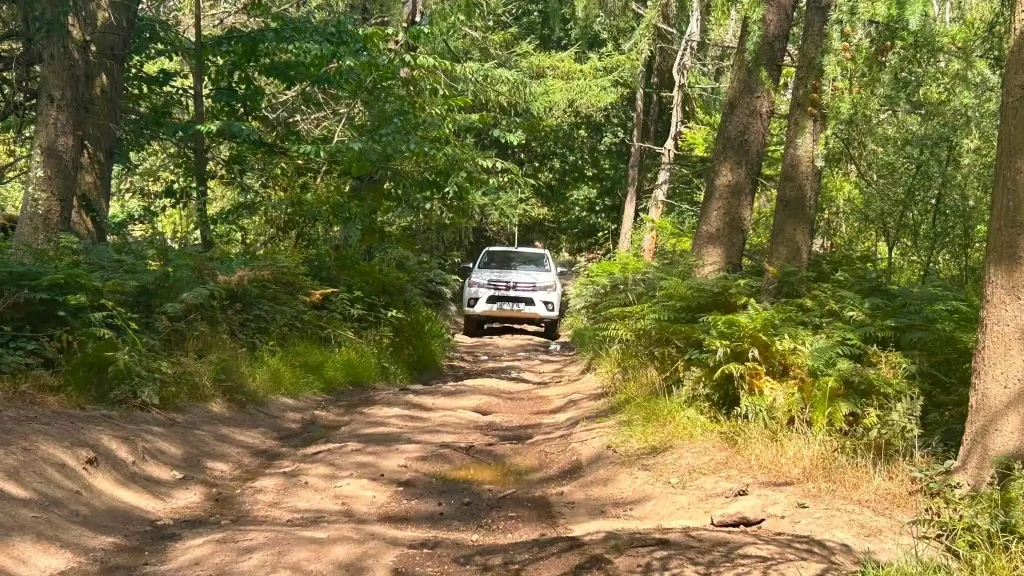
One of the most valuable habits taught during professional off-road training is to assess difficult terrain before attempting to cross it.
From the driving seat, it can be difficult to judge the depth of a rut, the severity of a drop or the position of an obstacle beneath the vehicle. Vegetation, standing water and changes in gradient can also obscure potential hazards.
Where there is doubt, the correct response may be to stop in a safe position, leave the vehicle and inspect the route on foot.
Drivers can then consider:
- the available ground clearance;
- the likely position of each wheel;
- approach, breakover and departure angles;
- the risk of grounding or damaging the underside;
- suitable escape routes;
- and whether an alternative route would be safer.
This process encourages deliberate decision-making and helps prevent drivers from becoming committed to terrain from which they cannot easily reverse.
Understanding Vehicle Limitations
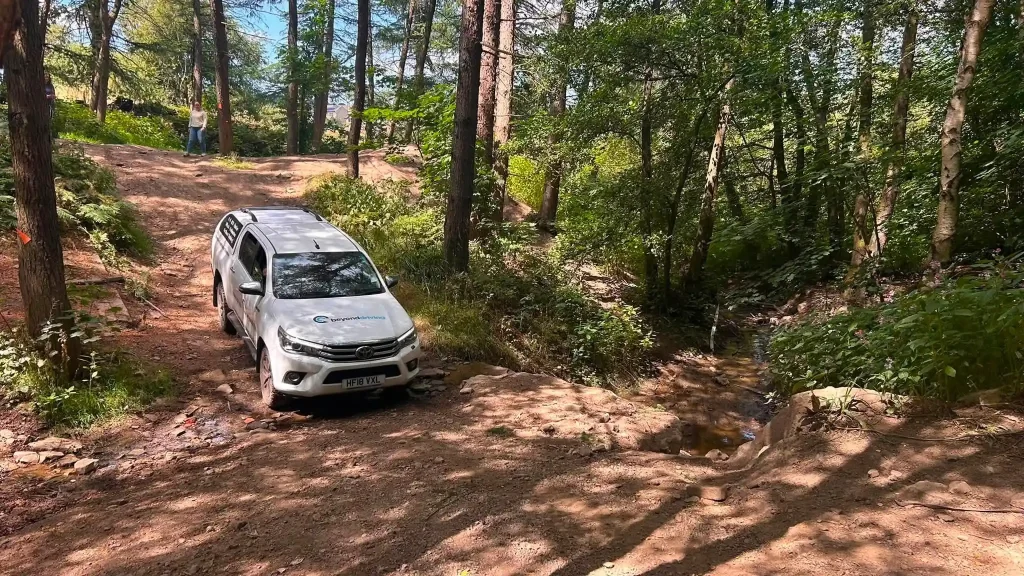
A capable 4×4 can provide access to difficult locations, but no vehicle is suitable for every route or every set of conditions.
Payload, tyres, ground clearance, wheelbase and the presence of tools or equipment can all affect how a vehicle behaves off road. A route that is manageable in dry weather may become unsafe following prolonged rain, while loose material can change considerably during repeated use.
Lantra 4×4 Operator Training helps drivers understand both the capabilities and the limitations of the vehicle they are using.
This includes recognising situations in which continuing may place the driver, passengers, vehicle or surrounding environment at unnecessary risk.
For environmental organisations, responsible route selection also helps reduce avoidable damage to habitats, verges, tracks and sensitive ground.
Why Road-Driving Experience Is Not Enough
A competent road driver may have little experience of situations where individual wheels lose traction, the vehicle tilts across a slope or the surface changes beneath the tyres.
On-road driving generally rewards smooth progress within a predictable road layout. Off road, the driver may need to move extremely slowly, constantly reassess the surface and alter the vehicle’s position to protect its underside and maintain traction.
Without suitable instruction, drivers may:
- approach obstacles too quickly;
- brake heavily on loose descents;
- select an unsuitable driving mode;
- follow existing wheel tracks without assessing them;
- or continue onto ground from which recovery may be difficult.
Structured operator training gives delegates the opportunity to experience these situations with an instructor present, rather than encountering them for the first time while working alone at a remote site.
Nationally Recognised Lantra Certification
The course delivered for JBA Consulting was completed to Lantra standards, providing delegates with nationally recognised certification.
Beyond Driving’s professional 4×4 course covers areas including relevant health and safety considerations, vehicle checks, 4×4 and all-wheel-drive technology, varied terrain, gradients, route planning, traction management and emergency procedures.
Accredited training also gives employers a consistent and documented way to demonstrate that operators have received appropriate instruction for work-related off-road driving.
4×4 Training Near Bradford and Across the UK
Beyond Driving delivers professional off-road driver training from locations across the UK, including established training provision in Yorkshire.
Courses can be arranged for environmental organisations, engineering consultancies, utilities, local authorities, emergency services, conservation teams and other employers whose personnel need to travel beyond surfaced roads.
Training can also be adapted around the vehicles, terrain and operational circumstances delegates are likely to encounter during their work.
Our Bradford-area facility provides access to demanding woodland terrain where drivers can develop practical skills in a controlled environment before applying them during real field operations.
Arrange Off-Road Training for Your Field Teams
Where employees drive 4×4 vehicles to access remote, rural or environmentally sensitive sites, appropriate training can improve safety, strengthen decision-making and help protect vehicles and equipment.
Beyond Driving provides Lantra-accredited 4×4 training for individuals and organisational teams throughout the UK.
Find out more about our off-road driving courses in Yorkshire or contact Beyond Driving to discuss training for your environmental, engineering or field-based workforce.