Sand Driving Training for Beach Teams: Why Real-World Conditions Matter
Driving on sand is unlike driving on tarmac, gravel, grass or even many conventional off-road sites. For council beach teams, coastal rangers, environmental staff and operators working on beaches, sand creates a set of challenges that can quickly expose gaps in vehicle control, judgement and confidence.
That is why Beyond Driving has been busy in Weston-super-Mare delivering Lantra UTV training for North Somerset Council, giving staff the opportunity to develop practical skills in the environment where they actually work.
With wide open sands, coastal access routes, dunes, soft patches, tidal considerations and public beach use all part of the operating picture, this was far more than a standard UTV course. It was professional vehicle training built around the real demands of the job role.
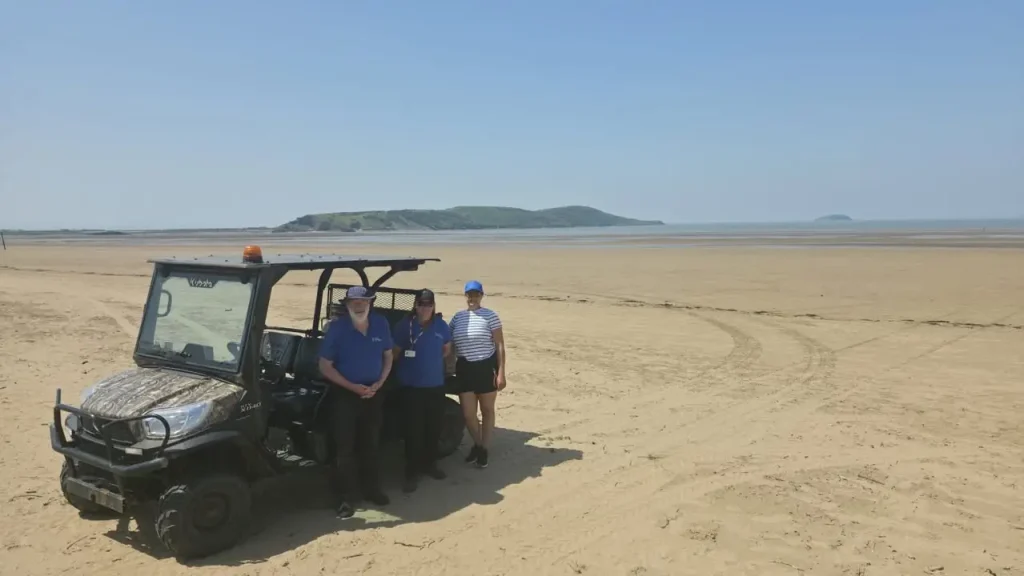
Training on the Beach at Weston-super-Mare
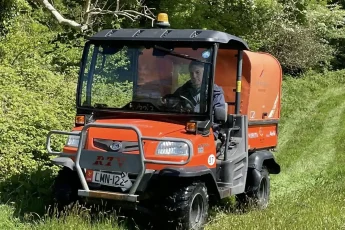
The recent course took place on the beach at Weston-super-Mare using a utility terrain vehicle suitable for the type of work carried out by local authority beach teams. The images from the day show a UTV operating across open sand, following defined beach routes and negotiating softer, uneven areas near the dunes.
This is exactly the kind of environment where trained decision-making matters.
A vehicle that feels stable and predictable on firm ground can behave very differently when the tyres begin to sink, the surface changes without warning, or the driver has to work close to posts, beach furniture, access tracks, pedestrians or other vehicles. Sand driving requires a smooth approach, good observation and an understanding of how the surface affects traction, steering, braking and momentum.
For North Somerset Council’s team, training in Weston-super-Mare meant the course could be linked directly to their day-to-day responsibilities. Rather than learning in an artificial setting and then trying to transfer those skills later, candidates were able to practise in the same coastal environment they are likely to encounter during operational duties.
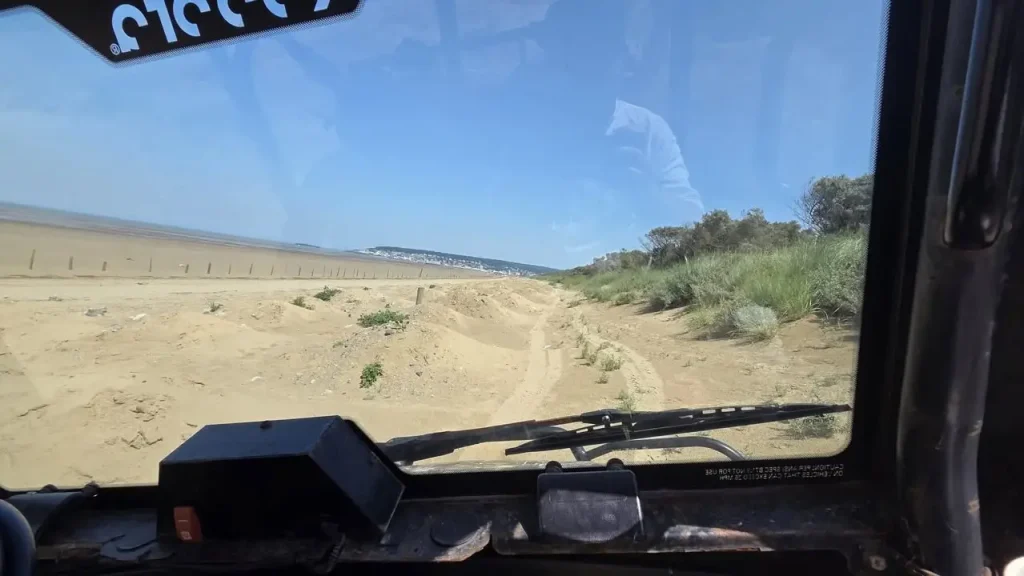
Why Sand Driving Needs Specific Training
Beach driving can look deceptively simple. A flat expanse of sand may appear open and forgiving, but the reality can be very different.
Sand changes constantly. It can be compact and supportive in one area, then soft, loose or rutted a few metres away. Weather, tides, vehicle traffic and public activity can all affect the condition of the surface. Drivers may also need to understand how to operate safely near dunes, access points, fencing, sea defences or areas used by the public.
Professional sand driving training helps drivers to understand:
- How to assess sand conditions before committing the vehicle
- How to maintain momentum without excessive speed
- How to avoid harsh steering, braking or acceleration
- How to reduce the risk of becoming stuck
- How to select appropriate routes across soft or variable ground
- How to operate safely in areas shared with pedestrians and other beach users
- How to recognise when conditions are not suitable for the vehicle or task
For local authority teams, this is not about recreational off-roading. It is about safe, controlled and work-related vehicle operation.
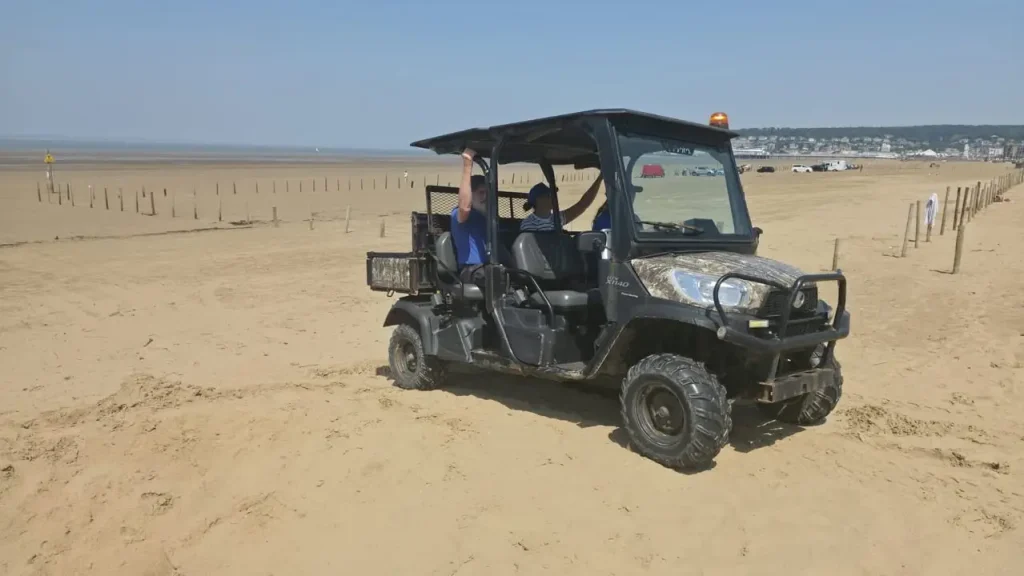
The Importance of Training in the Right Vehicle
One of the most valuable parts of any Beyond Driving course is the focus on training in either the actual vehicle being used by the client or a vehicle type that closely matches the job role.
For beach teams, a UTV can be an essential tool. It may be used for patrols, transporting equipment, accessing areas that larger vehicles cannot reach, supporting events, assisting with environmental work or helping staff move safely across large coastal sites.
However, UTVs have their own handling characteristics. They are not cars, vans or full-size 4x4s. Drivers need to understand their size, turning circle, visibility, ground clearance, load carrying limits, stability and braking behaviour.
Training in the relevant vehicle type helps candidates build confidence in the controls and limitations of the machine they will actually use at work. This is particularly important where the vehicle is being used on sand, slopes, ruts or uneven coastal terrain.
Training in the Actual Working Environment
Where possible, Beyond Driving believes training should reflect the environment in which candidates will operate. This is especially important for organisations whose teams work in specialist settings, such as beaches, nature reserves, farms, utilities sites, estates, construction areas or remote access routes.
A generic training location can teach core vehicle control, but a real working environment adds context.
At Weston-super-Mare, the training allowed candidates to consider practical factors such as route planning, beach access, softer sand near dunes, visibility across open spaces, interaction with public areas and the need to keep the vehicle controlled at all times.
This approach helps turn training from a tick-box exercise into something that genuinely supports safer working.
Lantra UTV Training for Professional Operators
Beyond Driving delivers Lantra UTV training for organisations whose staff need to operate sit-in ATV or utility terrain vehicles as part of their job. Lantra training provides recognised certification and gives employers a structured way to demonstrate that staff have received appropriate instruction.
For councils and public sector teams, this can be especially important. Vehicles used on beaches or off-road environments may be part of routine operations, but they still carry risk. Employers need to show that drivers have been trained, assessed and made aware of safe operating procedures.
A Lantra UTV course can cover areas such as:
- Pre-use checks
- Safe starting and stopping
- Vehicle familiarisation
- Steering and manoeuvring
- Understanding gradients and uneven ground
- Load awareness
- Risk assessment
- Safe operating speeds
- Environmental awareness
- Recovery considerations and what to do if the vehicle becomes stuck
When delivered in a beach environment, these principles can be applied directly to sand driving and coastal operations.
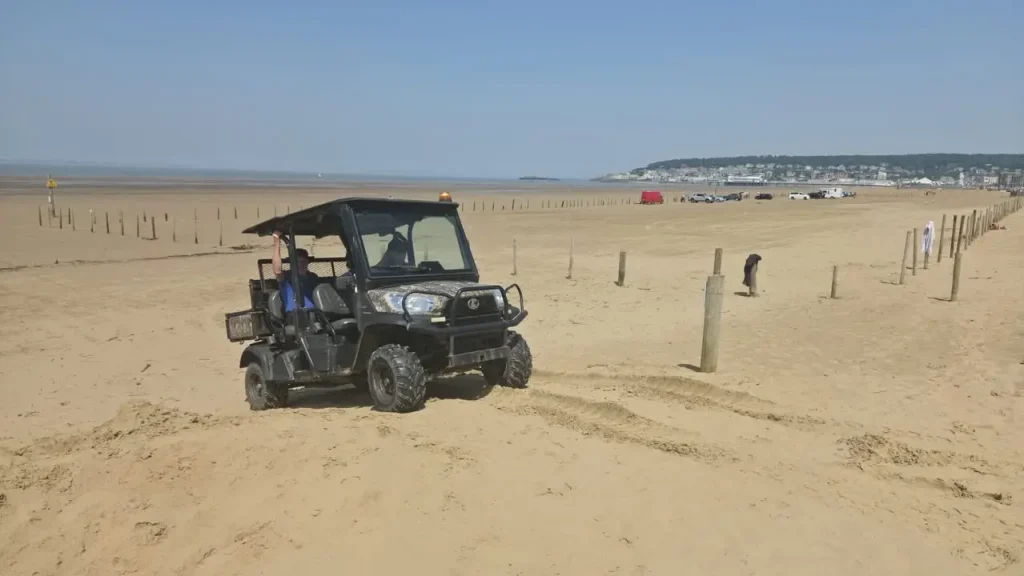
Supporting Councils, Beach Teams and Coastal Operators
North Somerset Council’s training is a good example of how off-road and UTV training can be adapted for specific public sector roles.
Beach teams may be required to work in busy, exposed and fast-changing environments. They may need to cover large areas, access locations quickly, carry tools or equipment, or support public safety and maintenance operations. In those situations, confident and competent vehicle use matters.
Beyond Driving works with councils, utilities, wildlife organisations, emergency services, government agencies and commercial operators across the UK. The common theme is that staff need practical, relevant training that reflects the vehicles they use and the environments they face.
For coastal authorities and beach operators, sand driving training can help reduce risk, improve driver confidence and support a more professional approach to vehicle use.
Confidence, Compliance and Safer Working
Good training is not only about learning how to move a vehicle from one point to another. It is about knowing when to continue, when to stop, when to change route and when conditions are not suitable.
On a beach, that judgement can be vital.
Drivers need to be able to read the surface, understand the vehicle’s limits and avoid creating unnecessary risk for themselves, their colleagues or members of the public. They also need to be aware that sand driving can cause avoidable damage to vehicles if carried out incorrectly, particularly through excessive wheelspin, poor momentum control or repeated attempts to force a vehicle through unsuitable ground.
By training in real conditions at Weston-super-Mare, North Somerset Council’s team gained practical experience that is directly relevant to their work.
Bespoke UTV and Sand Driving Training from Beyond Driving
Beyond Driving provides professional off-road, UTV, ATV, 4×4, trailer and winch training for organisations throughout the UK. Courses can be delivered at Beyond Driving training locations or, where suitable, on client sites and operational environments.
For teams working on beaches, coastal sites or other specialist terrain, this flexibility is particularly useful. It allows training to focus on the genuine risks and tasks faced by the team, rather than relying on a generic course that may not reflect the job.
The recent Lantra UTV training for North Somerset Council at Weston-super-Mare shows the value of this approach. Candidates were able to train in an appropriate vehicle, on the surface they use for work, with instruction tailored to the real demands of beach operations.
For councils, estates, environmental organisations and coastal operators, that combination of recognised training and real-world relevance can make a significant difference.
Need Sand Driving or UTV Training for Your Team?
If your staff operate UTVs, ATVs or 4×4 vehicles on beaches, coastal sites, dunes, soft ground or other off-road environments, Beyond Driving can deliver professional training tailored to your organisation.
Our instructor team can help you build safer, more confident operators through practical, job-focused training backed by recognised certification.