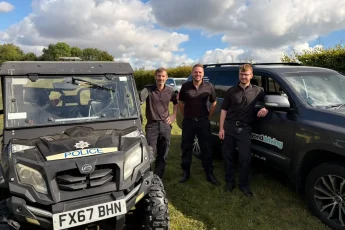
When emergency response teams are called to incidents in remote or difficult-to-access locations, getting personnel and specialist equipment to the scene can present challenges long before the emergency itself is reached.
Woodland tracks, muddy slopes, uneven ground and restricted access routes can all complicate an operation. Specialist vehicles, including Polaris Utility Task Vehicles (UTVs) and four-wheel-drive vehicles, provide valuable off-road capability. However, the ability to negotiate challenging terrain is only one part of the equation.
What happens if the vehicle cannot continue? And, just as importantly, how will the team get back out?
These are fundamental questions in off-road recovery planning, where decisions made before entering difficult terrain can have a considerable impact on operational safety.
Beyond Driving has recently been working with London Ambulance Service NHS Trust, delivering specialist Polaris off-road training and winch refresher courses for its Hazardous Area Response Team (HART) at our training facilities near Newbury, Berkshire.
The woodland environment provided an opportunity to explore the relationship between vehicle handling, terrain assessment, recovery planning and team communication.
Off-Road Access Is Only Half the Journey
For emergency services, access to a casualty or incident location may be a priority, but a successful operation must also consider how personnel, equipment and vehicles can leave the area safely.
This is particularly important when operating away from established roads.
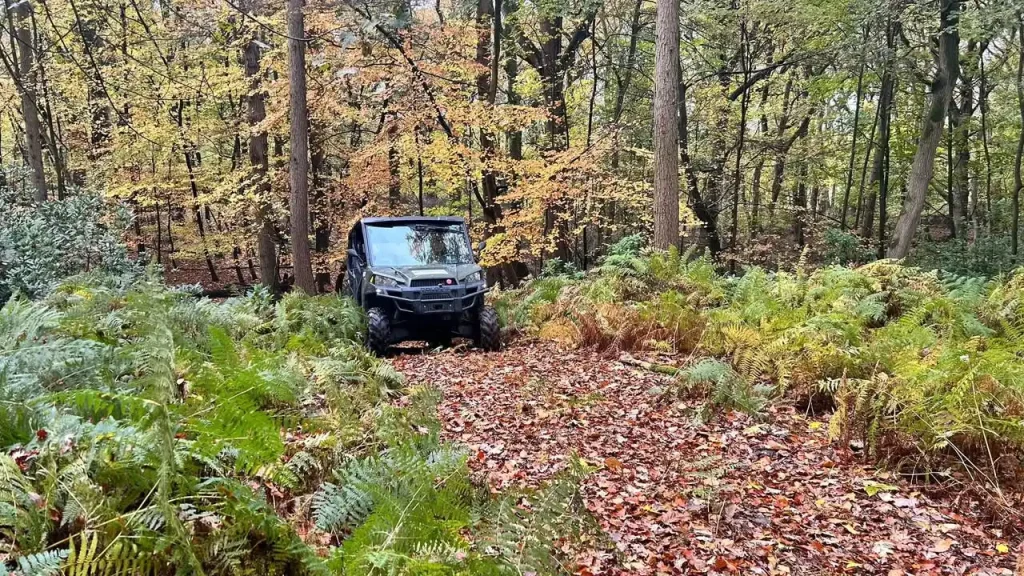
A woodland track that initially appears manageable can present several hazards:
- Steep gradients where traction changes between ascent and descent.
- Wet leaves, exposed roots and loose soil that reduce available grip.
- Deep ruts and uneven surfaces that increase the risk of grounding or instability.
- Restricted turning areas that make reversing or changing direction difficult.
- Soft ground that deteriorates following repeated vehicle movements.
- Limited opportunities to position another vehicle safely if recovery becomes necessary.
These conditions require operators to think beyond the immediate obstacle.
Before committing to a route, a competent driver should consider whether the vehicle can complete the intended journey, where it could safely stop and what options would remain if conditions prevented further progress.
The safest decision may sometimes be to select an alternative route, reposition the vehicle or continue on foot where operational circumstances permit.
This approach reflects the Health and Safety Executive’s guidance on workplace transport risk assessment, which emphasises the importance of assessing the operating environment, the suitability of vehicles and the actions of those using them.
Reading the Terrain: Lessons from the Newbury Training
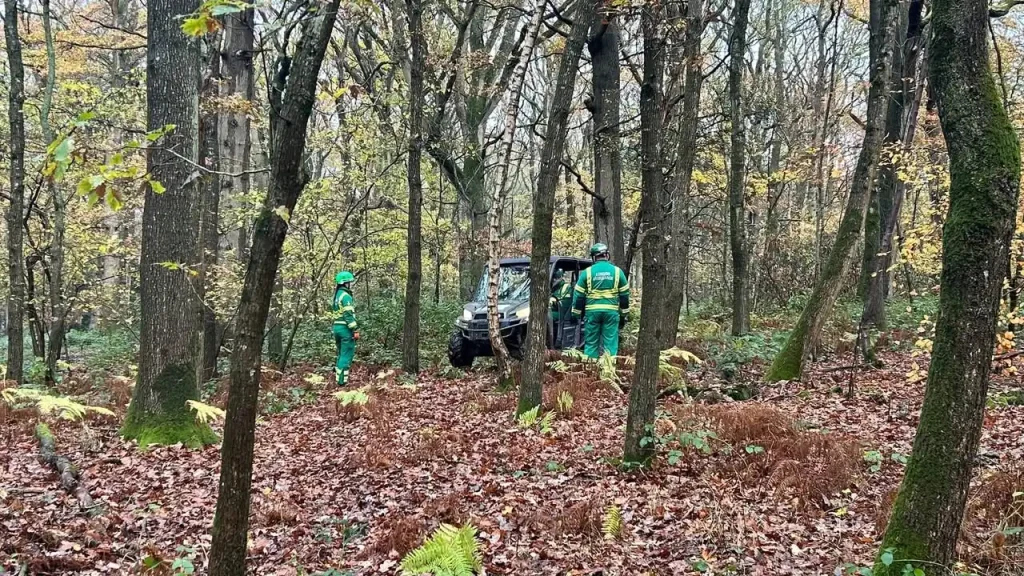
During the recent London Ambulance HART training near Newbury, the Beyond Driving instructor team worked with personnel operating Polaris UTVs through wooded terrain featuring narrow tracks, gradients, muddy sections and uneven surfaces.
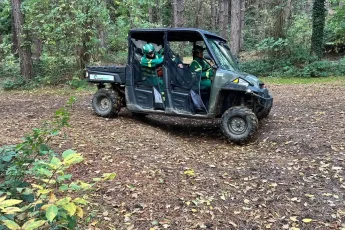
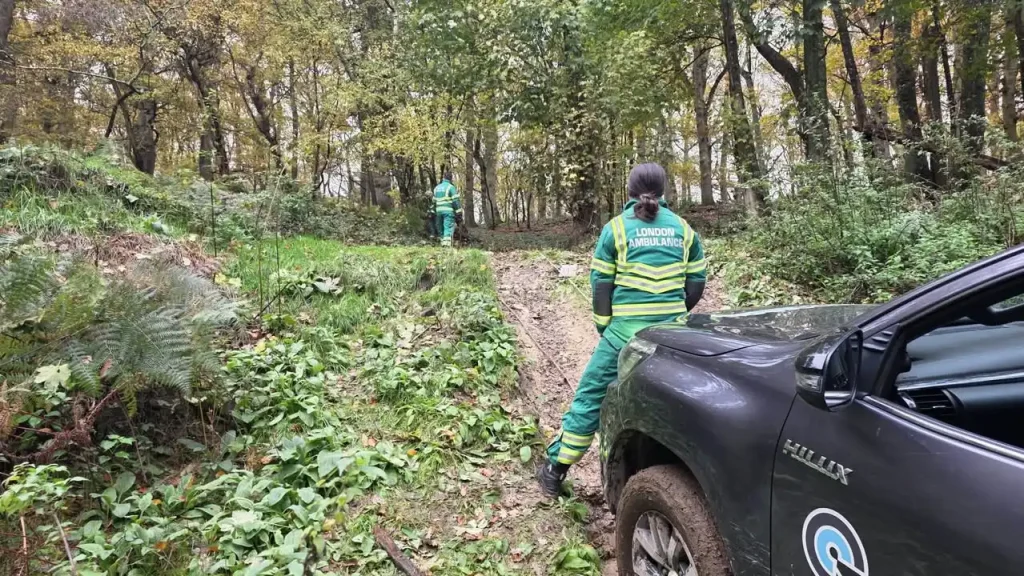
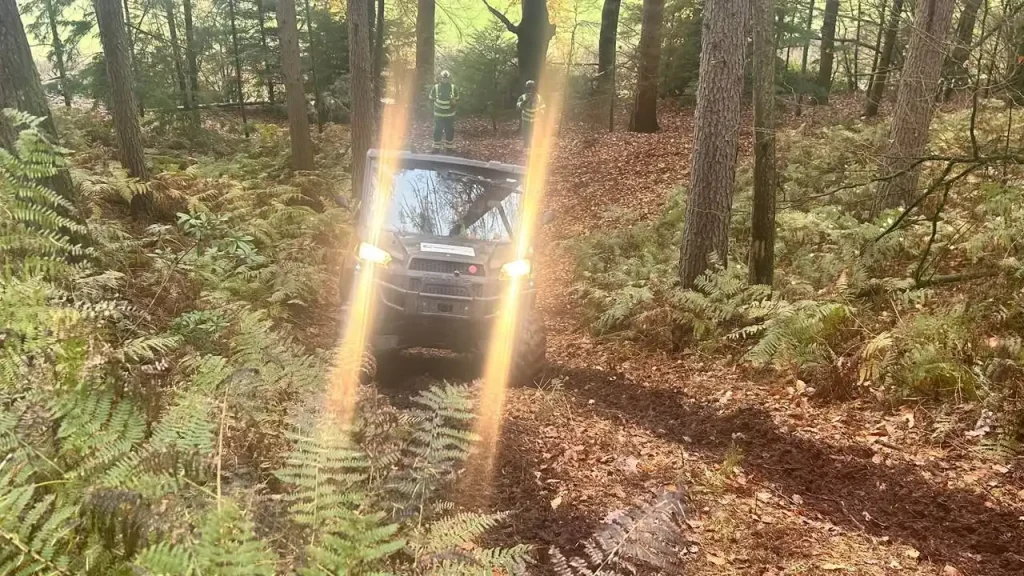
The photographs from the training show the Polaris negotiating a muddy incline, working between trees and travelling through sections of woodland where careful vehicle positioning is essential.
These environments demonstrate why off-road driving requires considerably more than simply selecting four-wheel drive and proceeding.
Drivers need to understand how ground conditions affect traction, how the vehicle responds to changes in gradient and how to maintain control without unnecessarily increasing the risk of becoming stuck.
A particularly important skill is recognising when to stop and assess a section of terrain before attempting it.
From behind the wheel, it can be difficult to judge the depth of a rut, the stability of the ground or the severity of a change in gradient.
By taking the time to assess the intended route, operators can make informed decisions about whether to proceed and how best to negotiate an obstacle.
For emergency response personnel, this judgement is just as important as the vehicle’s technical capabilities.
Beyond Driving’s ATV and UTV operator training develops these practical driving skills alongside terrain awareness, vehicle familiarisation and safe operating procedures.
Planning a Recovery Before It Becomes Necessary
One of the most important principles of professional off-road operation is that vehicle recovery should never be treated solely as an afterthought.
Winching equipment can provide an effective means of recovering a vehicle from difficult terrain, but the presence of a winch does not automatically make a challenging route safe.
Indeed, an incorrectly planned recovery can create hazards that are potentially more serious than the original situation.
This is why recovery planning should begin before the vehicle enters an area where traction, access or stability could become problematic.
Operators need to understand the recovery capabilities and limitations of their vehicles, together with the practical considerations involved in positioning recovery equipment.
Questions include whether suitable recovery points are available, whether a safe recovery direction can be established and whether the surrounding terrain permits personnel to work without unnecessary exposure to risk.
Just as importantly, operators must recognise situations where attempting a recovery would be unsafe and additional specialist assistance may be required.
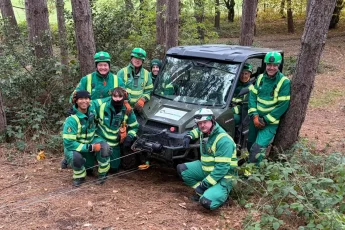
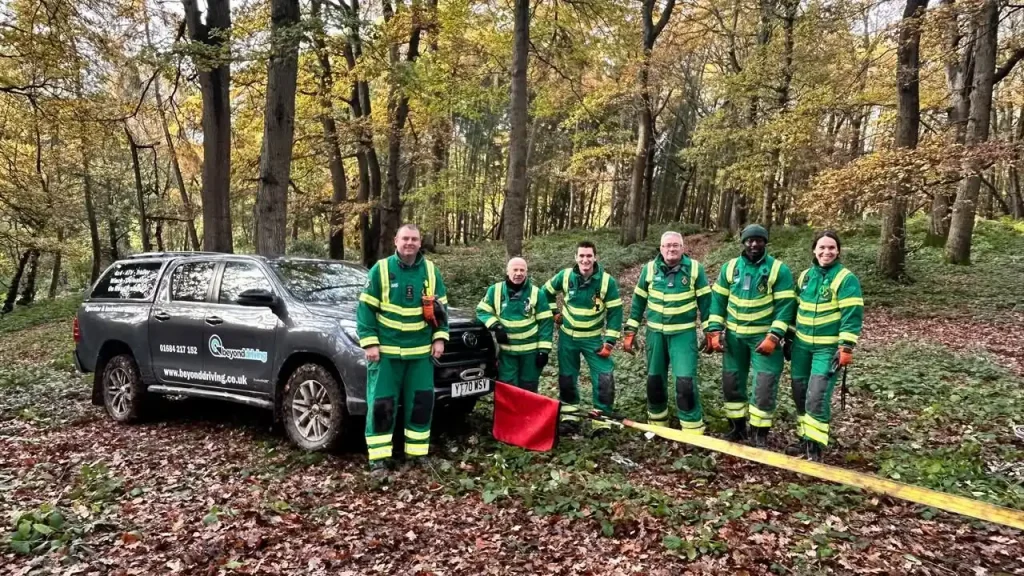
At Newbury, the London Ambulance HART winch refresher training included practical work in woodland conditions, using recovery equipment and winch-equipped vehicles.
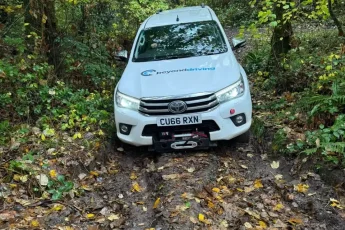
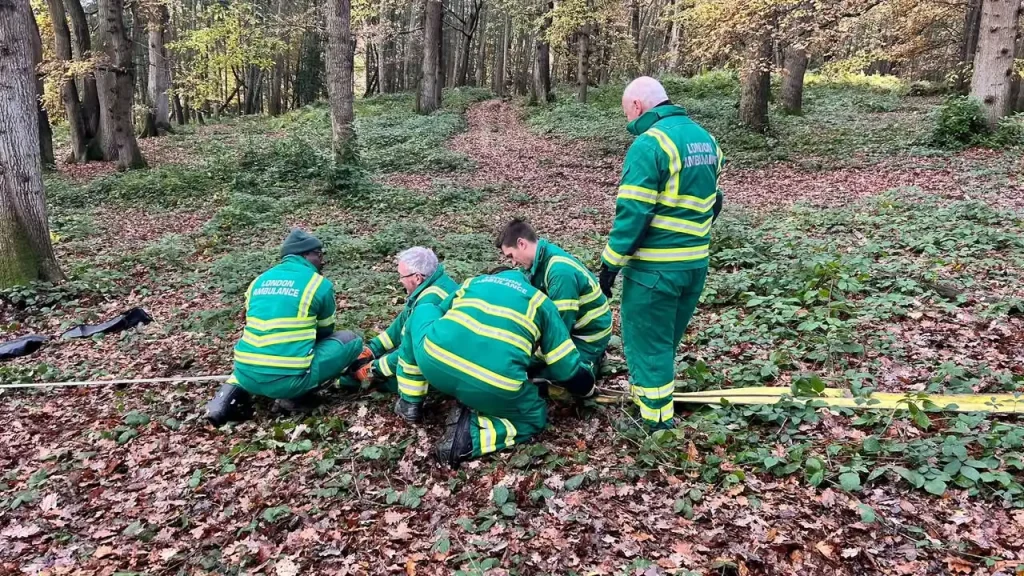
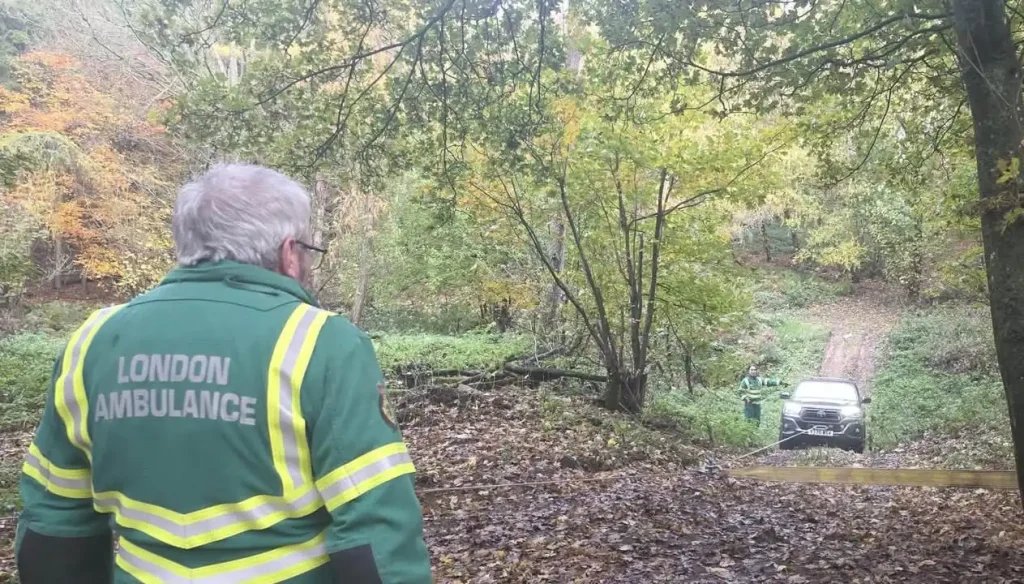
The photographs show team members working together around recovery straps and equipment, alongside a Beyond Driving Toyota Hilux positioned on a woodland track.
These practical scenarios help reinforce the importance of preparation, appropriate equipment selection and controlled recovery procedures.
Our dedicated Winch Operation Training courses address the technical and safety considerations involved in professional vehicle recovery.
Safe Vehicle Recovery Depends on Teamwork
Off-road recovery is rarely a task that should be approached by a driver working in isolation.
Where several people are involved, effective communication becomes an essential safety measure.
The driver may have a limited view of the surrounding terrain or recovery equipment. Other personnel may be required to assess the situation, monitor vehicle movement or provide guidance from a suitable safe position.
Everyone involved must understand their responsibilities, the agreed communication arrangements and when an operation must be stopped.
During winching, additional hazards can arise from equipment under tension, vehicle movement and the potential failure of recovery components.
Correctly established exclusion zones, safe positioning and clear communication are therefore fundamental to controlling risk.
The Newbury photographs showing London Ambulance personnel working together with recovery equipment provide a useful illustration of this team-based approach.
For HART personnel, these principles have particular relevance.
According to London Ambulance Service’s description of its Hazardous Area Response Team, specialist paramedics are trained to deliver care in complex, hazardous and difficult-to-reach environments, often working alongside other emergency services.
Their role demands coordinated decision-making across a wide range of challenging situations.
The same principle applies to specialist vehicle operations: a safe outcome depends not simply on what the vehicle can do, but on how effectively the people operating it work together.
Why Polaris Driving and Winch Training Belong Together
Polaris UTVs and larger four-wheel-drive vehicles have different operating characteristics, advantages and limitations.
A Polaris UTV can offer access along narrower routes and through areas where a conventional pickup may be less suitable. However, its dimensions, stability characteristics, loading arrangements and handling require specific operator knowledge.
A larger four-wheel-drive vehicle, such as a Toyota Hilux, may provide different carrying and recovery capabilities, but also presents its own challenges in confined or unstable terrain.
Understanding these differences helps teams select suitable vehicles for the task and recognise the limits of each platform.
It also reinforces why off-road driving competence and recovery knowledge should be considered together rather than as entirely separate disciplines.
A driver who understands the principles of vehicle recovery may be better equipped to recognise situations in which continuing would create unnecessary risk.
Equally, a trained winch operator who understands vehicle behaviour and terrain conditions is better placed to appreciate the wider considerations involved in a recovery.
Beyond Driving’s specialist training brings these disciplines together through practical exercises, allowing delegates to develop vehicle handling, assessment and recovery skills in realistic environments.
Maintaining Competence Through Refresher Training
For personnel who use specialist vehicles as part of their operational responsibilities, initial training provides an important foundation. However, practical skills need to be maintained.
Operators may not encounter particularly challenging terrain or need to use winching equipment during every deployment.
As a result, there can be lengthy intervals between opportunities to apply some of the more demanding techniques.
Refresher training gives experienced personnel an opportunity to revisit these skills, review operating procedures and practise decision-making under controlled conditions.
It also provides an opportunity to address changes to vehicles, equipment and organisational requirements.
The importance of appropriate training is reflected in the Provision and Use of Work Equipment Regulations 1998 (PUWER). These regulations require employers to ensure that work equipment is suitable, properly maintained and used by people who have received adequate information, instruction and training.
Beyond Driving regularly works with emergency response organisations to deliver specialist training designed around their vehicles, equipment and operational requirements.
Our ongoing work with London Ambulance HART teams is an example of this approach, with practical Polaris and winch refresher training helping experienced personnel maintain the skills needed for demanding off-road environments.
You can also read about our earlier NHS HART training programme at Newbury, which combined UTV operation with practical winch training.
A Wider Lesson for Organisations Operating Off Road
Although the recent Newbury training involved specialist ambulance personnel, the underlying lessons apply to many other sectors.
Fire and rescue services, utilities, forestry teams, environmental organisations and infrastructure contractors all operate vehicles in locations where road access is limited and recovery options may be restricted.
For these organisations, effective off-road planning means considering the whole task rather than simply the journey to the worksite.
That includes understanding the terrain, selecting appropriate vehicles, maintaining operator competence and ensuring suitable arrangements are in place if conditions change.
Good planning can reduce the likelihood of incidents developing into more complicated recovery situations, helping to protect personnel, equipment and the wider operation.
Beyond Driving: Preparing Teams for the Whole Operation
The recent London Ambulance HART training near Newbury demonstrates an important principle of specialist off-road vehicle operation.
Successfully reaching a difficult location is only part of the challenge.
Operators must also understand the limitations of their vehicles, recognise when conditions are becoming unsafe and know what arrangements are available should recovery become necessary.
By combining practical vehicle handling with recovery planning, technical knowledge and effective team communication, organisations can develop a more complete approach to off-road operational safety.
At Beyond Driving, we provide specialist off-road training for first response units, alongside professional Polaris UTV, 4×4 and winch operator courses for organisations throughout the UK.
Whether your team requires initial operator training, refresher instruction or a bespoke programme covering specialist vehicles and recovery equipment, our instructors can develop practical training around your operational requirements.
To discuss off-road driver training or vehicle recovery courses for your organisation, contact Beyond Driving or call 01684 217152.