Coastal 4×4 operator training for real-world telecoms access
Beyond Driving is still near Lossiemouth in Moray, delivering Lantra 4×4 Operator Training for BT staff who are required to drive off road as part of their job role.
This latest course took place in a very different environment from many inland 4×4 training locations. The attached images show a mixture of sandy tracks, coastal dunes, scrubland, narrow trails and open terrain close to the Moray coast. It is a landscape that demands far more than ordinary road driving confidence. For telecoms teams, where access to remote sites can be part of keeping essential communications infrastructure working, the ability to drive safely and responsibly across varied ground conditions is an operational skill.
Rather than simply teaching drivers how to get a 4×4 through difficult terrain, the course focuses on judgement, planning and control. That distinction matters. In coastal environments, a poor driving decision can lead to loss of traction, vehicle damage, environmental impact or unnecessary recovery. Professional training gives drivers the confidence to assess the ground before committing, select the correct approach and understand when not to proceed.
Why coastal terrain needs a different approach
Driving off road near the coast presents its own set of challenges. Sand, loose tracks and dune edges behave very differently from mud, rock or grass. Ground that appears firm can quickly become soft under load, while small changes in gradient can affect traction and vehicle stability.
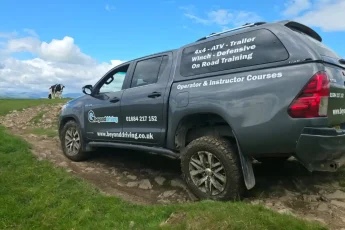
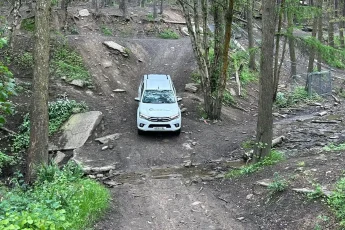
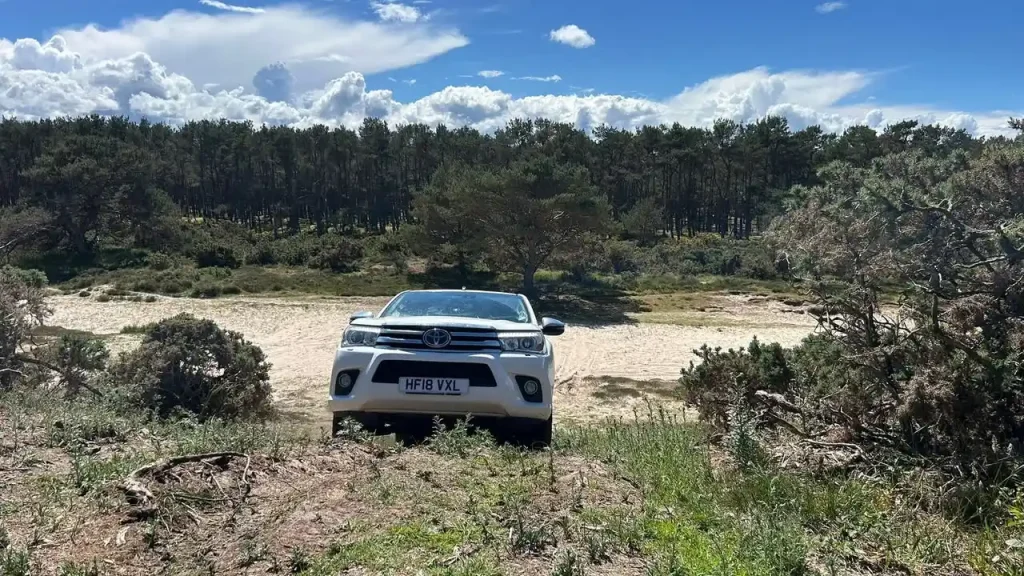
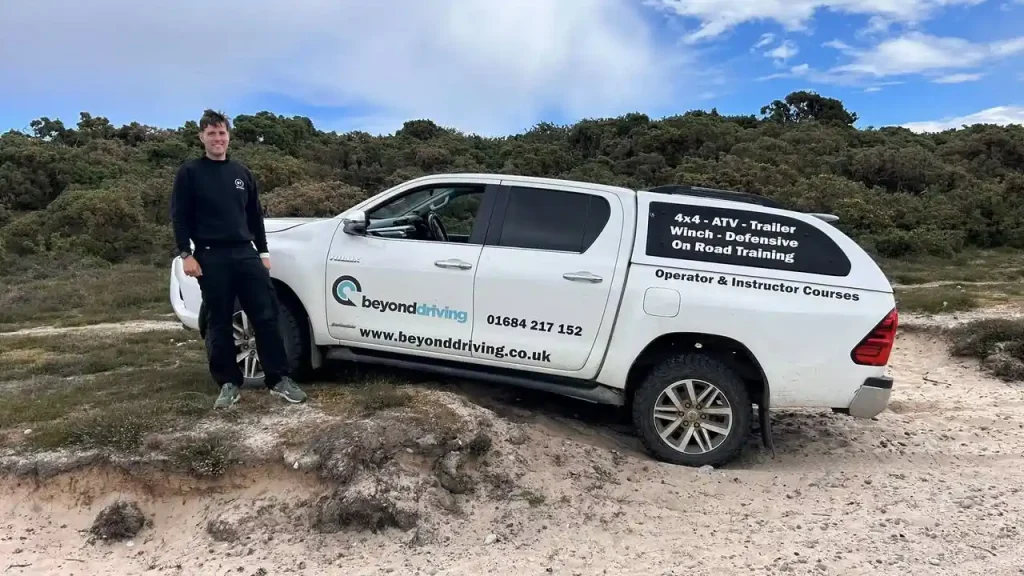
The photographs from the Lossiemouth training show the Beyond Driving Toyota Hilux working through sandy hollows, uneven trails and vegetation-lined tracks. These are exactly the types of conditions where drivers need to understand momentum, steering input, braking control and the importance of reading the surface ahead.
On sand, too much throttle can dig the vehicle in. Too little momentum can cause progress to stop at the wrong point. Harsh braking or sudden steering can unsettle the vehicle, especially on slopes or rutted sections. A trained 4×4 operator learns to keep movements smooth, controlled and deliberate.
For BT staff, this is not recreational off-roading. It is workplace driving. The objective is to reach the job safely, complete the task and return without incident.
Supporting telecoms teams who work beyond the tarmac
Telecommunications infrastructure is not always located beside a convenient road. Engineers and field teams may need to access masts, cabinets, lines, rural sites and coastal routes where standard driving skills are not enough.
In areas such as Moray, weather, ground conditions and location can quickly change the level of risk. A track that is straightforward in dry conditions may become more difficult after rain. A sandy route may be affected by wind, drainage or previous vehicle use. Remote locations can also reduce the margin for error, because recovery or assistance may not be close at hand.
That is why formal 4×4 operator training is important for organisations such as BT. It helps staff understand the capabilities and limits of their vehicles, and it supports safer decision-making when working away from normal road networks.
Lantra 4×4 training with practical, hands-on instruction
Beyond Driving’s Lantra 4×4 Operator Training is designed around practical application. Candidates are not simply shown what a 4×4 can do; they are coached through how to operate it safely, methodically and with proper awareness of risk.
The course typically covers key areas such as vehicle checks, route assessment, correct use of 4×4 systems, observation, positioning, traction management, ascent and descent techniques, and safe recovery considerations. The exact delivery can be adapted to the needs of the client and the environments their teams are likely to encounter.
Near Lossiemouth, the training environment provided an ideal opportunity to focus on soft ground and coastal access. The images show vehicles being used on sandy tracks, gentle climbs, uneven surfaces and narrow routes bordered by scrub. These are useful training scenarios because they encourage drivers to think ahead, choose appropriate lines and avoid unnecessary vehicle stress.
Confidence without overconfidence
One of the most important outcomes of professional 4×4 training is not simply confidence. It is calibrated confidence.
A good operator should feel capable, but not careless. They should know what the vehicle can do, but also recognise the point at which conditions, terrain or operational pressures make it unsafe to continue.
This is particularly relevant for staff who drive as part of a wider technical role. BT engineers and telecoms staff are not employed as off-road drivers first and foremost. Driving is a means of reaching the worksite. Training ensures that the journey to and from that site is treated as a managed risk, not an afterthought.
By developing calm, structured driving habits, candidates are better prepared to deal with challenging access routes without rushing or relying on guesswork.
Protecting vehicles, people and the environment
Coastal and rural driving also brings environmental responsibilities. Sand dunes, scrubland and coastal habitats can be sensitive. Operators must understand how to keep to approved routes, avoid unnecessary wheelspin and reduce damage to the ground.
This is another reason why professional training is valuable. Good off-road driving is often less dramatic than people expect. It is about using the least force necessary, maintaining control and making progress without causing avoidable harm.
For organisations running fleet vehicles, this also helps reduce wear and tear. Smooth driving, careful route choice and proper use of vehicle systems can help protect tyres, suspension, drivetrain components and bodywork. In turn, that supports lower downtime and fewer operational disruptions.

Training delivered where the work happens
The Lossiemouth course also highlights a key strength of Beyond Driving’s approach: training can be delivered in locations that reflect the conditions staff are likely to face.
A generic off-road site can teach important fundamentals, but there is real value in putting those skills into context. For coastal telecoms work, that means understanding how a 4×4 behaves on sand, loose tracks, scrub-lined routes and exposed ground.
The photographs show a varied and highly relevant training environment, from open sandy areas to narrow undulating tracks with coastal scenery in the background. This type of setting helps candidates connect the training directly with the operational realities of their role.
Professional 4×4 training for national teams
Beyond Driving works with organisations across the UK, delivering professional driver training for teams who operate in demanding environments. Courses include 4×4 operator training, ATV and UTV training, trailer handling, winch training, defensive driving and instructor development.
For BT teams near Lossiemouth, this latest Lantra 4×4 course continues that practical, job-focused approach. The aim is not to turn staff into off-road enthusiasts. It is to help them become safer, more capable workplace drivers who can access remote locations with greater awareness and control.
Where essential infrastructure depends on people being able to reach difficult sites, training is not an optional extra. It is part of doing the job properly.
Lantra 4×4 operator training near Lossiemouth
Beyond Driving’s recent work near Lossiemouth demonstrates how varied 4×4 operator training can be. Coastal sand, dune tracks, scrubland and remote access routes all create different challenges for professional drivers.
For BT staff required to drive off road as part of their role, Lantra 4×4 training provides the skills, confidence and judgement needed to operate safely in these environments.
From the Moray coast to rural tracks, construction sites, utility routes and remote infrastructure locations across the UK, Beyond Driving delivers training that is practical, relevant and built around the demands of the job.