Beyond Driving has been up in the North East delivering a Lantra UTV course for the Wildfowl & Wetlands Trust at Washington Wetland Centre. It was another excellent day of professional operator training, working with a team whose day-to-day responsibilities require safe, confident and practical use of utility terrain vehicles in a live visitor and conservation environment.
For organisations such as WWT, UTVs are more than convenient site vehicles. They are working tools used to move people, equipment, feed, materials and maintenance kit across varied ground. At a wetland centre, that can mean moving between public paths, service areas, grass tracks, gravel yards, soft ground and restricted operational spaces. The vehicle must be operated with care, control and awareness of the environment around it.
That is where structured UTV operator training becomes essential.
Why UTV Training Matters
Utility Terrain Vehicles, often known as UTVs, side-by-sides or sit-in ATVs, are widely used across estates, farms, wildlife reserves, forestry sites, leisure venues, local authorities and environmental organisations. They are highly versatile, but they also require proper training.
A UTV may look straightforward to drive, especially for someone with experience of cars, vans or 4x4s. However, the operating environment is often very different. Drivers may need to deal with uneven ground, tight turns, slopes, variable surfaces, pedestrians, animals, visitors, staff vehicles and loaded cargo areas.
Professional UTV training helps operators understand not only how to drive the machine, but how to use it safely as part of their working role.
The Lantra UTV course delivered by Beyond Driving focuses on practical operator competence. It gives candidates the opportunity to develop safe habits, improve vehicle control and understand the limitations of both the machine and the terrain.
Training at Washington Wetland Centre
Washington Wetland Centre provides a strong example of why training should be relevant to the client’s real working environment. The centre includes areas used by visitors, staff and conservation teams, alongside the practical yard and operational spaces needed to keep the site running.
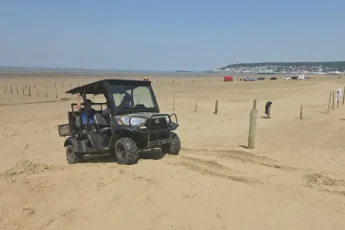
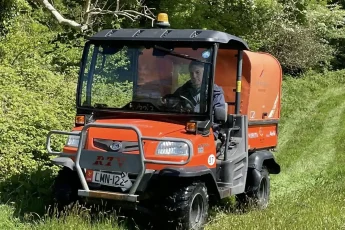
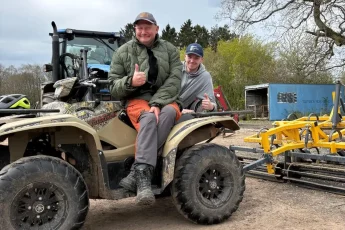
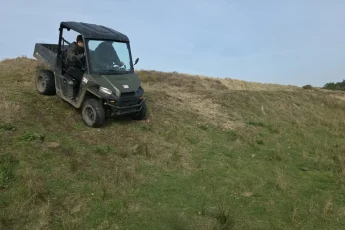
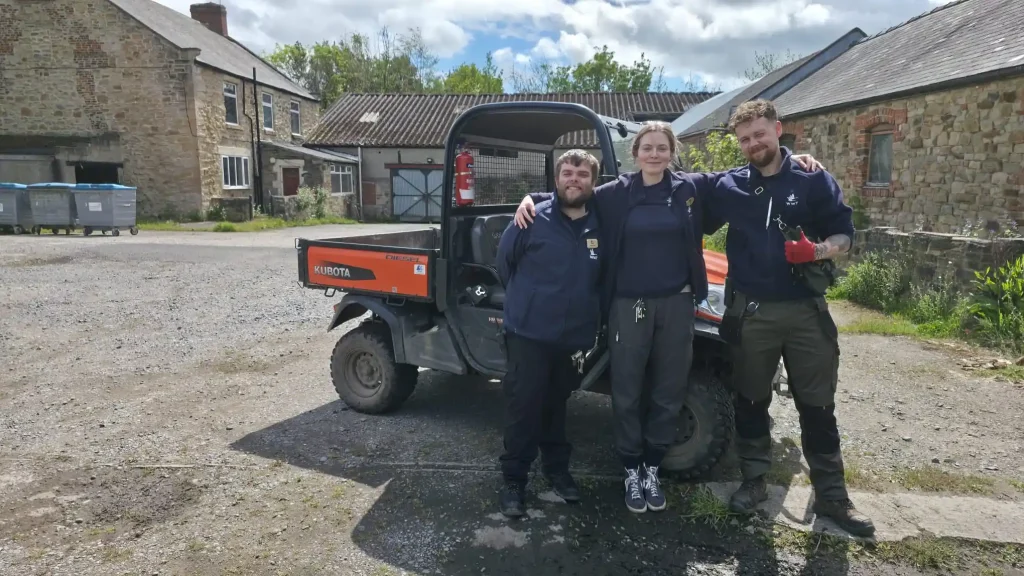
The images from the day show a Kubota UTV being used in a typical working setting, with staff gathered beside the vehicle after completing training. The setting, with stone buildings, service yards and open outdoor areas, reflects the type of environment where UTV operators need to combine slow-speed control with good observation and awareness.
In locations such as this, UTV use is rarely just about travelling from one point to another. Operators may be moving through narrow spaces, working near buildings, sharing routes with pedestrians, transporting tools or equipment, and operating in changing weather and ground conditions. Training must therefore be practical, relevant and focused on real-world use.
What a Lantra UTV Course Covers
Beyond Driving’s Lantra UTV operator training is designed to give candidates the knowledge and confidence to operate sit-in ATVs safely and professionally.
Course content will typically include:
- Pre-use checks and daily inspection routines
- Understanding vehicle controls and safety features
- Safe starting, stopping and manoeuvring
- Steering, braking and throttle control
- Operating on different ground surfaces
- Managing slopes, cambers and uneven terrain
- Safe loading and load awareness
- Risk assessment and route planning
- Working around people, buildings, animals and site hazards
- Understanding the limits of the vehicle and operator
The aim is not simply to “pass a course”. The purpose is to ensure each operator leaves with a better understanding of how to use a UTV safely as part of their role.
For conservation organisations, wildlife trusts and wetland centres, this is particularly important. Staff and volunteers may be operating vehicles in sensitive locations where care for the environment is just as important as care for the machine.
UTVs in Conservation and Wetland Management
The Wildfowl & Wetlands Trust carries out important conservation, education and visitor engagement work across its wetland centres. Sites such as Washington require ongoing maintenance, animal care, habitat management and visitor support.
UTVs are well suited to this type of work because they can access areas that may be unsuitable for larger vehicles. They are useful for transporting equipment, supporting grounds teams, helping with feeding and welfare routines, and assisting staff across larger outdoor sites.
However, wetland and conservation environments can present particular challenges. Operators may encounter soft ground, wet grass, slopes, tracks, gateways and areas close to water. There may also be wildlife, livestock, visitors and staff to consider.
That makes operator judgement a key part of safe UTV use. Training helps candidates think ahead, assess conditions and choose the safest approach for the vehicle, the load and the site.
Safe Operation in Visitor Environments
One of the most important aspects of UTV training for visitor attractions and public-facing sites is awareness of others.
At a wetland centre, UTVs may need to move through areas where visitors are nearby, or where staff are carrying out other duties. Even when vehicles are operating in back-of-house spaces, there may still be pedestrians, other vehicles, gates, buildings, bins, tools and equipment to consider.
Safe UTV use relies on low-speed control, clear observation, anticipation and a professional attitude. Drivers need to understand that the vehicle may be compact, but it still carries risk if used without proper care.
Beyond Driving’s instructor-led approach helps operators develop these skills in a controlled and supportive way, using practical exercises that reflect the working environment.
Lantra Training for Professional Compliance
Many organisations choose Lantra training because it provides nationally recognised certification and a clear record of competence. For employers, this supports health and safety responsibilities and demonstrates that staff have received appropriate training for the equipment they use.
For operators, it gives confidence. Candidates understand what checks they should carry out, how the vehicle behaves, what hazards to look for and how to make safer decisions during daily operations.
For managers, Lantra UTV training can form part of a wider approach to fleet safety, site risk assessments and staff development.
UTV Training Across the North East and the UK
This recent course at WWT Washington Wetland Centre highlights Beyond Driving’s ability to deliver UTV training in the North East of England, as well as at locations across the UK.
Beyond Driving works with a wide range of clients, including wildlife trusts, conservation organisations, utility companies, public sector teams, estates, farms, equestrian centres, outdoor activity providers and private businesses.
Training can be delivered at suitable client sites, where candidates can learn using familiar vehicles in relevant surroundings. This is often one of the most effective ways to train, because it links course content directly to the conditions operators will meet in their job.
Where required, Beyond Driving can also advise on suitable training locations, course structure and the type of instruction needed for different operator groups.
Building Confidence, Not Just Competence
A good UTV course should do more than cover the basics. It should help candidates build confidence in a sensible and controlled way.
Some operators may already have experience with UTVs or similar machinery. Others may be new to the vehicle type and need time to understand how it responds. A professional course allows candidates to ask questions, practise manoeuvres and learn from an experienced instructor.
At Washington, the training provided WWT staff with the opportunity to develop their skills around the vehicle and within a working site environment. The result is not only better driving technique, but improved awareness of safe working practice.
Professional UTV Training for Wildlife, Estates and Land-Based Teams
Whether a team is working in conservation, grounds maintenance, agriculture, utilities, events, local authority services or estate management, UTVs are often relied upon every day. Their flexibility makes them valuable, but only when operators understand how to use them properly.
Beyond Driving’s Lantra UTV training helps organisations reduce risk, support staff competence and improve safe vehicle use across varied terrain.
The recent course for WWT at Washington Wetland Centre is a great example of practical, relevant operator training delivered where it matters: in the environment where the vehicle is actually used.
For teams in the North East and across the UK, Beyond Driving can provide professional UTV operator training tailored to the needs of your site, your staff and your vehicles.
Find out more:
Visit Beyond Driving’s Sit-In ATV / UTV Operator Training page:
https://www.beyonddriving.co.uk/off-road-driving-courses/sit-in-atv-operator-training/