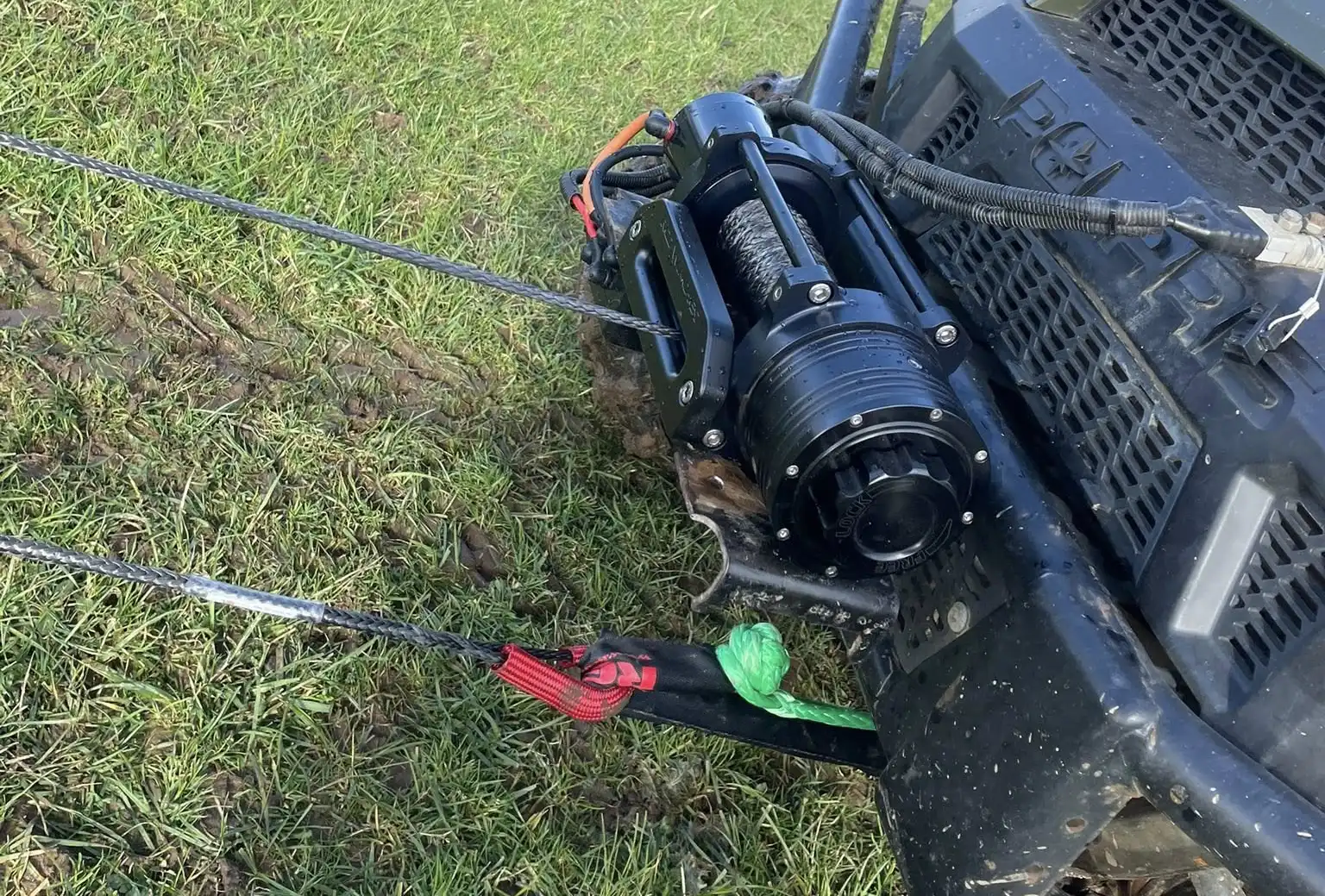
Why winch training is essential
Winching introduces hazards that are not present during routine off-road driving. Anchor point selection, load rating, line tension and exclusion zones must all be managed correctly to prevent catastrophic failure.
Beyond Driving’s training focuses on:
-
Understanding forces involved in winching
-
Managing risk to people, vehicles and surroundings
-
Applying controlled, repeatable recovery methods
-
Avoiding common causes of injury and equipment damage
The emphasis is always on planning, control and communication, not speed or improvisation.
Course content: practical and safety-led
Winch Operation Training is delivered predominantly in practical sessions, supported by clear safety briefings and structured demonstrations. Course content is tailored to vehicle type, equipment and operational context but typically includes:
Winch systems and equipment
-
Electric and hydraulic winches
-
Winch ratings, load limits and duty cycles
-
Cables, ropes, shackles and recovery accessories
Safe winching principles
-
Risk assessment and dynamic decision-making
-
Establishing exclusion zones and safe working distances
-
Communication between operators and banksmen
Recovery techniques
-
Straight-line and angled pulls
-
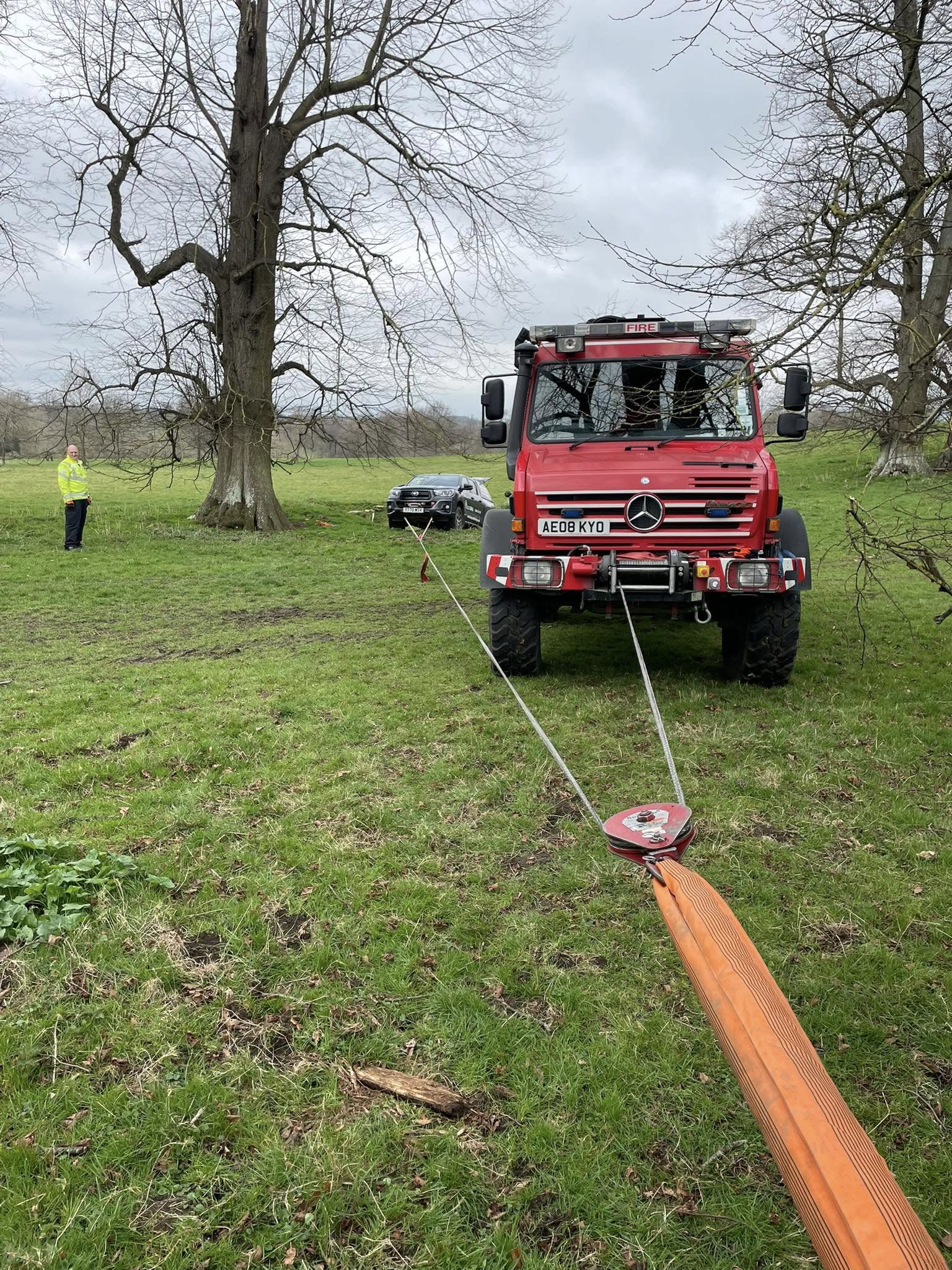
Single-line and double-line (snatch block) setups
-
Vehicle and equipment recovery on varied terrain
Environmental and situational awareness
-
Anchor point selection and protection
-
Ground conditions and stability
-
Managing bystanders and team safety
Training is paced to ensure operators understand not just how to winch, but when and whether winching is the safest option.
Realistic training environments
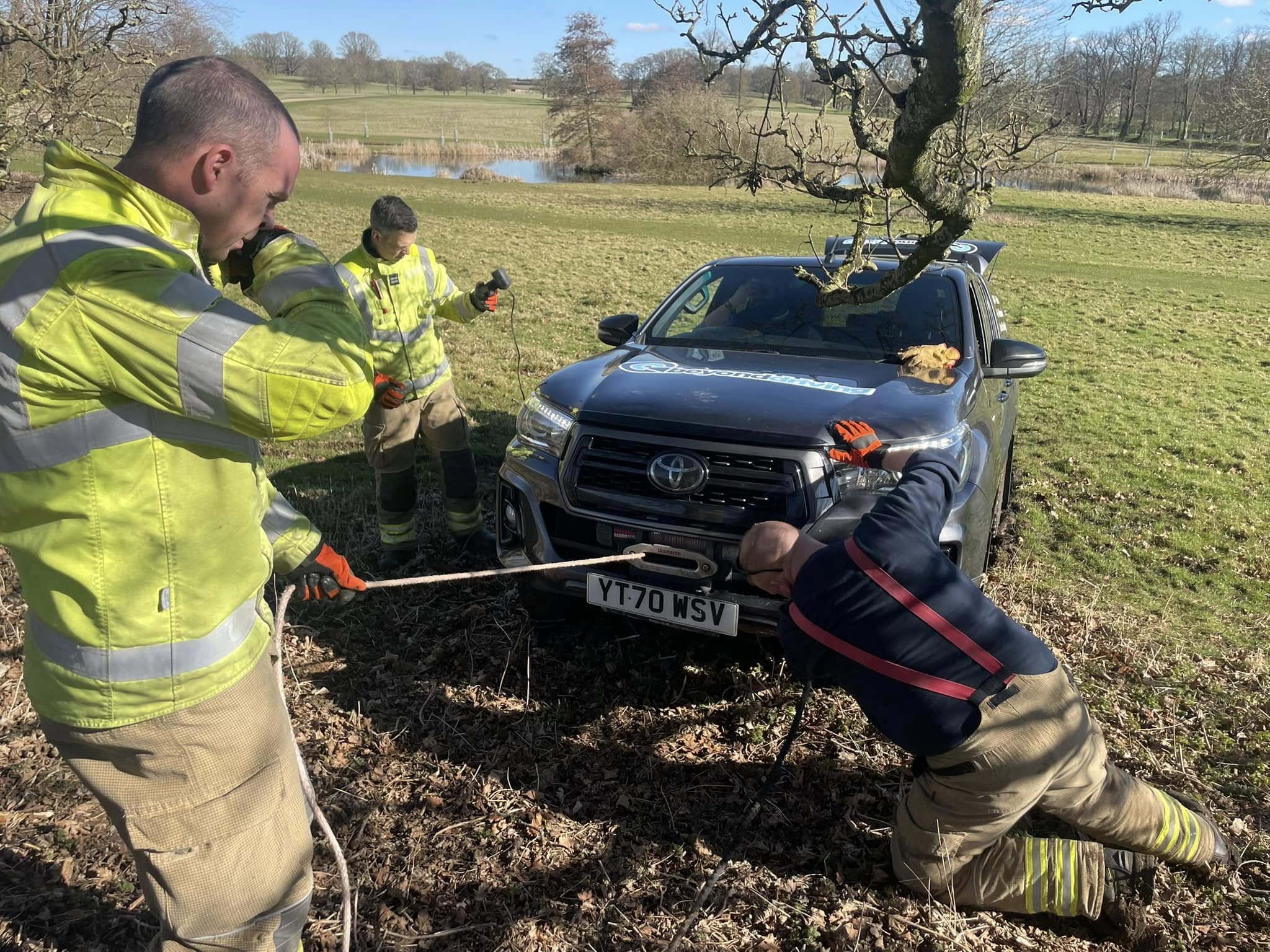
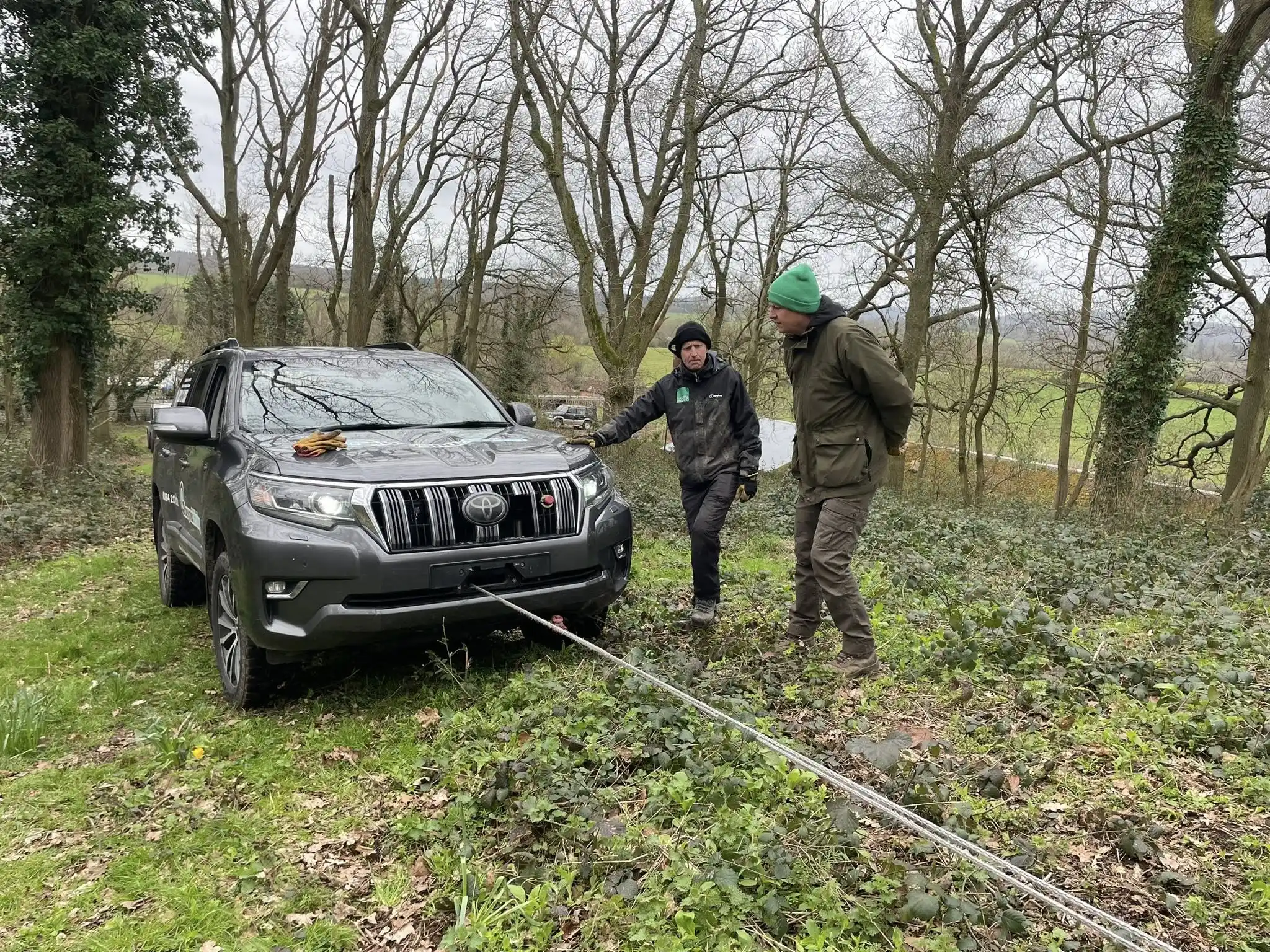
Beyond Driving delivers winch training in controlled off-road environments that replicate real operational conditions. Where appropriate, training can be delivered using client vehicles and winching equipment, ensuring direct relevance to workplace operations.
This approach improves skill retention and reduces the likelihood of unsafe improvisation during live incidents.
Compliance, PUWER and duty of care
Winches and recovery equipment used at work are classed as work equipment under the Provision and Use of Work Equipment Regulations (PUWER). Employers must ensure that staff are trained, competent and able to use equipment safely.
Winch Operation Training supports:
-
PUWER compliance
-
Employer duty of care obligations
-
Reduced risk of injury and equipment failure
-
Clear evidence of operator competence
Beyond Driving’s structured approach ensures training stands up to internal, insurer and regulatory scrutiny.
Accreditation options: matched to operational need
Beyond Driving offers BORDA, Lantra and Qualsafe-aligned winch training, allowing organisations to select the most appropriate accreditation framework based on operational risk, governance requirements and workforce structure.
We work with clients to:
-
Assess winching exposure and risk
-
Align training outcomes to real-world use
-
Select the most suitable accreditation pathway
This ensures drivers are neither under-trained nor placed on an inappropriate certification route.
Why choose Beyond Driving for winch training?
-
Specialist focus on professional off-road operations
-
Highly experienced instructors with operational backgrounds
-
Safety-led, realistic training environments
-
BORDA, Lantra and Qualsafe accreditation options
-
National delivery with flexible course structures
Beyond Driving delivers winch training that prioritises control, judgement and safe outcomes in demanding environments.
Book winch operation training
If your organisation operates vehicles equipped with winches, structured training is essential to manage risk and protect your people. Beyond Driving provides professional Winch Operation Training aligned to operational reality and recognised standards.
Contact Beyond Driving to discuss your vehicles, equipment and operating environments, and we will recommend the most appropriate training and accreditation pathway.