Winching is a high-risk, high-responsibility skill. When deployed incorrectly, it can cause serious injury, vehicle damage and operational delay. When delivered by a competent instructor, however, it becomes a controlled, effective recovery method that underpins safe incident response.
At Beyond Driving, our Qualsafe Accredited Winch Instructor Course is designed to develop confident, technically proficient winch instructors capable of training others to nationally recognised standards. A recent course delivered to Hereford & Worcester Fire and Rescue Service provided an excellent example of how structured instructor training translates directly into operational readiness.
If you are looking for professional winch instructor training, accredited and aligned with best practice, this course sets the benchmark.
Why Choose a Qualsafe Accredited Winch Instructor Course?
Qualsafe Awards is one of the UK’s leading awarding organisations, recognised for maintaining rigorous standards across vocational qualifications. Accreditation ensures:
- Robust assessment and quality assurance
- Nationally recognised certification
- Clear learning outcomes and instructor competence standards
- External verification of course delivery
For emergency services and organisations operating in challenging environments, accreditation is not simply desirable — it is essential.
Our course builds on operational winch experience and develops candidates into instructors who can:
- Deliver structured winch operator training
- Assess competence safely and consistently
- Manage dynamic risk during recovery operations
- Demonstrate correct equipment inspection and setup
- Instil safe working practices across their teams
Real-World Application: Training with Hereford & Worcester Fire and Rescue
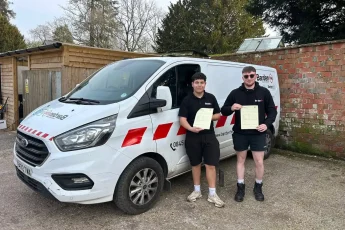
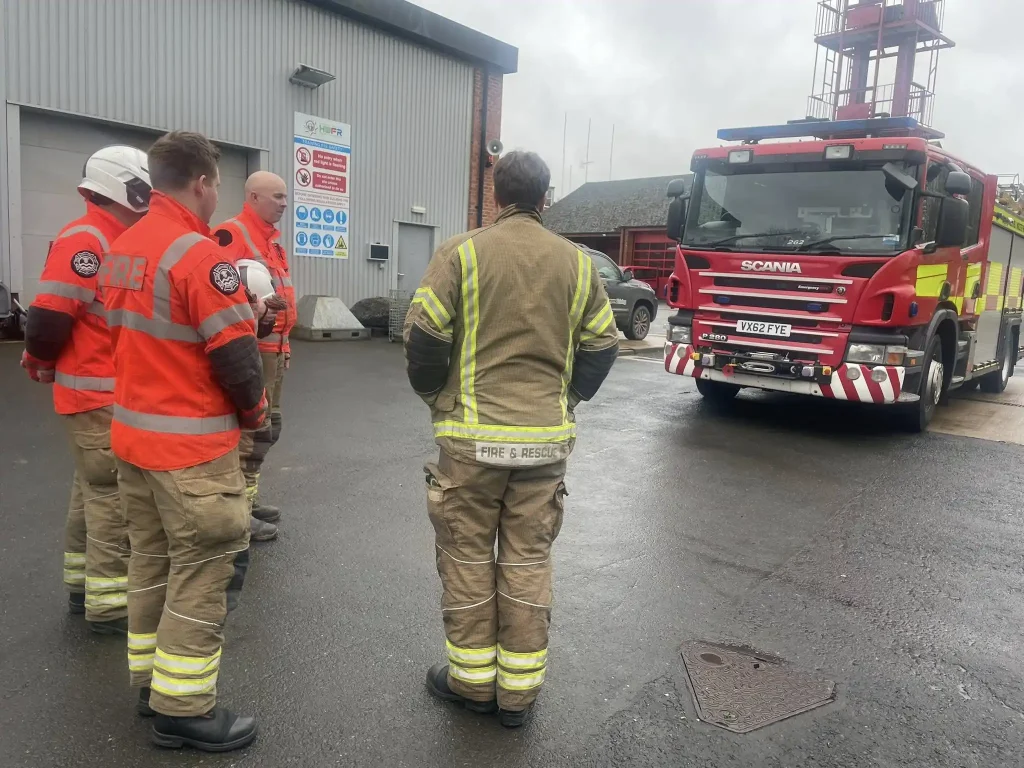
The recent delivery for Hereford & Worcester Fire and Rescue Service brought together experienced operational firefighters looking to formalise and enhance their instructional capability.
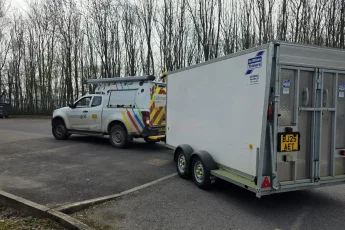
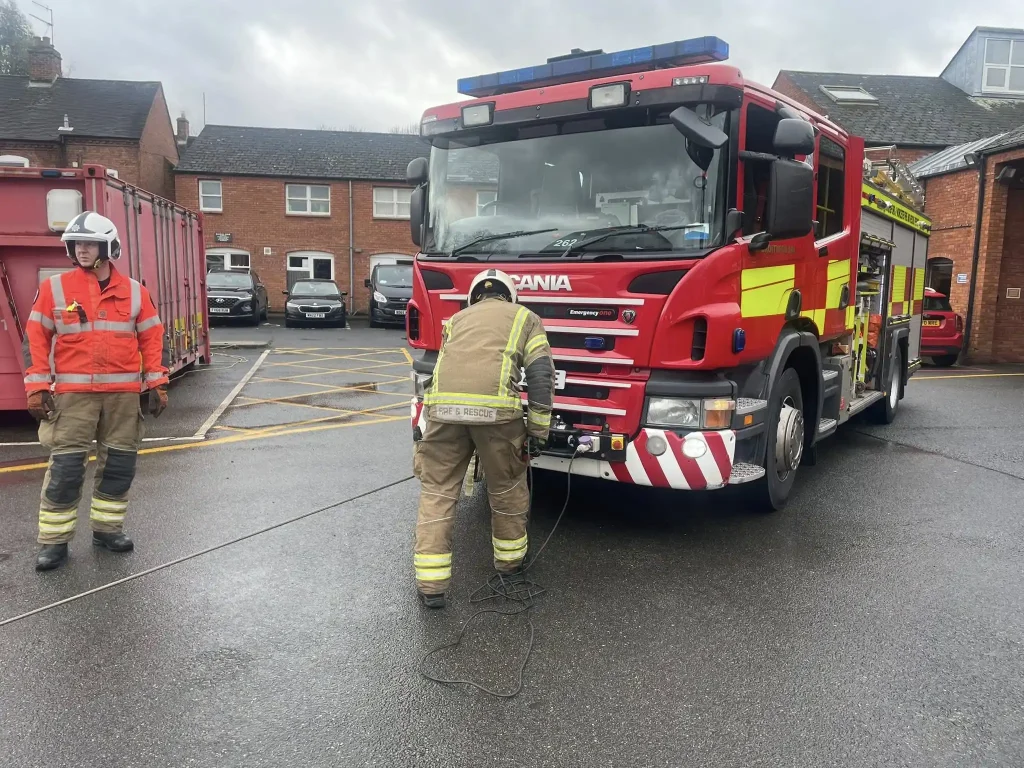
The training took place in a realistic working environment using front-mounted winch systems fitted to Scania fire appliances. This allowed candidates to practise instruction in scenarios that mirror live operational demands.
Safe Equipment Setup and Pre-Use Checks
One of the first elements covered was systematic pre-use inspection. Candidates were required to demonstrate:
- Winch integrity checks
- Fairlead and mounting inspection
- Remote control testing
- Correct cable spooling
- Anchor point identification
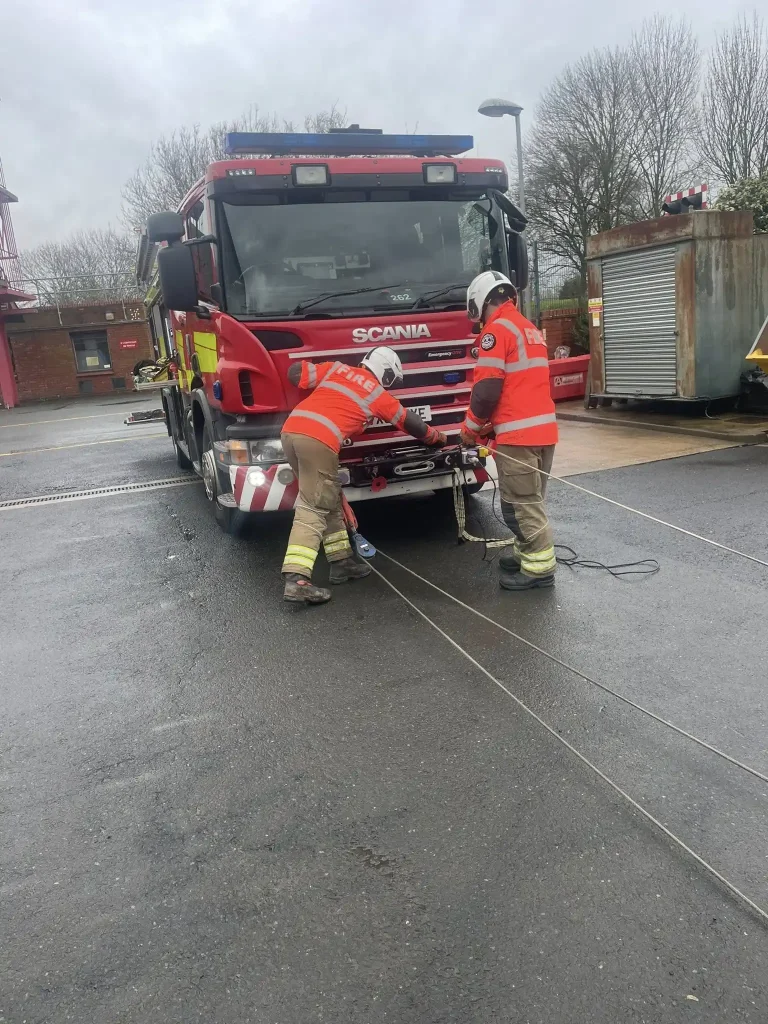
Images from the course show instructors working directly at the front-mounted winch assembly, ensuring cable alignment and tension are correct before any load is applied. These small details prevent long-term equipment damage and significantly reduce risk during recovery.
Establishing Safe Working Zones
A critical part of instructor development is understanding how to control the working area.
During practical exercises, trainees were tasked with:
- Setting exclusion zones
- Managing bystander positioning
- Communicating clearly with team members
- Supervising tensioning of the winch line
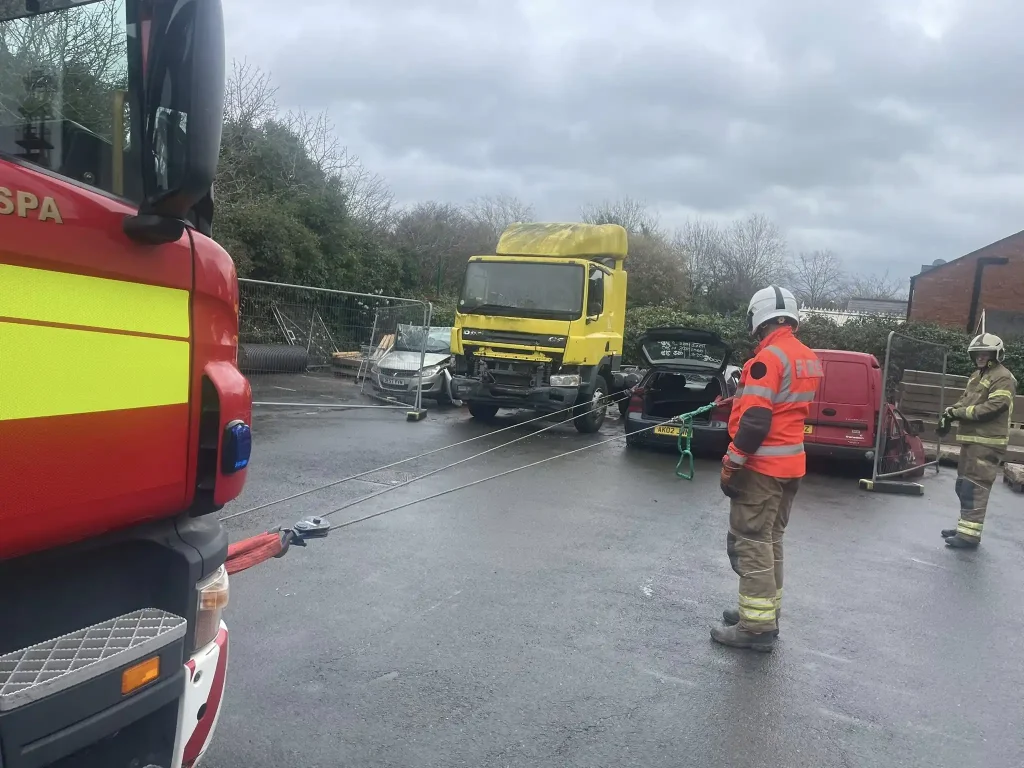
Photographs from the course show firefighters positioned at safe stand-off distances while maintaining clear sightlines of the recovery operation. This discipline ensures that if a cable or attachment point fails, personnel remain protected.
Live Vehicle Recovery Scenarios
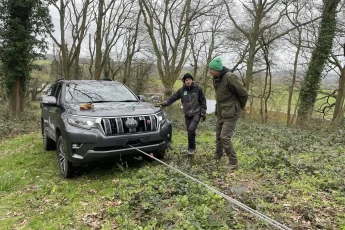
Instructor candidates progressed to practical recovery operations involving tensioned winch lines and simulated vehicle recovery.
In one scenario, the fire appliance winch was rigged to a casualty vehicle positioned across the training yard. Trainees managed:
- Anchor selection
- Correct use of recovery straps and shackles
- Controlled tensioning
- Communication between winch operator and safety observer
The images demonstrate textbook line management, with clean cable runs and effective communication between team members wearing high-visibility fire service PPE.
This is where instructor-level training differs from operator-level training. Candidates must not only perform the task safely, but also:
- Explain the process clearly
- Correct unsafe practice
- Justify decision-making
- Adapt scenarios to learner ability
Developing Instructional Competence
Our 4×4 Winch Instructor Training Course is not simply about technical recovery skills. It is about teaching others safely and effectively.
The course covers:
1. Instructional Techniques
- Delivering theory sessions
- Structuring practical demonstrations
- Managing group dynamics
- Providing constructive feedback
2. Risk Assessment and Control
- Dynamic risk management
- Hazard identification
- Environmental considerations
- Emergency procedures
3. Equipment Knowledge
- Electric winch systems
- Synthetic vs steel cable
- Load ratings and limitations
- Recovery accessories and compatibility
4. Assessment and Documentation
- Conducting formal assessments
- Recording competence
- Maintaining compliance with awarding body requirements
Candidates are continuously assessed against Qualsafe standards, ensuring they leave not just capable — but verified.
Why Emergency Services Invest in Accredited Winch Instructor Training
Fire and Rescue Services, HART teams and other emergency responders operate in unpredictable conditions. Vehicles become stranded on soft ground, embankments or obstructed roadways. Recovery must be:
- Controlled
- Efficient
- Legally defensible
- Conducted with minimal additional risk
By training internal instructors through a Qualsafe accredited pathway, organisations gain:
- In-house training capability
- Consistent operational standards
- Reduced reliance on external providers
- Improved safety culture
The Hereford & Worcester Fire and Rescue cohort demonstrated exactly why this matters — experienced operators refining their skills into structured instruction capability.
A Practical, Professional Learning Environment
Beyond Driving’s training ethos combines technical accuracy with practical realism.
The images from the course highlight:
- Hands-on setup at vehicle-mounted winches
- Supervised tensioning under load
- Clear communication between trainees
- Real emergency service appliances in use
This is not classroom-only theory. It is structured, supervised practical training that reflects operational demands.
Who Is This Course For?
Our Qualsafe Accredited Winch Instructor Course is suitable for:
- Fire and Rescue Services
- NHS HART teams
- Utility providers
- Forestry and land management organisations
- 4×4 response units
- Military and civil contingency teams
Candidates should already possess operational winch experience and be confident in safe recovery techniques before enrolling on the instructor pathway.
Why Train with Beyond Driving?
As specialists in emergency services driver and recovery training, Beyond Driving combines:
- Industry-recognised accreditations
- Operational experience
- Dedicated instructor development
- Modern, well-maintained training equipment
- Flexible UK-wide delivery
We understand that winch instruction is not about ticking a box. It is about creating instructors who maintain standards long after the course concludes.