This week, Beyond Driving has been working near Chichester delivering its Qualsafe-accredited Level 4 Instructor course for the South East Coast Ambulance Service NHS Foundation Trust (SECAmb) Hazardous Area Response Team (HART). Designed for experienced operational personnel, this advanced qualification strengthens in-house training capability while ensuring nationally recognised standards are met.
For emergency service organisations operating in high-risk, dynamic environments, the ability to deliver robust, compliant and consistent internal training is critical. This Level 4 Instructor programme gives HART teams the tools, confidence and formal accreditation needed to train their own staff to an exceptional standard, aligned with both operational reality and regulatory expectations.
Why Instructor Training Matters in High-Risk Operations
HART teams operate where conventional response vehicles and methods may not be sufficient. Flooded terrain, woodland tracks, unstable ground and restricted access routes are part of daily reality. In these conditions, advanced off-road driving and decision-making skills are not optional extras – they are fundamental to responder safety and patient outcomes.
Beyond Driving’s approach recognises that instructor competence is about far more than technical vehicle control. Effective instructors must be able to:
- Assess risk dynamically
- Communicate clearly under pressure
- Adapt teaching methods to varied learner experience
- Ensure training remains defensible, auditable and compliant
The Level 4 Instructor qualification formalises these competencies, allowing organisations such as SECAmb to maintain high standards internally without reliance on external providers for every course delivery.
What Is a Level 4 Qualification?
A Level 4 qualification is an advanced award, broadly equivalent to the first year of a UK bachelor’s degree. It sits above Level 3 vocational qualifications and reflects a deeper level of theoretical understanding, practical application and professional judgement.
According to UK Government guidance, Level 4 qualifications demand:
- Critical evaluation of concepts and procedures
- Independent decision-making
- Applied learning in real-world contexts
- Evidence-based assessment
For emergency service instructors, this means the course goes well beyond “how to drive” or “how to teach”. It develops instructors who can justify their training decisions, evidence competence, and uphold organisational governance standards.
A Bespoke Programme for NHS HART Operations
While the qualification itself is nationally recognised, the delivery is tailored. For SECAmb’s HART team, Beyond Driving designed the course around the operational challenges faced by ambulance responders rather than generic off-road scenarios.
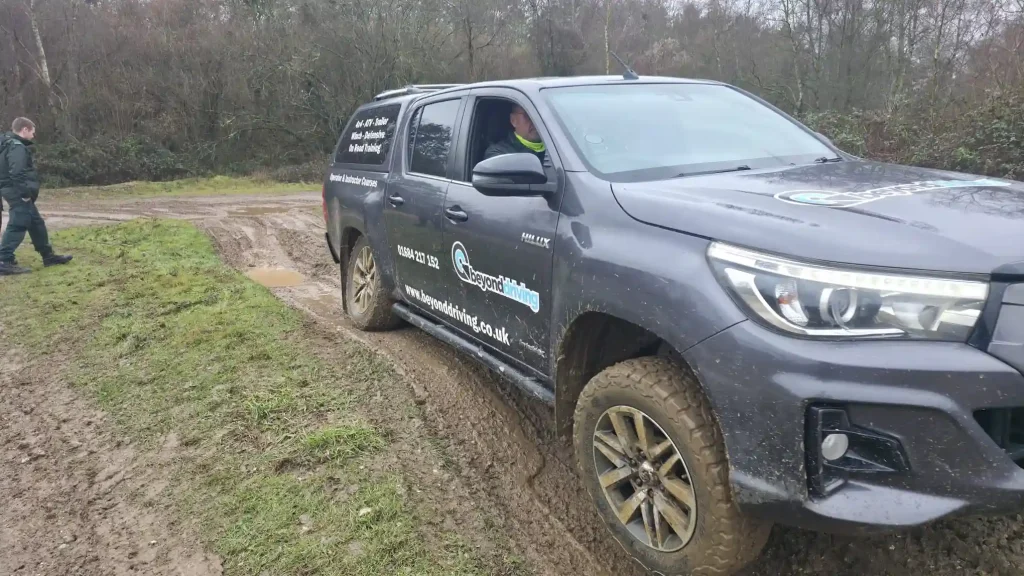
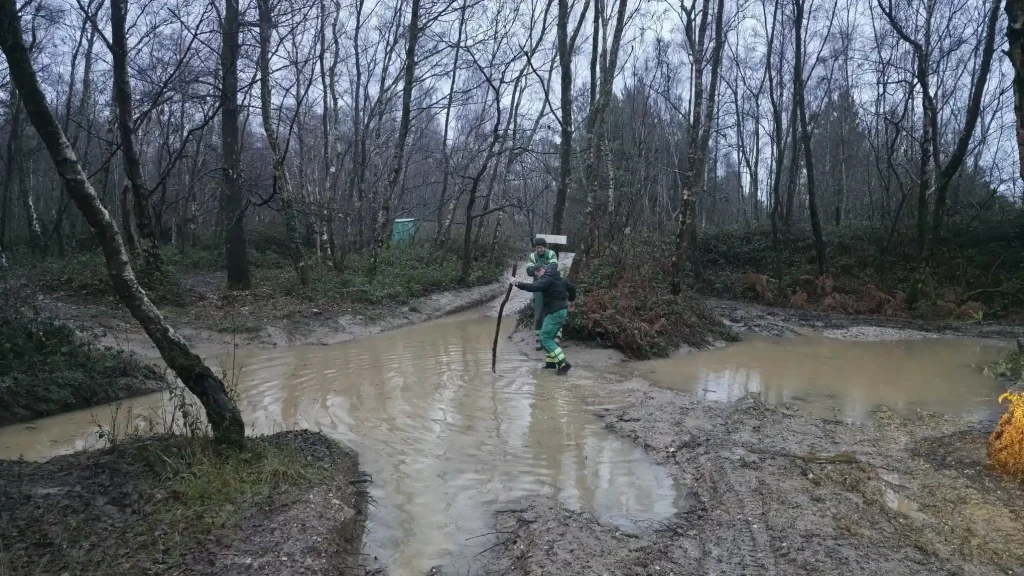
Training took place across varied terrain, including mud, standing water, rutted tracks and confined woodland routes. These environments mirror the real incidents HART teams are deployed to, ensuring learning remains relevant and transferable.
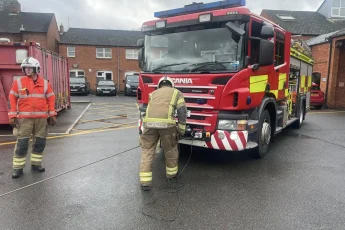
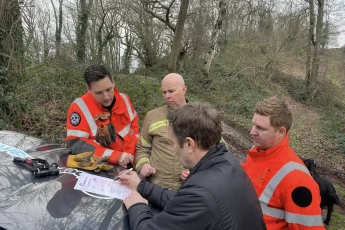
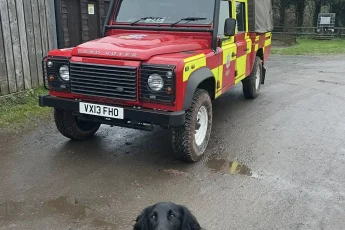
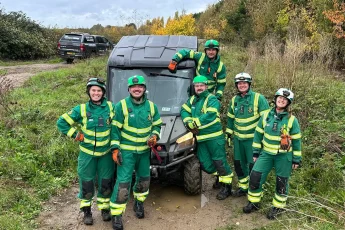
Images from the course show instructors and candidates:
- Assessing water depth on flooded tracks before vehicle entry
- Using hand signals and verbal communication to guide drivers
- Managing vehicle positioning and traction through deep mud
- Observing and critiquing driving technique from safe stand-off positions
These practical sessions are deliberately instructor-led, with candidates rotating between driving, observing and delivering coached instruction.
From Operator to Instructor: Developing the Training Mindset
One of the key challenges in instructor development is the transition from competent operator to effective educator. The Level 4 Instructor course is structured to support this shift.
Candidates are coached to move beyond personal driving skill and focus on:
- Identifying learning objectives
- Structuring progressive training sessions
- Managing mixed-ability groups
- Providing constructive, evidence-based feedback
Classroom-based theory is integrated with practical delivery, ensuring candidates understand why specific techniques are taught, not just how to perform them. This approach aligns strongly with adult learning principles and emergency service training frameworks.

Assessment, Standards and Accountability
As a Qualsafe-accredited programme, the Level 4 Instructor course is formally assessed against nationally defined criteria. Candidates must demonstrate competence across multiple areas, including:
- Lesson planning and delivery
- Risk assessment and dynamic safety management
- Instructional communication
- Practical demonstration and correction of driving techniques
Assessment is continuous and evidence-led, with candidates required to justify their decisions and reflect on performance. This ensures that successful candidates are not only capable instructors, but defensible ones – a critical requirement for NHS and public sector organisations.
Supporting Internal Training Capability
For organisations like SECAmb, the value of this qualification lies in its long-term impact. Once qualified, instructors can deliver in-house training that:
- Meets national accreditation standards
- Is tailored to specific operational roles
- Reduces reliance on external providers
- Supports ongoing skills maintenance and refresher training
This approach enhances resilience, consistency and organisational control, while ensuring staff remain current and competent in evolving operational environments.
Beyond Driving’s Experience with Emergency Services
Beyond Driving has extensive experience delivering advanced driver and instructor training to ambulance services, fire and rescue services, police units and specialist response teams across the UK. This background ensures that training is grounded in operational reality rather than abstract theory.
Courses are delivered by instructors who understand:
- Blue light operational pressures
- Multi-agency working environments
- The importance of safety culture
- The scrutiny applied to emergency service training programmes
This credibility is essential when working with teams such as HART, where training decisions directly affect frontline safety.
Training Environments That Reflect Reality
The images from this week’s delivery near Chichester highlight one of Beyond Driving’s key strengths: the ability to provide challenging but controlled training environments. Muddy tracks, water crossings and uneven ground are not used for spectacle, but as learning tools.
Candidates are encouraged to analyse terrain, vehicle capability and human factors before committing to any manoeuvre. This reinforces the principle that safe progress is driven by judgement, not bravado.
A Qualification That Adds Real Value
The Qualsafe Level 4 Instructor qualification is not simply a certificate. It represents:
- Professional recognition
- Enhanced training governance
- Improved internal capability
- Greater consistency in operational standards
For SECAmb’s HART team, this investment supports both immediate operational readiness and long-term workforce development.
Continuing to Raise the Standard
Delivering this programme for South East Coast Ambulance Service NHS Foundation Trust reinforces Beyond Driving’s commitment to raising standards in professional driver and instructor training. As emergency services face increasingly complex operational demands, the need for highly skilled, well-qualified instructors has never been greater.
By combining nationally recognised qualifications with bespoke, operationally relevant delivery, Beyond Driving continues to support organisations that operate where conditions are unpredictable and the margin for error is minimal.