Effective 4×4 operator training is not just about learning how to drive off road. It is about learning how to make safe, controlled decisions in the vehicle, terrain and working environment that drivers will actually face.
That was the focus of a recent Beyond Driving training day with North Somerset Council’s Seafront Ranger Team, delivered as part of our Lantra 4×4 Operators programme.
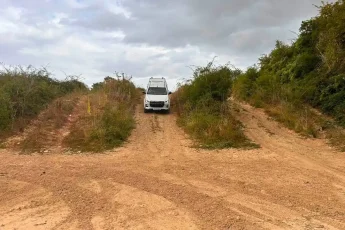
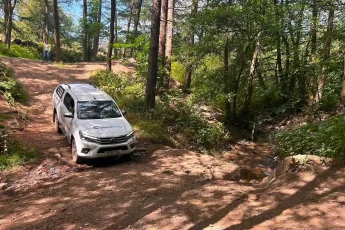
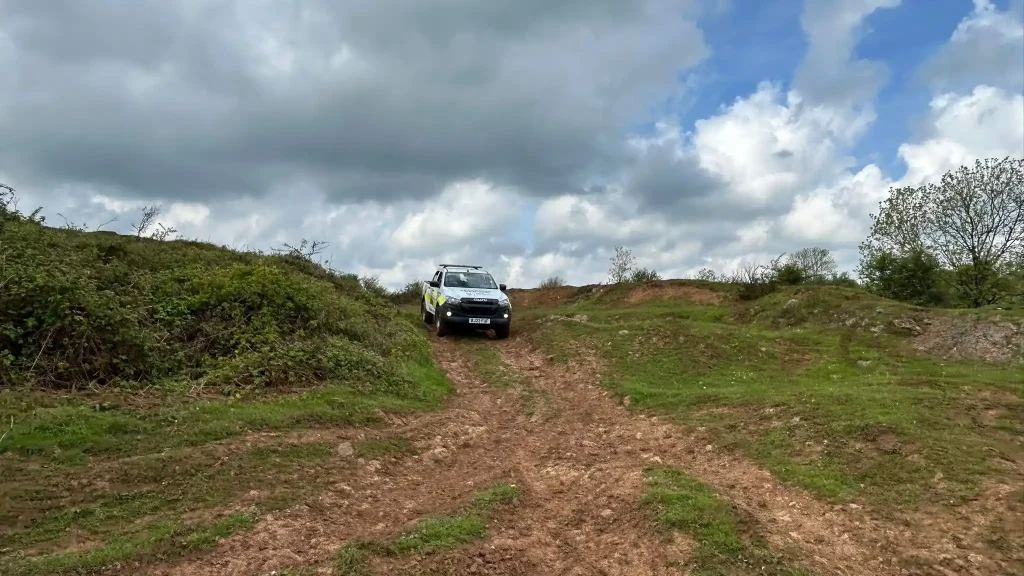
The course began at our training site near Cheddar, where delegates developed and refreshed core 4×4 driving techniques in a controlled off-road setting. The second part of the day took place at Weston-super-Mare beach, where the rangers operate as part of their day-to-day role.
For this team, sand driving is not an occasional extra. It is a key part of the job. That makes training in relevant conditions essential.
Why familiar vehicles matter in 4×4 training
No two 4×4 vehicles behave in exactly the same way. Weight, wheelbase, visibility, tyres, transmission systems, ground clearance and onboard technology all affect how a vehicle performs off road.
Training in a generic vehicle can still teach useful principles, but for professional teams, the greatest value often comes from using the vehicles they already operate. This allows drivers to understand the specific capabilities and limitations of their own fleet.
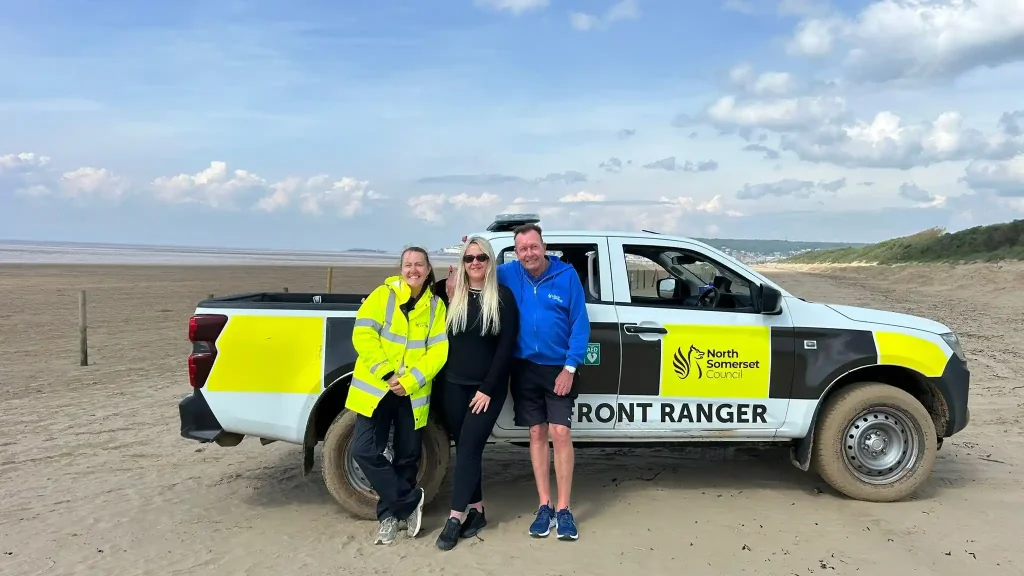
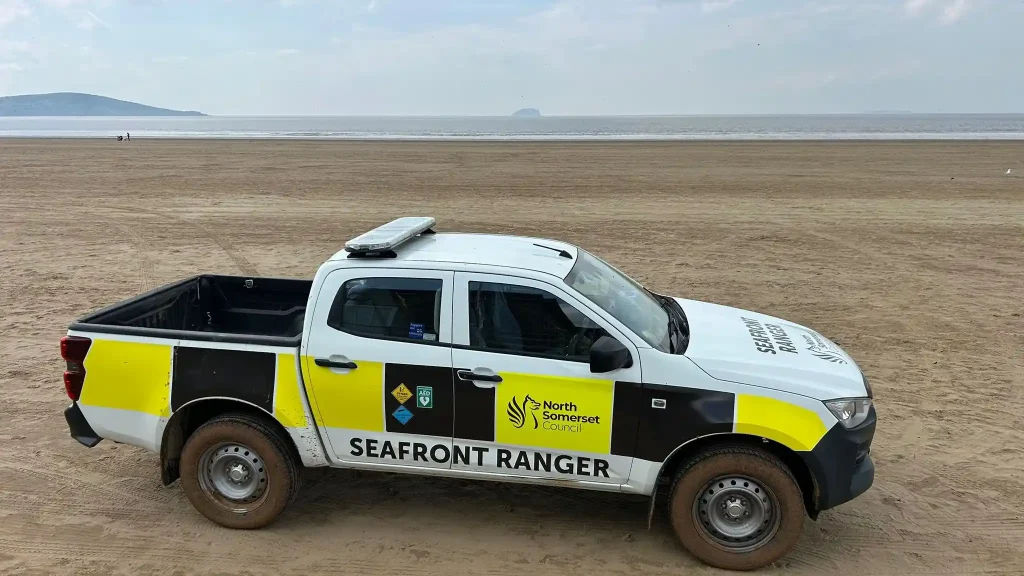
For the Seafront Ranger Team, that meant training with their North Somerset Council ranger vehicle rather than using a vehicle that felt unfamiliar or unrealistic. Drivers could learn how their own 4×4 responds on slopes, uneven ground and soft sand, building confidence that transfers directly back into their working role.
This matters because, in a real operational environment, drivers need to make decisions quickly and calmly. They need to know how the vehicle feels before it loses traction, how much momentum is appropriate, when to stop, and how to avoid turning a minor problem into a recovery situation.
Real terrain creates better judgement
A controlled training site is an ideal place to build core skills. It gives drivers the opportunity to practise observation, route planning, use of gears, throttle control, braking technique, hill work, traction management and recovery awareness without the pressure of a live public environment.
However, many client roles involve terrain that cannot be fully replicated on a standard off-road course.
For North Somerset Council’s Seafront Ranger Team, the operating environment includes the beach at Weston-super-Mare. Sand presents its own challenges. It can vary from firm and compact to soft and unstable within a short distance. Surface conditions can change with the tide, weather, vehicle traffic and pedestrian activity.
Driving on sand requires a different level of anticipation. Operators need to understand how to maintain momentum without excessive speed, how to avoid sharp steering inputs, how to recognise areas where the vehicle may bog down, and how to protect both the vehicle and the public space around them.
By splitting the day between our Cheddar training location and the team’s own facilities at Weston-super-Mare, the course connected structured learning with practical application.
Training for the job, not just the certificate
Lantra 4×4 operator training provides a recognised framework, but Beyond Driving’s approach is always shaped around the client’s working environment.
For councils, utilities, emergency services, conservation teams, contractors and land-based organisations, 4×4 driving is rarely a leisure activity. It is part of a professional role. Drivers may be carrying equipment, working near members of the public, accessing remote locations, responding to changing conditions or operating under time pressure.
That is why training should go beyond “can the driver complete the obstacle?” and ask more useful questions:
Can the driver assess whether a route is suitable?
Can they decide when not to proceed?
Do they understand how their vehicle behaves on the terrain they actually use?
Can they reduce risk to themselves, colleagues, the public and the vehicle?
Can they recover from a loss of traction safely and proportionately?
These are the skills that make professional 4×4 training valuable.
The importance of sand driving training
Beach and sand environments demand particular care. A vehicle that feels capable on compacted tracks can behave very differently on loose sand. Tyre contact, momentum, steering angle and throttle use all become more sensitive.
For teams working on beaches, foreshores or coastal access routes, sand driving training can help operators understand:
How to read the surface before committing the vehicle
How to manage speed and momentum safely
How to avoid unnecessary wheelspin
How tyre pressures and vehicle loading influence performance
How to reduce the risk of becoming stuck
How to plan a route with escape options
How to operate around pedestrians, wildlife, tides and other beach users
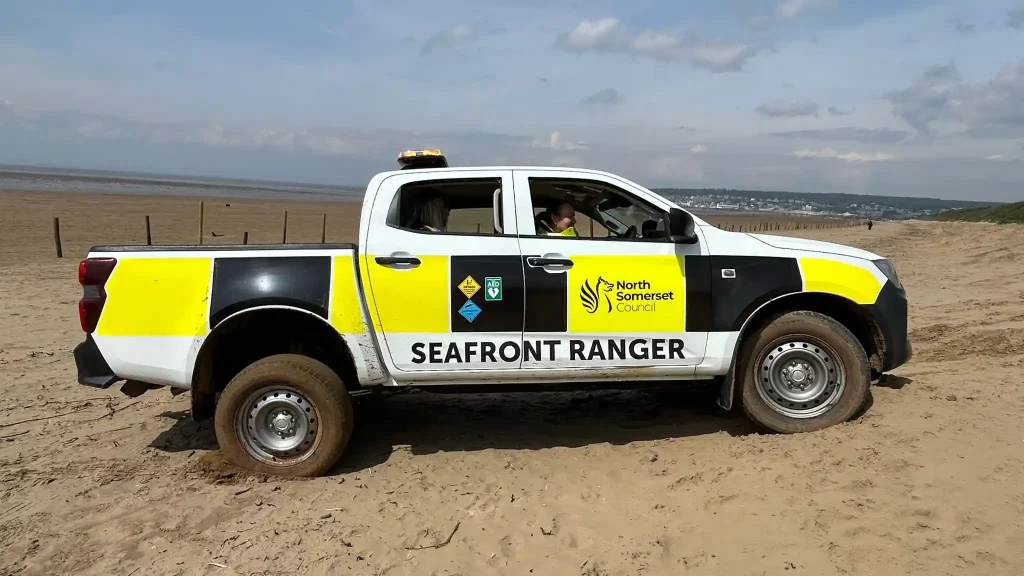
In the case of the Seafront Ranger Team, this was not a theoretical exercise. Weston-super-Mare is their working environment, so the training needed to reflect the decisions they make while carrying out their duties.
Building confidence without encouraging overconfidence
One of the most important outcomes of good 4×4 training is not simply confidence. It is calibrated confidence.
Drivers should leave training with a clearer understanding of what they can do, but also what they should avoid. Overconfidence can be a significant risk in off-road environments, especially when a vehicle is capable enough to get into difficult terrain but not always capable of getting out again without support.
A well-designed course helps drivers recognise limits. It encourages them to pause, assess and choose the safest option, rather than relying on the vehicle to solve every problem.
This is especially important for public-facing teams such as seafront rangers. Their driving decisions are visible, operationally important and often made in places shared with pedestrians and other users.
A tailored approach for professional 4×4 operators
Beyond Driving regularly works with organisations whose drivers face unusual or demanding conditions. Some operate in rural environments, some work around construction or utilities sites, and others need access to beaches, flood-prone areas, moorland, forests or private estates.
The most effective training is designed around those realities.
For North Somerset Council, that meant starting with the foundations at our site near Cheddar, then moving to Weston-super-Mare to apply those skills in context. It gave the Seafront Ranger Team a training day that was relevant, practical and directly connected to their role.
This blended approach is often the best way to train professional 4×4 operators. It provides a safe place to learn the techniques, followed by an opportunity to apply them where they matter most.
Beyond Driving 4×4 operator training
Beyond Driving delivers professional 4×4 training for organisations across the UK, including local authorities, utilities, emergency services, land-based industries and specialist operational teams.
Our training can be tailored to your vehicles, your drivers and your terrain. Whether your team needs to operate on tracks, fields, construction sites, steep gradients, mud, sand or mixed surfaces, we can build a course that reflects the conditions they are likely to encounter.
For North Somerset Council’s Seafront Ranger Team, that meant a Lantra 4×4 Operators programme that moved from controlled off-road training near Cheddar to practical beach-based driving at Weston-super-Mare.
The result was training that matched the job.
Because the best 4×4 operator training is not just about where a vehicle can go. It is about helping drivers understand when to go, how to get there safely, and how to make sound decisions in the conditions they face every day.
To discuss tailored 4×4 operator training for your organisation, contact Beyond Driving.