Driving a four-wheel-drive vehicle off road is not simply a question of how capable the vehicle is. Often, the most important skill is knowing whether the ground ahead can be negotiated safely – and recognising when turning back is the better decision.
For people working in construction, engineering, infrastructure and government operations, reaching locations away from the public highway can be a regular part of the job. Conditions can vary considerably, sometimes changing within a few metres.
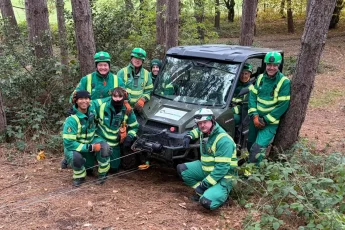
Beyond Driving has recently been delivering professional 4×4 operator training for Laing O’Rourke and government agencies, with courses taking place around Peterborough, Exeter and Newbury.
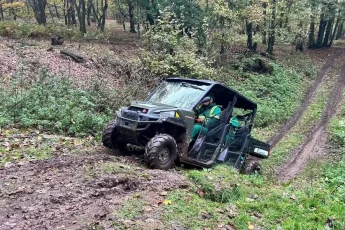
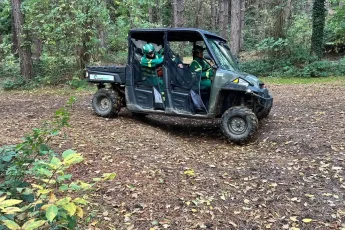
The training photographs illustrate why understanding terrain is so important. From deeply rutted woodland tracks and slippery autumn leaves to loose surfaces and challenging gradients, each environment presents a different set of decisions for the driver.
A 4×4 Can Be Capable Without the Route Being Safe
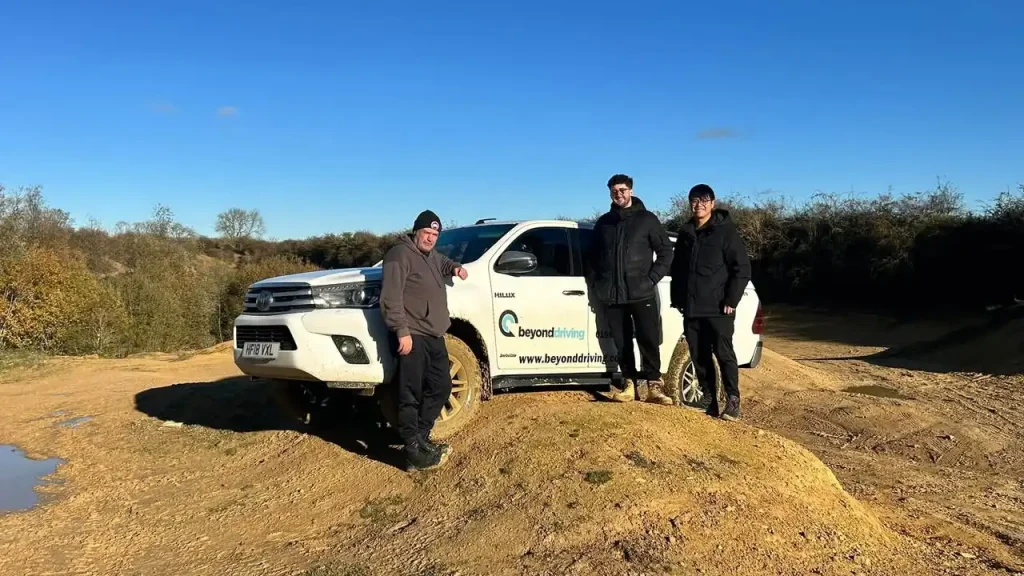
Modern four-wheel-drive vehicles, including the Toyota Hilux and Ford Ranger used during our training, are designed to handle conditions that would defeat many conventional vehicles.
However, four-wheel drive does not guarantee traction, ground clearance or stability.
A muddy track may appear straightforward until a wheel drops into an unexpectedly deep rut. A relatively gentle slope can become difficult when wet leaves conceal slippery ground. A vehicle approaching a sharp crest may have sufficient traction but inadequate clearance to pass without damage.
An experienced off-road driver needs to recognise these potential problems before committing the vehicle.
That is one reason professional operator training places considerable emphasis on judgement rather than simply negotiating obstacles.
Reading the Ground Before Driving It
Our recent training photographs show several examples of terrain that require careful consideration.
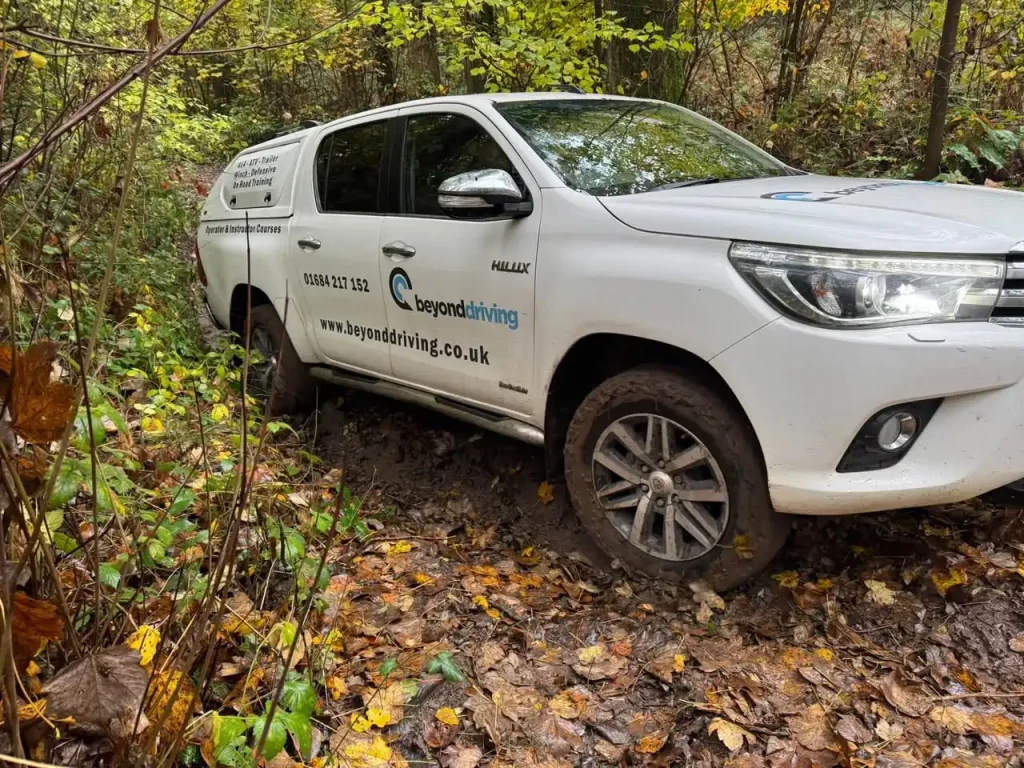
Mud, Ruts and Hidden Obstacles
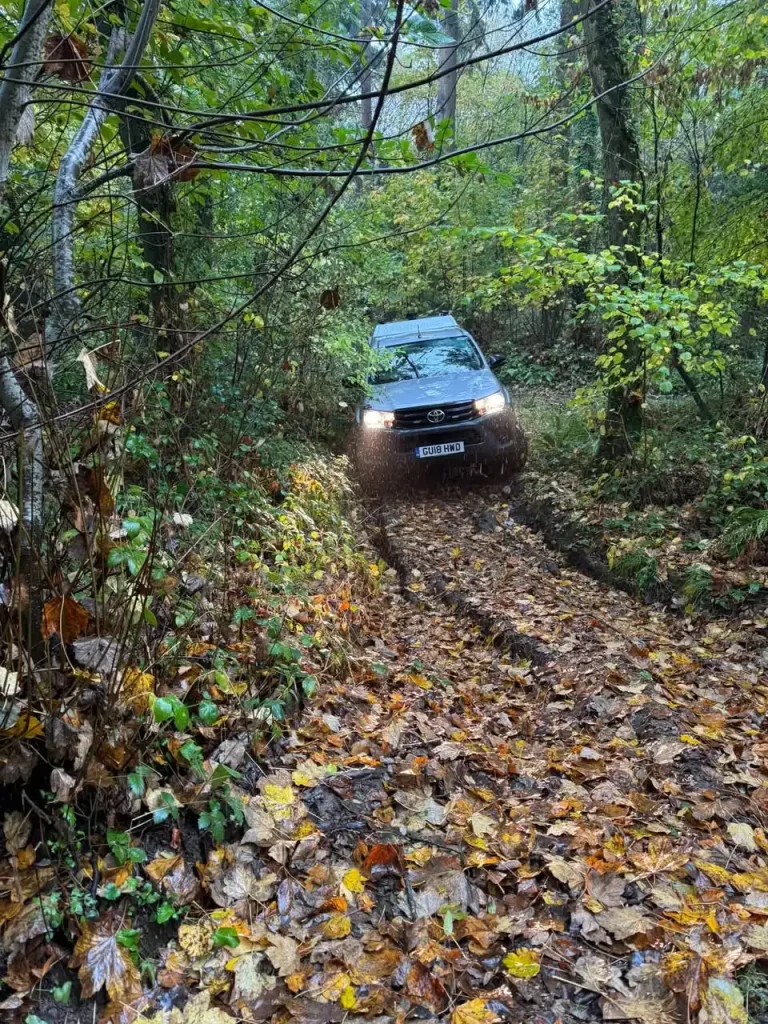
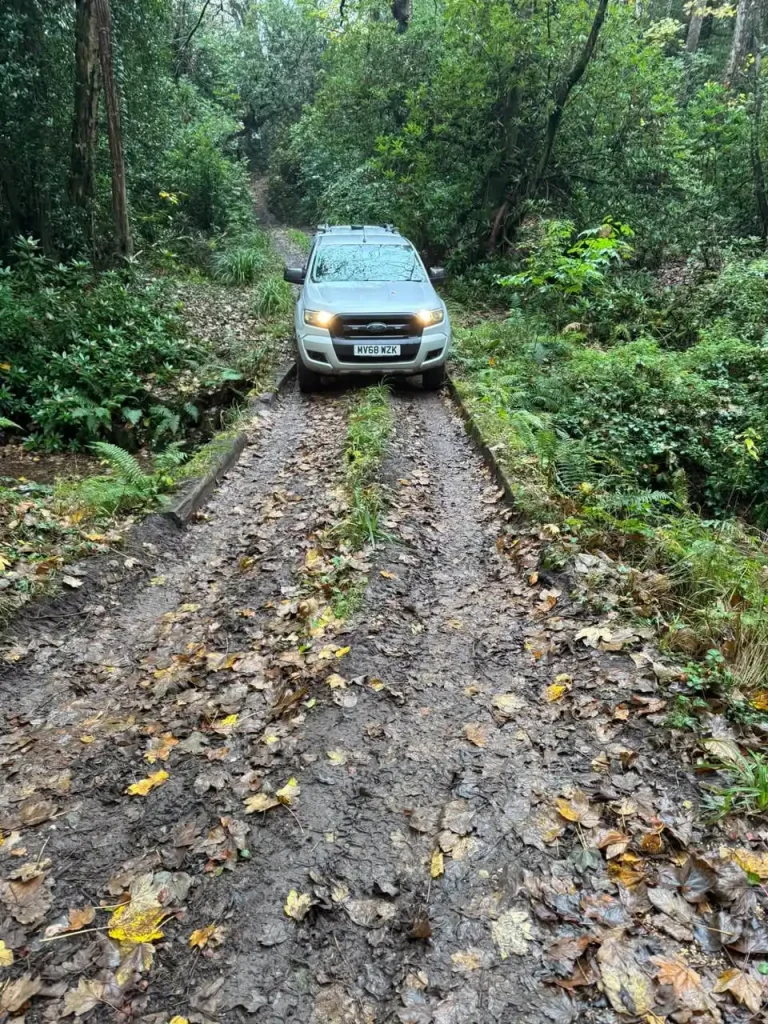
Woodland tracks can be particularly unpredictable during autumn and winter.
Fallen leaves can conceal deep ruts, exposed roots, rocks and areas of soft ground. Rain may leave the upper surface slippery while waterlogged soil underneath provides little support.
As a vehicle enters a rut, the driver must consider wheel placement, ground clearance and the possibility of the vehicle becoming grounded.
An apparently passable section may also lead into conditions where there is insufficient space to manoeuvre or reverse safely.
Learning to recognise these risks is part of developing competent off-road driving skills.
Gradients and Vehicle Stability
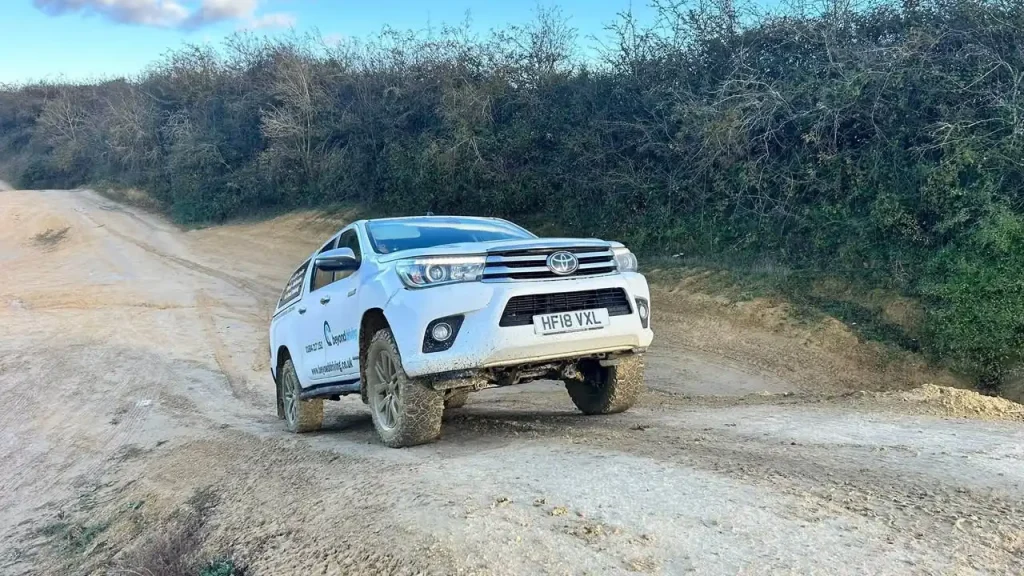
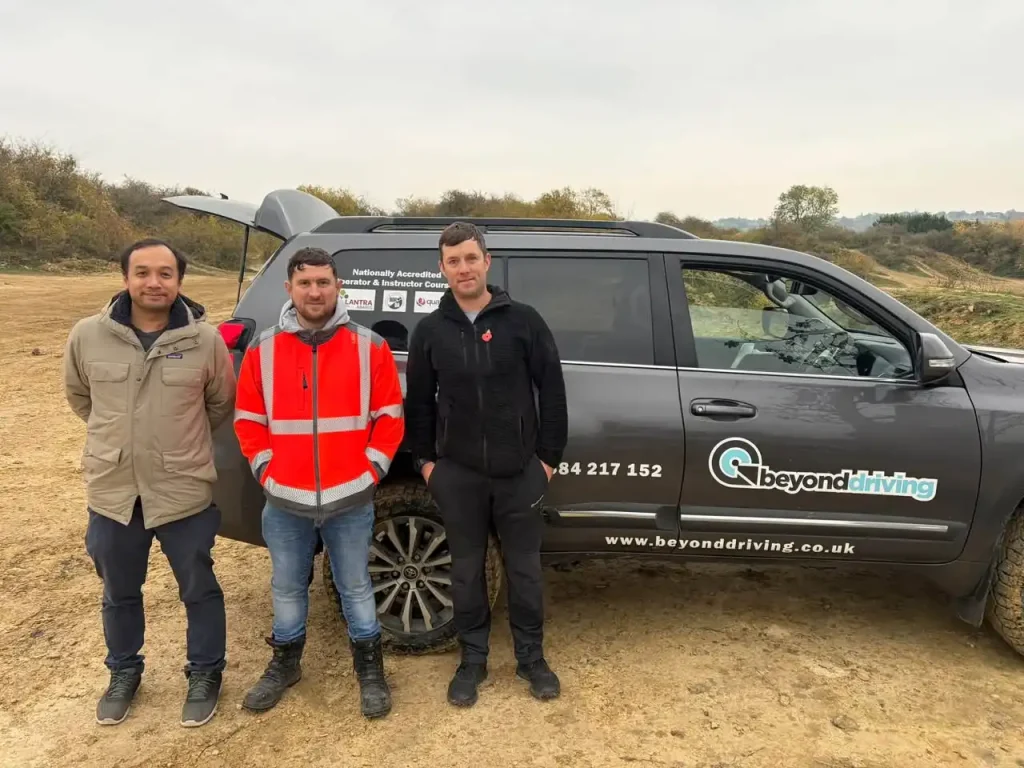
The photographs from our recent training also show vehicles negotiating uneven, open terrain with substantial changes in gradient.
These conditions introduce a different set of considerations.
Drivers must understand how the vehicle’s weight distribution changes when climbing, descending or crossing uneven ground.
They also need to consider what lies beyond a crest, whether sufficient traction is available and whether the planned route offers a safe alternative if conditions become unsuitable.
A vehicle may be capable of climbing an obstacle, but that does not necessarily mean attempting it is the correct decision.
Changing Conditions Can Change the Risk
One of the less obvious challenges of off-road driving is that a familiar route is not necessarily a safe route.
Ground that was firm during a previous visit may have become saturated following heavy rainfall. Vegetation can reduce visibility, while repeated vehicle movements can deepen ruts and damage the surface.
This is particularly relevant to organisations whose employees regularly visit remote infrastructure, construction locations or operational sites.
Drivers need to assess the conditions they find on the day rather than relying entirely on previous experience.
The Importance of Off-Road Risk Assessment
A practical off-road risk assessment does not have to be complicated, but it does need to be considered.
Before committing to difficult terrain, a driver should be thinking about several questions:
- Is the route suitable for this particular vehicle, including its tyres, ground clearance and load?
- Can I see and assess the ground ahead, including what lies beyond a slope or obstacle?
- Is there sufficient traction and vehicle stability to proceed safely?
- If conditions deteriorate, can I stop, turn around or retreat without introducing further risk?
- Would an alternative route, different vehicle or another means of access be safer?
These questions help drivers make informed decisions rather than relying on the assumption that a four-wheel-drive vehicle will find a way through.
Sometimes the correct outcome is to proceed using an appropriate technique. On other occasions, it is to stop and reconsider the route.
Recognising that distinction is a professional skill in its own right.
How Lantra and BORDA Training Develop Better Decisions
The importance of terrain assessment is reflected in recognised off-road driver training frameworks.
Lantra’s Off Road Vehicle Operating (4×4) course specifically includes assessing ground and route suitability, identifying risks, carrying out on-site risk assessments and making structured decisions about obstacles.
Similarly, the British Off Road Driving Association (BORDA) provides a structured approach to off-road training, with Basic, Standard and Higher Level courses designed for different operating conditions and levels of difficulty.
Both frameworks recognise that the purpose of training is not simply to develop the ability to drive across challenging ground.
It is to develop drivers who understand their vehicles, recognise their own limitations and make appropriate decisions in changing circumstances.
Beyond Driving offers Lantra, BORDA and Qualsafe accredited 4×4 training, allowing organisations to select an appropriate programme for their employees’ responsibilities and working environments.
For a more detailed explanation of Lantra certification and course content, see our Ultimate Guide to Lantra 4×4 Training.
Practical Experience Makes the Difference
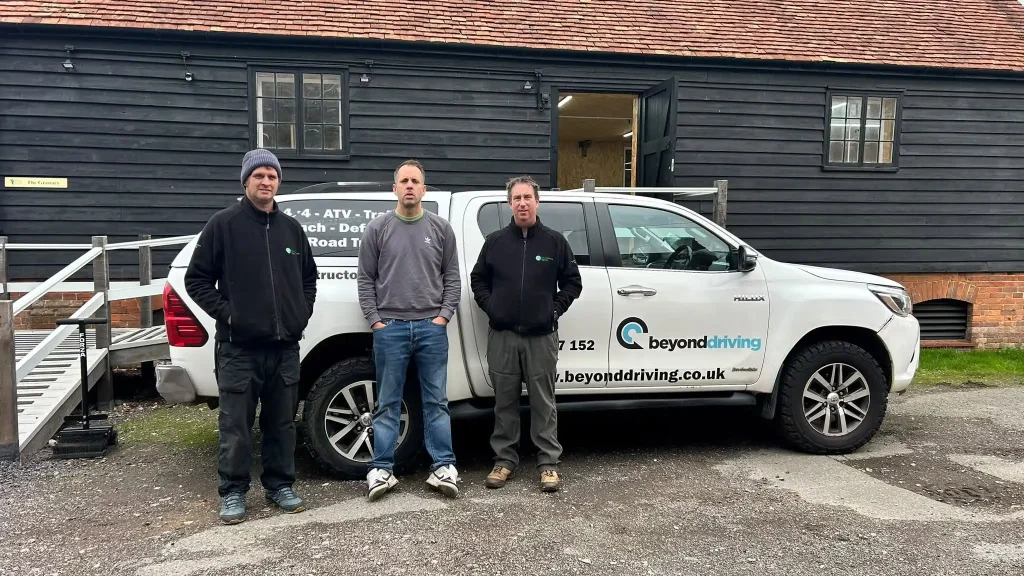
The recent courses around Peterborough, Exeter and Newbury are examples of Beyond Driving’s work with organisations whose staff require professional off-road driving skills.
Our training for Laing O’Rourke and government agencies reflects the range of organisations that depend on employees being able to operate vehicles safely beyond conventional road networks.
Working with experienced instructors on varied terrain gives delegates the opportunity to apply vehicle-control techniques, assess changing conditions and understand the consequences of different driving decisions.
The aim is not to see how far a vehicle can be pushed.
It is to develop a consistent, considered approach that can be applied when drivers return to their normal working responsibilities.
Good Off-Road Driving Starts With Good Judgement
The best professional 4×4 drivers are not necessarily those who can negotiate the most difficult obstacles.
They are the drivers who understand their vehicle, recognise the risks presented by the terrain and make decisions that protect themselves, their passengers, the vehicle and the surrounding environment.
For employers, developing that judgement is an important part of maintaining a competent workforce.
Beyond Driving delivers professional 4×4 operator training throughout the UK, working with businesses, infrastructure contractors, government agencies and specialist organisations.
Whether your staff operate on woodland tracks, remote construction sites or challenging access routes, we can help identify an appropriate accredited training programme.
Explore our 4×4 Off-Road Driving Courses or contact Beyond Driving to discuss your training requirements.