Beyond Driving completes specialist refresher training for London Ambulance Service HART teams near Maidstone and Newbury, combining challenging off-road driving with practical winch recovery exercises.
Beyond Driving has continued its programme of bespoke Polaris UTV and winch refresher training for London Ambulance Service NHS Trust’s Hazardous Area Response Team (HART), completing successful training sessions near Maidstone in Kent and at our facilities near Newbury in Berkshire.
Following the first training sessions in Kent, our instructors welcomed the HART West team to Newbury for further practical training, with the East team scheduled to follow.
The programme brings together experienced emergency response personnel, specialist off-road vehicles and realistic recovery exercises to reinforce the practical skills required for their operational responsibilities.
From negotiating narrow woodland tracks and steep, uneven terrain to planning and carrying out controlled winch recoveries, the sessions demonstrate the value of training that reflects the conditions specialist teams may encounter during deployment.
Training That Reflects the Demands of Emergency Response
London Ambulance Service HART personnel are trained to operate in hazardous and challenging environments where conventional ambulance access may be restricted.
Specialist vehicles, including Polaris side-by-side utility terrain vehicles (UTVs), provide additional capabilities for travelling across difficult ground and accessing locations away from established roads.
However, operating these vehicles safely requires a different approach from conventional road driving.
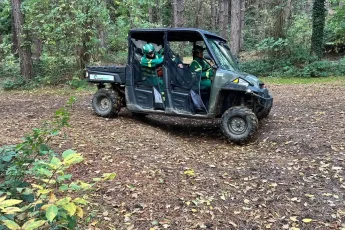
The recent Beyond Driving training sessions placed operators in woodland environments featuring muddy tracks, steep gradients, narrow passages between trees and uneven ground.
These conditions required participants to assess the terrain, consider vehicle positioning and apply appropriate driving techniques.
The objective was not simply to complete an off-road route. It was to practise making informed decisions about how to approach obstacles, when to proceed and when an alternative method might be required.
Challenging Polaris UTV Exercises in Woodland Terrain
The photographs from the training illustrate the variety of conditions encountered by the HART teams.
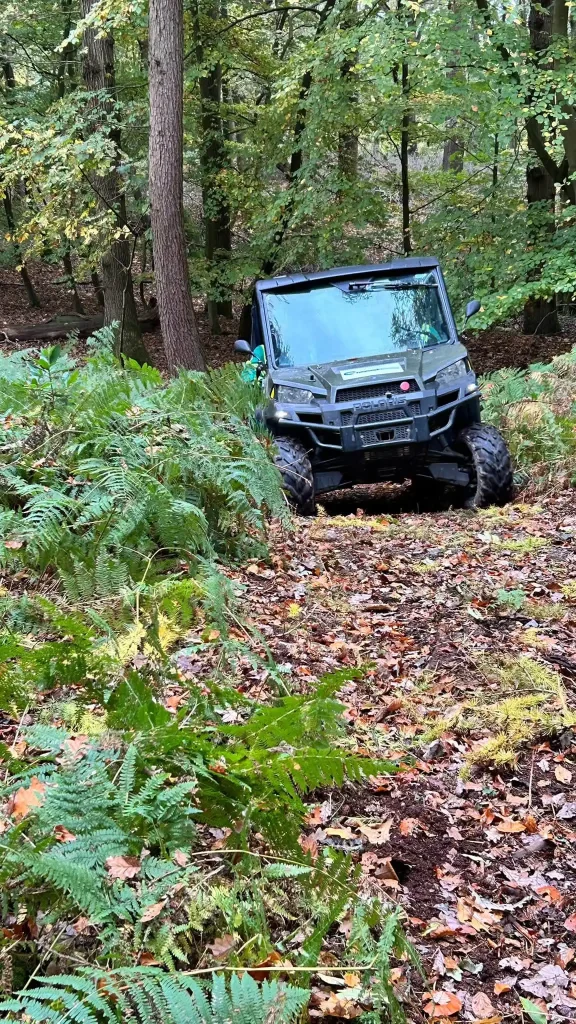
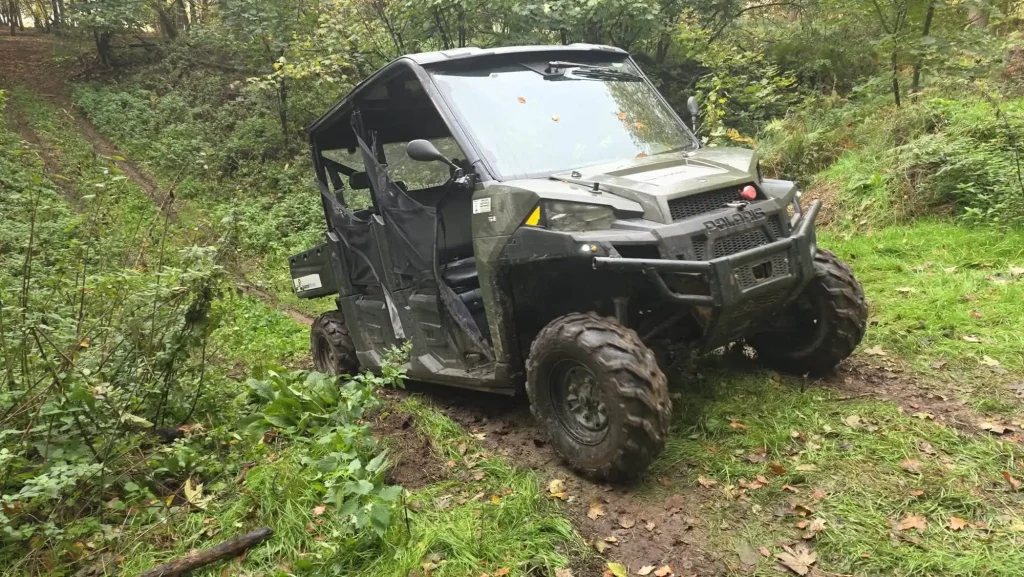
Polaris UTVs can be seen negotiating deeply rutted tracks, traversing uneven woodland ground and approaching inclines where vehicle stability and available traction become important considerations.
In one exercise, a Polaris vehicle is positioned on an uneven, narrow route surrounded by trees and dense vegetation, demonstrating the need to assess available space, wheel placement and changes in ground level.
Other photographs show vehicles working through muddy sections and negotiating slopes where careful speed control and an understanding of vehicle limitations are essential.
These exercises provide experienced operators with opportunities to practise techniques relevant to their operational roles while working under instructor supervision.
The training also reinforces the importance of recognising when conditions may exceed a vehicle’s capabilities and when a planned recovery may be more appropriate than attempting to drive further.
Practical Winch Recovery Training in Realistic Conditions
A significant element of the programme involved practical winch recovery exercises using both Polaris UTVs and winch-equipped Toyota 4×4 vehicles.
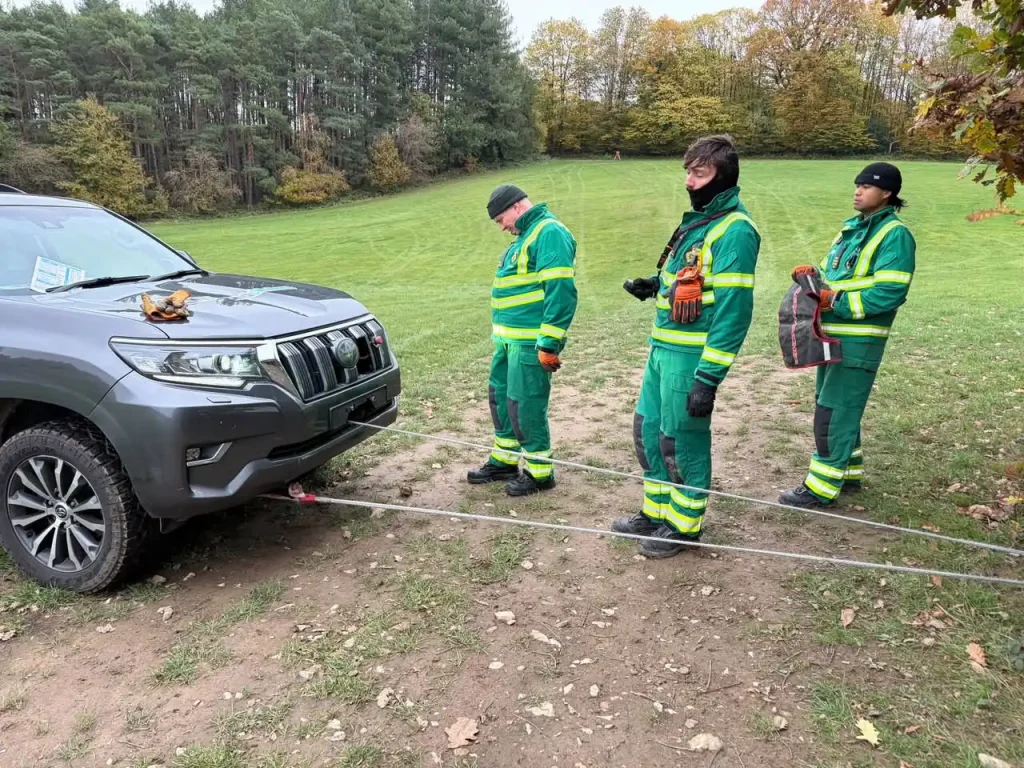
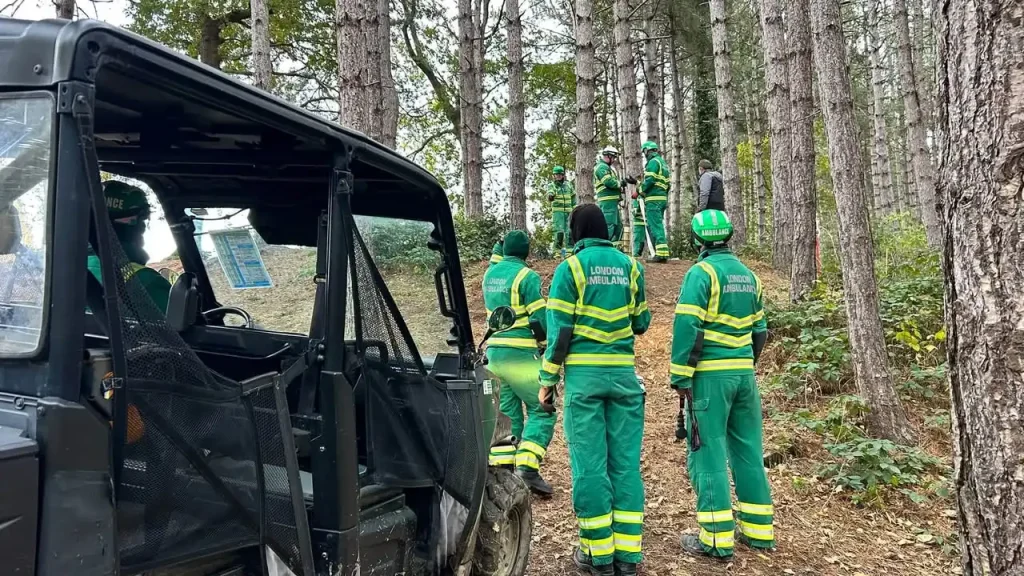
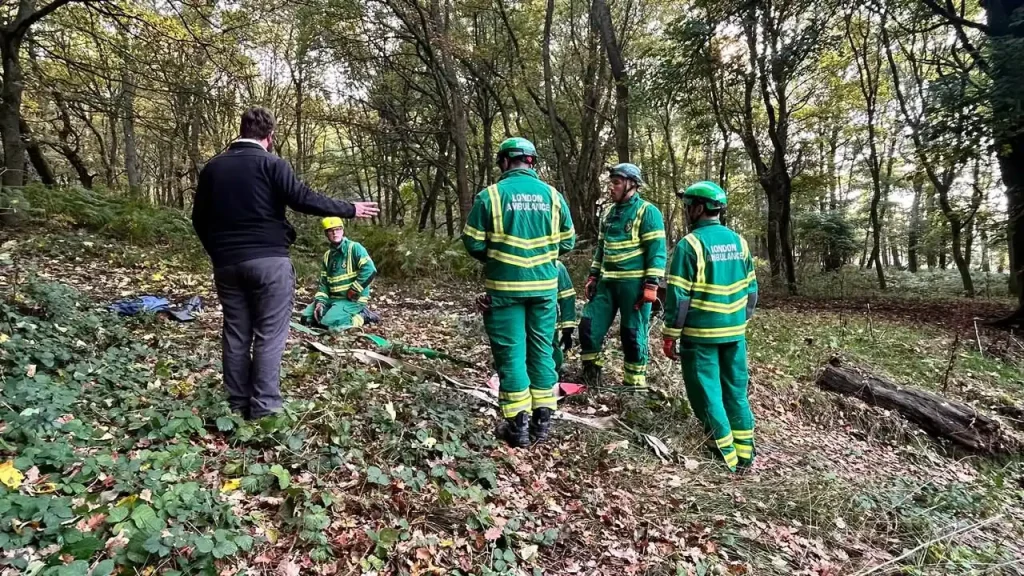
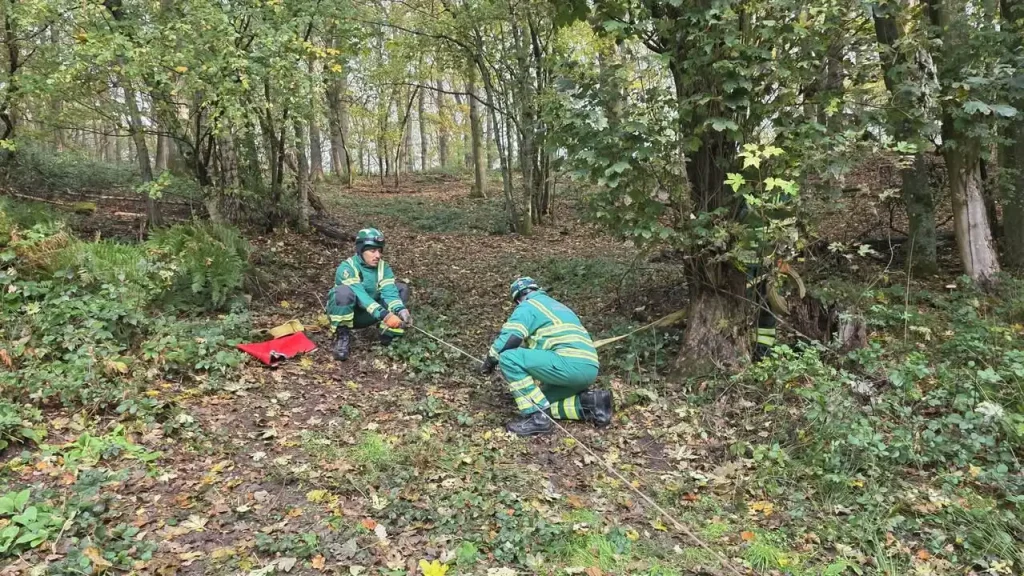
The photographs show HART personnel preparing recovery equipment, examining winch arrangements and working together to establish recovery setups in woodland environments.
One particularly useful exercise involved a Polaris UTV positioned on a wooded slope, with its front-mounted winch connected to a recovery arrangement.
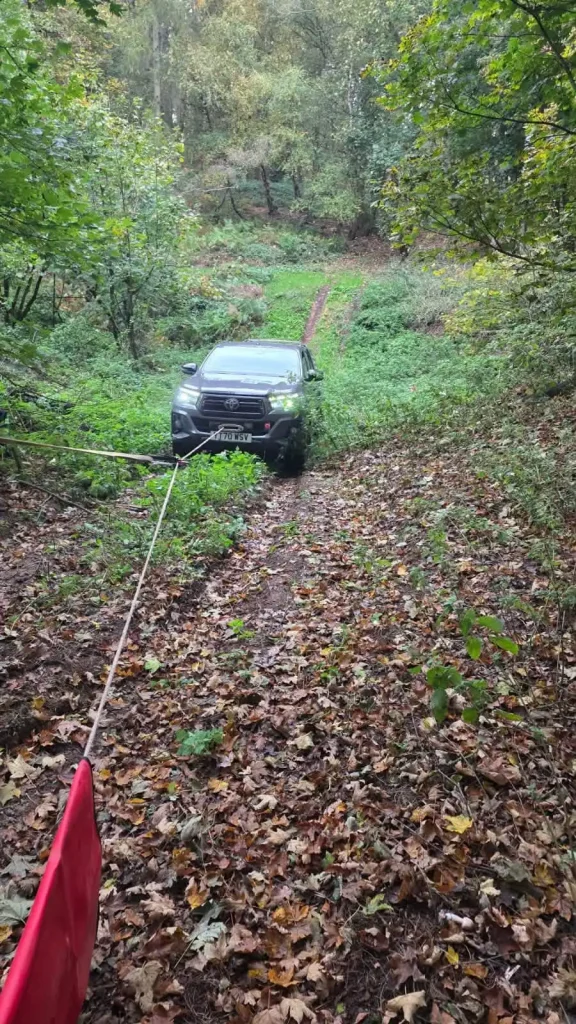
Another shows a Toyota 4×4 on a muddy woodland track with a winch line extending uphill.
These situations provide opportunities to revisit the principles of safe vehicle recovery in conditions where gradients, ground conditions, available anchor points and vehicle positioning all need careful consideration.
Practical refresher training can reinforce important recovery principles, including:
- Assessing the recovery situation before commencing work.
- Understanding winch capabilities and equipment limitations.
- Inspecting recovery equipment and selecting suitable arrangements.
- Considering appropriate anchor points and line routing.
- Establishing safe working areas and managing the risks associated with tensioned equipment.
- Maintaining clear communication throughout the recovery operation.
- Reviewing the recovery plan as conditions change.
By working through realistic scenarios, operators can revisit procedures they may not use frequently during their normal duties.
Recovery Planning, Risk Assessment and Team Communication
One of the most valuable aspects of bespoke training is the opportunity to practise the decision-making process before any recovery begins.
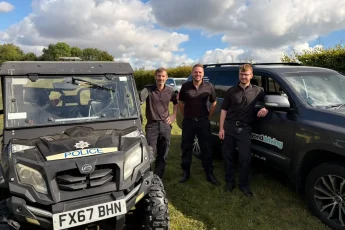
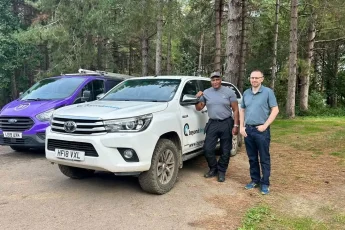
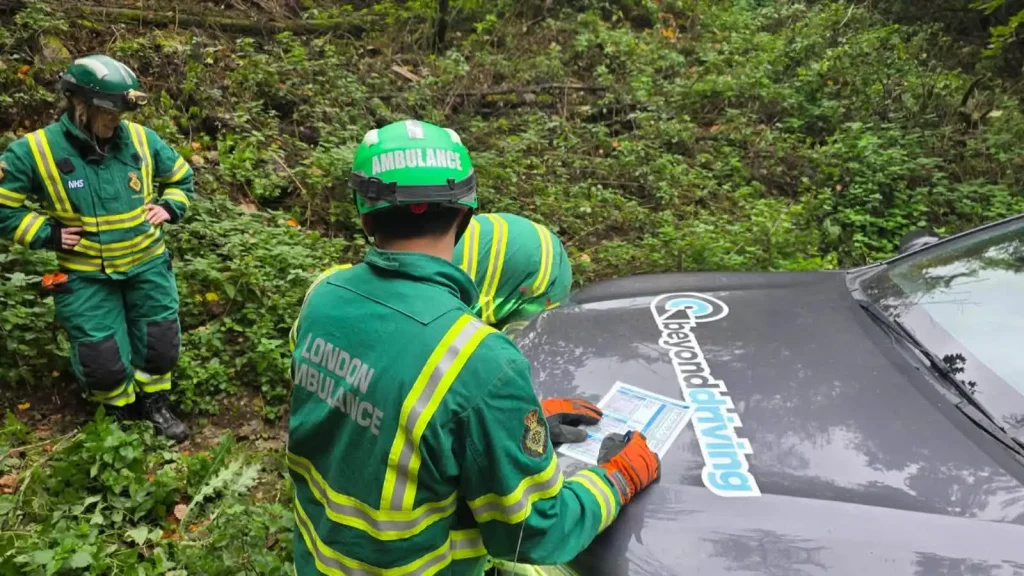
Several photographs show HART personnel gathered around vehicles, reviewing information and discussing recovery arrangements with Beyond Driving instructors.
Others show teams working together around recovery lines and equipment in woodland settings.
These activities demonstrate that safe recovery is about considerably more than operating a winch.
It requires planning, an understanding of the forces involved, appropriate equipment selection and clear communication between everyone participating in the operation.
For emergency response personnel, the ability to work together using established procedures is particularly important.
Training provides a controlled environment in which operators can revisit these responsibilities, discuss different approaches and receive feedback from experienced instructors.
Bespoke Training for Established HART Teams
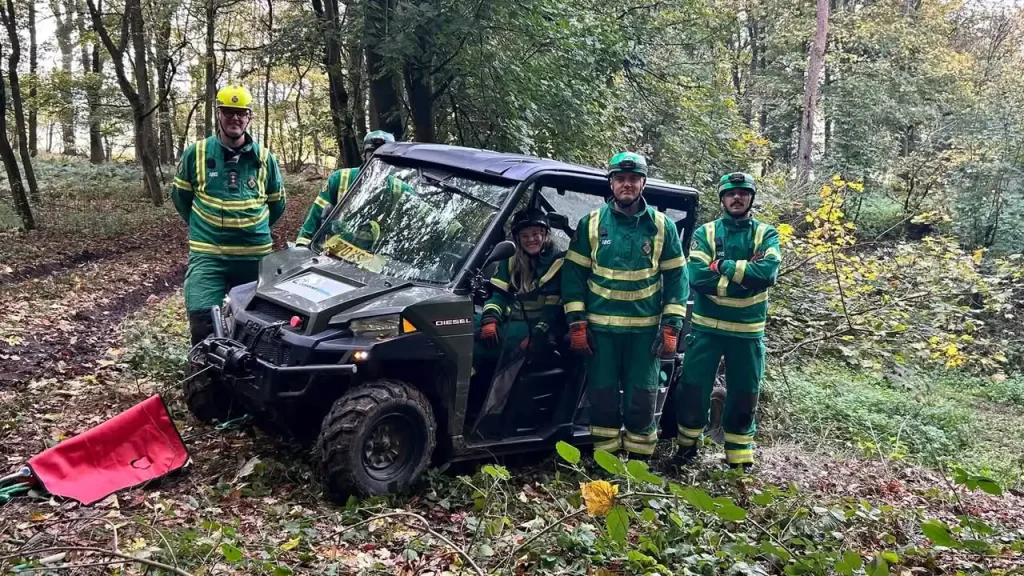
Beyond Driving’s approach to the London Ambulance Service programme recognises that the participants are already experienced personnel.
Rather than treating the sessions as introductory courses, the training is designed to revisit and develop existing knowledge through practical exercises relevant to the teams’ operational requirements.
This allows instructors to concentrate on areas such as vehicle handling, recovery planning, teamwork and maintaining familiarity with specialist equipment.
It also creates opportunities for operators to share experiences, ask questions and revisit procedures with colleagues.
For teams that may work together during challenging incidents, this shared practical experience is an important benefit.
The familiar faces returning for annual training also reflect the continuing working relationship between Beyond Driving and London Ambulance Service HART.
Delivering Specialist Training Across Multiple Locations
The latest programme demonstrates Beyond Driving’s ability to provide specialist training for different operational teams across more than one location.
The first bespoke Polaris and winch refresher course was successfully completed near Maidstone, Kent, before the programme moved to Beyond Driving’s facilities near Newbury, Berkshire.
Here, the HART West team completed another programme of practical vehicle and recovery training, with the East team next in the schedule.
Delivering training across different locations provides an opportunity to use varied terrain while maintaining a consistent focus on safe operating procedures and practical competence.
For organisations with personnel based across multiple regions, this approach can be particularly valuable.
Beyond Driving works with organisations to develop training programmes suited to their vehicles, equipment, operating environments and workforce requirements.
Specialist Training for Emergency Services and Operational Teams
The London Ambulance Service HART programme is an example of how bespoke off-road vehicle and recovery training can be adapted to meet the requirements of specialist teams.
Similar considerations apply to other organisations whose personnel operate away from conventional roads or may need to recover vehicles in difficult environments.
These include emergency services, utilities, infrastructure operators, environmental organisations and other specialist field teams.
While the vehicles and operating circumstances may differ, the underlying requirement remains the same: personnel need appropriate training and opportunities to maintain the practical skills associated with their responsibilities.
Beyond Driving provides specialist training across the UK, including ATV and UTV operator training, winch operation training and 4×4 off-road driver training.
Building on Existing Skills Through Continued Training
The successful completion of the Maidstone and Newbury sessions marks further progress in Beyond Driving’s annual programme for London Ambulance Service HART.
The exercises have provided opportunities for experienced personnel to revisit specialist driving and recovery techniques, work alongside colleagues and reinforce established operating procedures.
As discussed in our earlier article, Why Refresher Training Matters: Keeping Specialist Vehicle and Winch Skills Up to Date, maintaining competence is an ongoing responsibility rather than something achieved through a single training course.
The latest HART sessions demonstrate how that principle can be put into practice through realistic, instructor-led training.
With the Kent and HART West sessions completed, Beyond Driving looks forward to welcoming the East team for the next stage of the programme.
Looking for bespoke specialist vehicle training for your organisation?
Beyond Driving delivers professional off-road driver training, UTV operator training and winch recovery courses for organisations throughout the UK. Contact our team to discuss a programme designed around your personnel, vehicles and operational requirements.