An overland expedition can take a 4×4 far beyond the conditions encountered in everyday driving. Remote tracks, steep gradients, loose surfaces, deep water and difficult terrain can all become part of the journey – often when assistance is a long way away.
That makes preparation particularly important.
Beyond Driving provides bespoke 4×4 expedition driver training designed around the people, vehicles and conditions involved in a planned trip. Rather than treating expedition preparation as a generic off-road driving course, training can be adapted to reflect the vehicles participants will actually drive and the challenges they may reasonably expect to encounter.
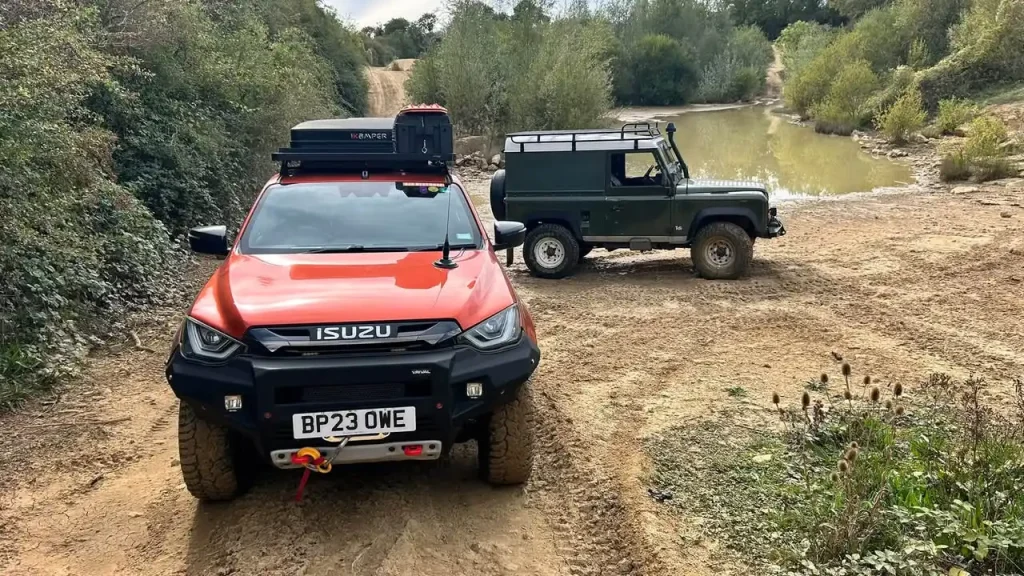
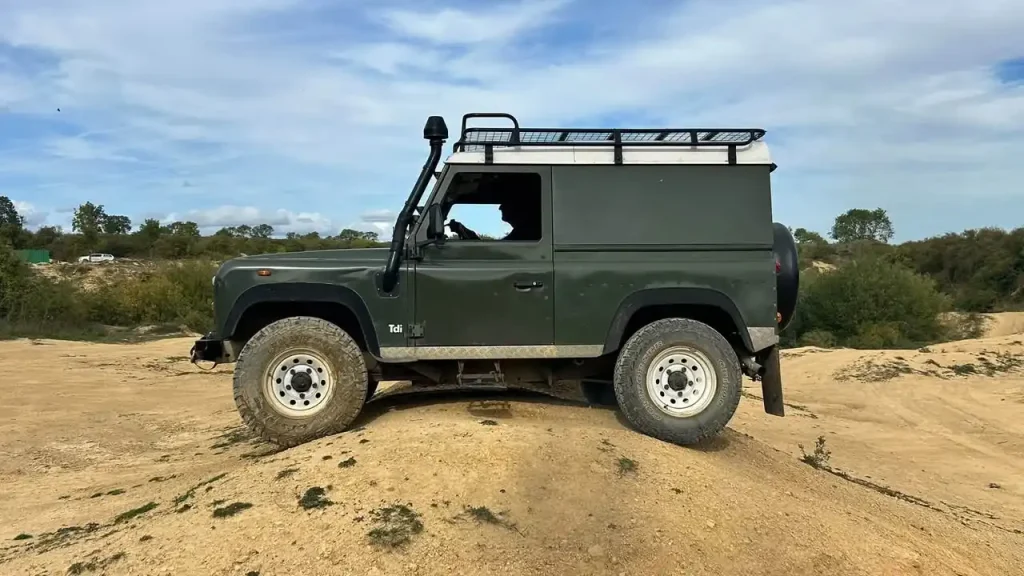
A recent training session provided an excellent example, with two very different expedition-prepared vehicles being put through their paces: a traditional Land Rover Defender and a modern Isuzu D-Max pick-up, both equipped for serious overland use.
Why expedition 4×4 training is different
An expedition vehicle may spend hundreds or thousands of miles on conventional roads before leaving the tarmac. Once off road, however, the driver may need to deal with surfaces and obstacles they rarely encounter at home.
The consequences of getting something wrong can also be greater. Becoming stuck on a UK training site is one thing; losing traction, damaging a vehicle or selecting an unsuitable route in a remote location is quite another.
Good expedition preparation therefore isn’t about seeing how far a 4×4 can be pushed. It is about developing the judgement to understand what the vehicle can do, how to use it effectively and when not to proceed.
This approach fits closely with BORDA’s higher-level training principles, which include developing a driver’s ability to recognise situations that extend beyond a vehicle’s capabilities.
Train in the vehicle you are taking
One of the most valuable aspects of bespoke expedition training is the opportunity to train in the actual vehicle that will be used on the expedition.
That was particularly relevant during this course.
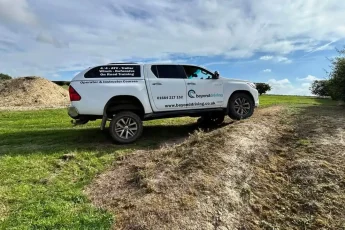
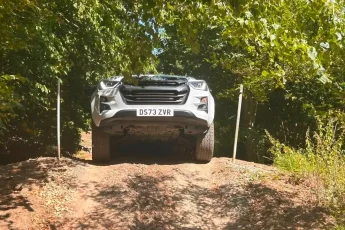
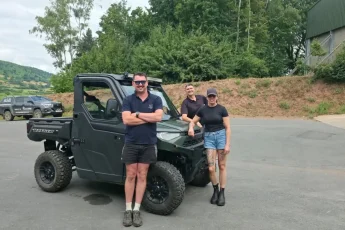
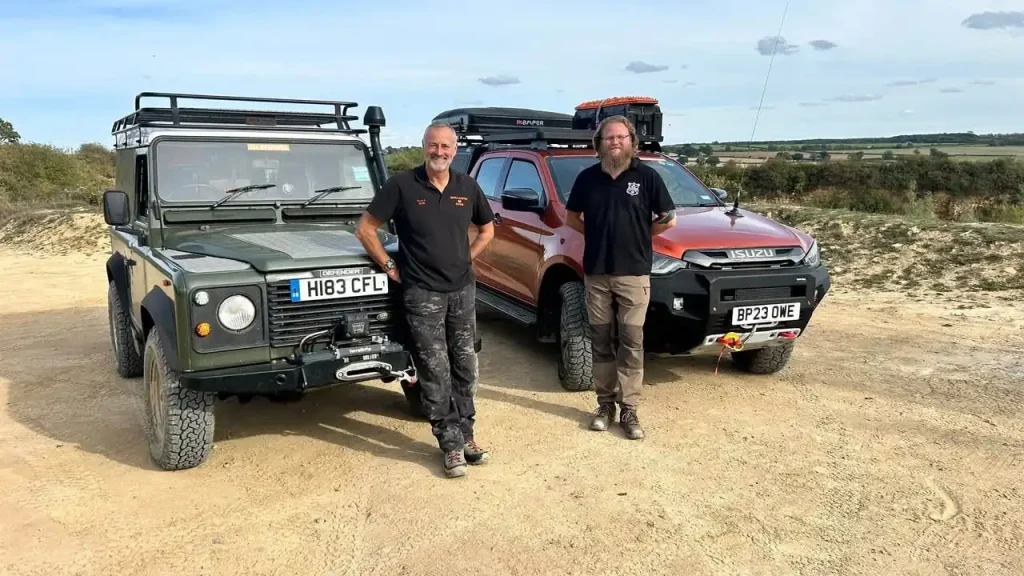
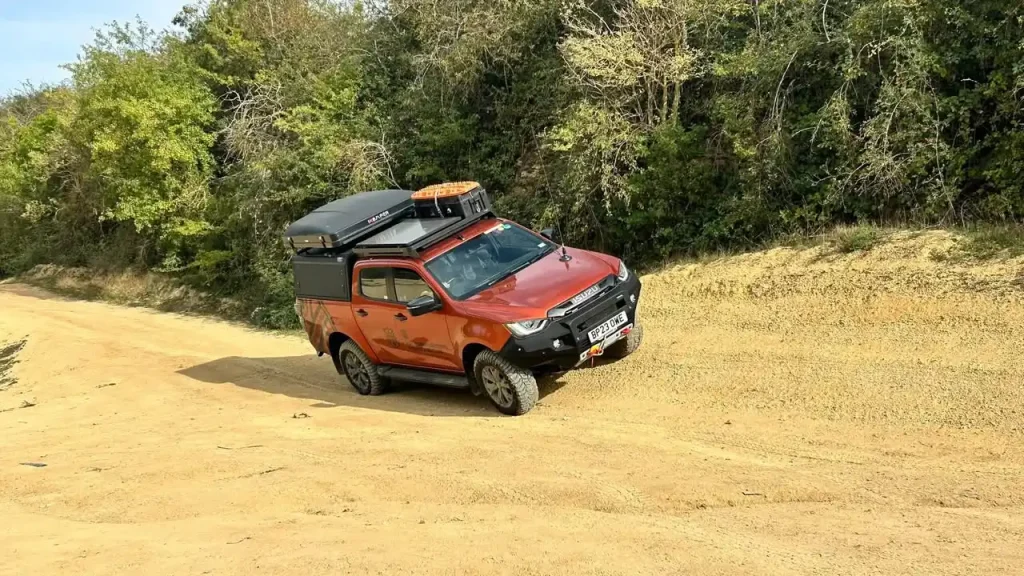
The photographs show a Land Rover Defender alongside a heavily equipped Isuzu D-Max. Although both are capable 4×4 vehicles, their dimensions, driving characteristics, visibility and responses over difficult terrain are different.
The Isuzu has also been prepared with additional expedition equipment and a substantial roof load. This changes the vehicle from the standard pick-up a driver might encounter during ordinary road use.
Training beforehand gives the driver an opportunity to become familiar with their particular vehicle in a controlled environment rather than discovering its characteristics for the first time in an unfamiliar country.
Beyond Driving already places considerable emphasis on using operators’ own vehicles where appropriate because it makes training immediately relevant to real-world use.
Understanding how an expedition-loaded 4×4 behaves
Vehicle preparation isn’t simply about fitting equipment. Everything carried by an expedition vehicle can affect the way it behaves.
Roof-mounted equipment raises the centre of gravity. Additional weight can influence braking, acceleration and traction. Loads can alter suspension behaviour and ground clearance, while accessories may affect the vehicle’s overall dimensions and approach to obstacles.
Drivers therefore need to think about the vehicle as it will actually be used.
The Isuzu pictured during the training provides a good illustration. With its roof-mounted expedition equipment, off-road tyres and recovery equipment, the driver needs to understand the vehicle as a complete expedition package rather than simply as a D-Max.
Likewise, the Defender brings its own characteristics and capabilities. Spending time with both vehicle and instructor allows drivers to build familiarity before departure.
Practising on realistic terrain
The training environment allows drivers to experience changing terrain under controlled supervision.
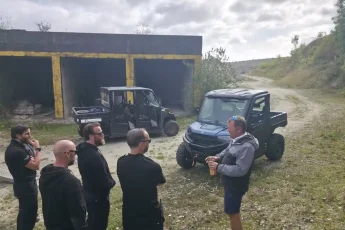
As the photographs show, this session included uneven ground, loose surfaces, gradients and water. These are useful environments for learning how small changes in speed, steering and vehicle positioning can make a significant difference.
Beyond Driving’s professional off-road programmes cover areas including terrain assessment, route planning, traction management, steep ascents and descents, uneven surfaces and water crossings.
For expedition preparation, those skills can be brought together around the individual trip and vehicle.
The objective isn’t simply to negotiate a particular obstacle successfully. Drivers should understand why a particular technique works so they can make better decisions when they encounter something different later.
Water crossings require judgement, not momentum
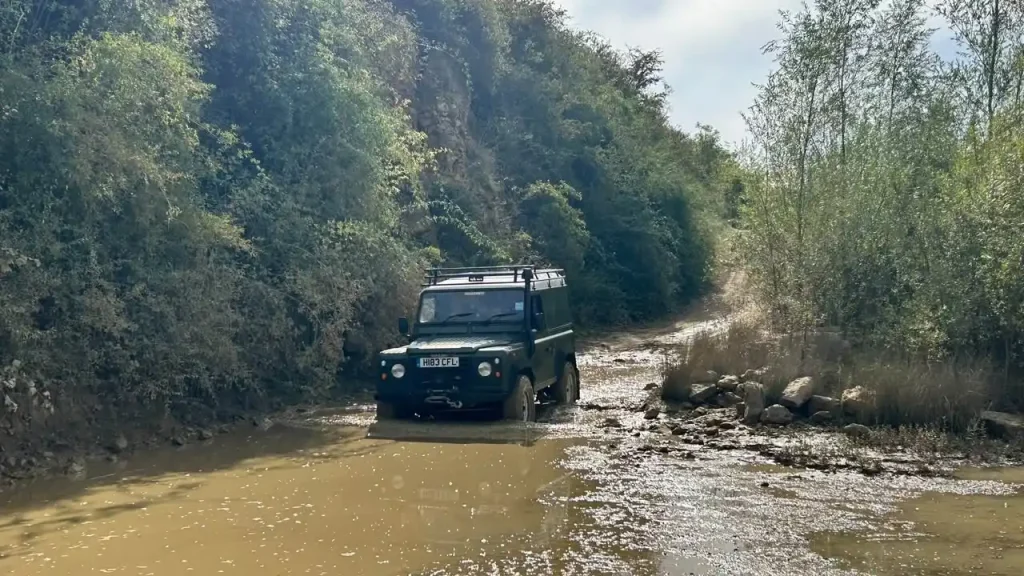
The images from this course show the Defender being driven through a substantial water section.
Water is a particularly useful training scenario because it reinforces the importance of assessment before action.
Rather than simply entering a crossing and hoping the vehicle gets through, drivers need to consider the route, depth, surface beneath the water, entry and exit points and the capabilities and limitations of their particular vehicle.
The same principle applies throughout expedition driving: assess first, drive second.
Developing that habit in a controlled training environment can be invaluable when travelling somewhere unfamiliar.
Gradients, articulation and vehicle positioning
Other images show the vehicles negotiating uneven and sloping terrain.
Here, drivers can experience how weight transfers through the vehicle and how wheel position, traction and carefully controlled inputs affect progress.
This is also where familiarity with the individual vehicle becomes particularly useful. A driver who has practised with their own expedition-prepared 4×4 develops a much better appreciation of its dimensions and responses.
BORDA’s off-road training framework progressively covers disciplines including traction, ascents, descents, ditches, ruts and side slopes, with higher-level training extending into more demanding situations.
Preparing the driver as carefully as the vehicle
It is easy to spend months preparing a 4×4 for an expedition.
Tyres are chosen. Recovery equipment is fitted. Storage systems are installed. Tools and spares are packed. Routes are researched.
Driver preparation deserves the same attention.
Even a highly capable and carefully equipped 4×4 still depends upon the person behind the wheel making appropriate decisions.
Bespoke expedition training can therefore concentrate on the skills most relevant to the proposed journey, potentially including:
- vehicle familiarisation and pre-departure checks
- understanding 4WD systems and vehicle settings
- route and terrain assessment
- traction and low-speed vehicle control
- steep ascents and descents
- ruts, uneven ground and loose surfaces
- water crossings
- recognising vehicle limitations
- the effects of additional loads and expedition equipment
- recovery and contingency considerations where appropriate.
The exact programme can be shaped around the driver, vehicle and intended use rather than trying to make the expedition fit a predetermined course.
Bespoke training for your expedition
No two expeditions are identical.
A vehicle being prepared for European mountain tracks may require a different emphasis from one intended for extended overland travel through Africa or remote parts of Asia. Experience levels also vary considerably, from seasoned off-road drivers wanting to refresh particular techniques to people undertaking their first serious overland journey.
Beyond Driving can tailor bespoke 4×4 driver training accordingly.
Training can be undertaken using the expedition vehicle itself where appropriate, giving drivers valuable time behind the wheel before departure. Beyond Driving’s off-road courses are delivered by experienced instructors and can be tailored around specific operational requirements.
When the vehicle is packed, the route is planned and the departure date is approaching, knowing how your 4×4 behaves away from the tarmac can be every bit as important as the equipment you’ve fitted to it.
Planning an overland journey or 4×4 expedition? Talk to Beyond Driving about a bespoke training programme built around your vehicle, experience and proposed journey.